

Sudan’s military chief visits Eritrea to discuss Sudan conflict with the president
Advertisement
Read this article for free:
or
Already have an account? Log in here »
To continue reading, please subscribe:

Digital Subscription
One year of digital access for only $205*
- Enjoy unlimited reading on winnipegfreepress.com
- Read the E-Edition, our digital replica newspaper
- Access News Break, our award-winning app
- Play interactive puzzles
*First annual payment billed as $205.00 + GST for one year. This annual subscription will automatically renew at $233.00 + GST every 52 weeks (10% off the regular annual price of $259.35). Offer available to new and qualified returning subscribers only. Cancel any time.
To continue reading, please subscribe:
Add Free Press access to your Brandon Sun subscription for only an additional
$1 for the first 4 weeks*
- Enjoy unlimited reading on winnipegfreepress.com
- Read the E-Edition, our digital replica newspaper
- Access News Break, our award-winning app
- Play interactive puzzles
*Your next Brandon Sun subscription payment will increase by $1.00 and you will be charged $17.95 plus GST for four weeks. After four weeks, your payment will increase to $24.95 plus GST every four weeks.
Read unlimited articles for free today:
or
Already have an account? Log in here »
Hey there, time traveller!
This article was published 11/09/2023 (1105 days ago), so information in it may no longer be current.
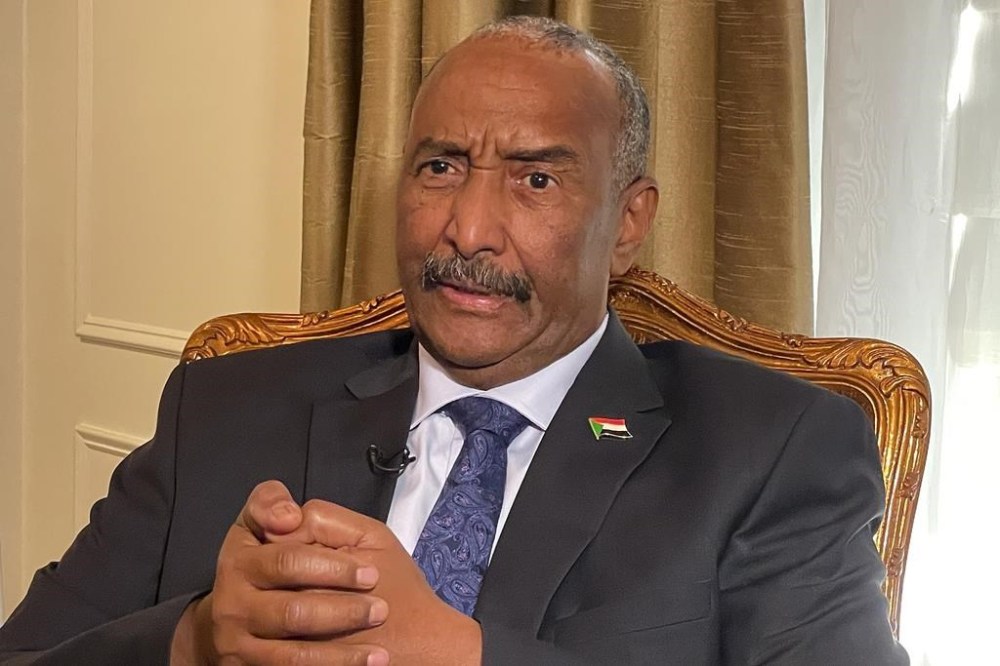
CAIRO (AP) — Sudan’s military chief traveled to Eritrea on Monday for a meeting with President Isaias Afwerki, the general’s latest international trip since fighting broke out between his army and a rival paramilitary force in mid-April, state media said.
Gen. Abdel Fattah Burhan has been looking for international support since tensions with the paramilitary Rapid Support Forces, commanded by Gen. Mohamed Hamdan Dagalo, burst into open fighting that has reduced Sudan’s capital, Khartoum, and its neighboring cities of Omdurman and Bahri, to urban battlefields.
Sudan’s state-run SUNA news agency said the talks between Burhan and Isaias would focus on bilateral relations and the conflict in Sudan. No further details were given.
For years, relations between Eritrea and Sudan have been fraught. Sudan is host to some 126,000 Eritrean refugees, many of whom have fled political persecution in one of the world’s most repressive countries, according to the U.N. refugee agency. Influential tribal groups in eastern Sudan that have long campaigned for a separate state — including the Beja — have been backed by Isaias’ government.
The visit is Burhan’s fourth high profile diplomatic meeting in the past two weeks.
Last week, he met with the Qatari emir, Sheikh Tamim bin Hamad Al Thani in Doha. The previous week, he met with Egyptian President Abdel Fattah el-Sissi in the Egyptian coastal city of el-Alamein.
Few details were made public about either trip.
Fighting raged in Sudan. On Sunday, a drone attack in an open market in Khartoum killed at least 43 people. The Associated Press has been unbale to verify which force was behind the attack.
In the western Darfur region — the scene of a genocidal campaign in the early 2000s — the conflict has morphed into ethnic violence, with the RSF and allied Arab militias attacking ethnic African groups, according to rights groups and the United Nations.
On Monday, Beth Van Schaack. the U.S. ambassador-at-large for global criminal justice, condemned the violence that has rocked Darfur, including “killings on the basis of ethnicity committed by the Rapid Support Forces and their allied militias.”
Schaak said the U.S. was bolstering the International Criminal Court’s effort to locate fugitives, but she gave few details on how it was helping the court, in which the United States is not a member state. In July, the ICC’s prosecutor, Karim Khan, said he was investigating alleged new war crimes and crimes against humanity in the Darfur region.
The conflict has killed more than 4,000 people, according to the United Nations. The real toll is likely much higher, doctors and activists say.