

A Colorado mountain tied to an 1864 massacre is renamed Mount Blue Sky
Advertisement
Read this article for free:
or
Already have an account? Log in here »
To continue reading, please subscribe:

Digital Subscription
One year of digital access for only $205*
- Enjoy unlimited reading on winnipegfreepress.com
- Read the E-Edition, our digital replica newspaper
- Access News Break, our award-winning app
- Play interactive puzzles
*First annual payment billed as $205.00 + GST for one year. This annual subscription will automatically renew at $233.00 + GST every 52 weeks (10% off the regular annual price of $259.35). Offer available to new and qualified returning subscribers only. Cancel any time.
To continue reading, please subscribe:
Add Free Press access to your Brandon Sun subscription for only an additional
$1 for the first 4 weeks*
- Enjoy unlimited reading on winnipegfreepress.com
- Read the E-Edition, our digital replica newspaper
- Access News Break, our award-winning app
- Play interactive puzzles
*Your next Brandon Sun subscription payment will increase by $1.00 and you will be charged $17.95 plus GST for four weeks. After four weeks, your payment will increase to $24.95 plus GST every four weeks.
Read unlimited articles for free today:
or
Already have an account? Log in here »
Hey there, time traveller!
This article was published 15/09/2023 (1099 days ago), so information in it may no longer be current.
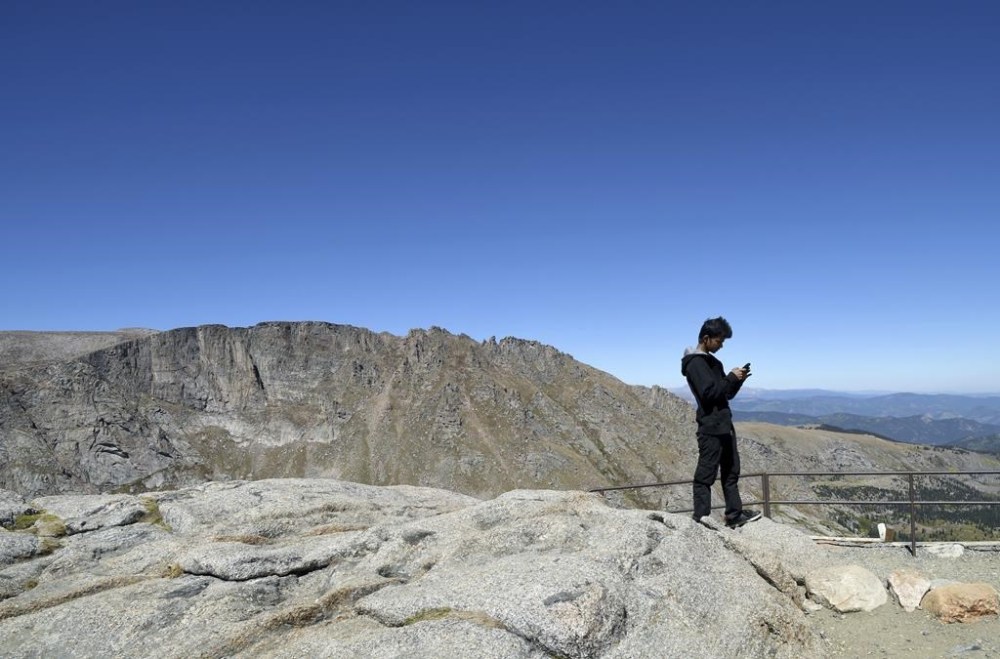
DENVER (AP) — Federal officials on Friday renamed a towering mountain southwest of Denver as part of a national effort to address the history of oppression and violence against Native Americans.
The U.S. Board on Geographic Names voted overwhelmingly to change Mount Evans to Mount Blue Sky at the request of the Cheyenne and Arapaho tribes and with the approval of Colorado Gov. Jared Polis. The Arapaho were known as the Blue Sky People, while the Cheyenne hold an annual renewal-of-life ceremony called Blue Sky.
The 14,264-foot (4,348-meter) peak was named after John Evans, Colorado’s second territorial governor and ex officio superintendent of Indian affairs. Evans resigned after Col. John Chivington led an 1864 U.S. cavalry massacre of more than 200 Arapaho and Cheyenne people — most of them women, children and the elderly — at Sand Creek in what is now southeastern Colorado.
“It is a huge step, not only for the Cheyenne and Arapaho people, but also for the Ute Mountain Ute Tribe, Southern Ute Tribe, Northern Arapaho Tribe, Northern Cheyenne Tribe, and other allies who worked diligently to begin the healing process, bringing honor to a monumental and majestic mountain,” Cheyenne and Arapaho Tribes Gov. Reggie Wassana said after Friday’s vote.
Tribal leaders are now focusing their efforts on changing the name of the adjacent Mount Evans Wilderness Area to Mount Blue Sky Wilderness area, which would require congressional action.
Polis, a Democrat, revived the state’s 15-member geographic naming panel in July 2020 to make recommendations for his review before being forwarded for final federal approval. On Friday, the federal board considered changing several other geographical names submitted from across the country, none as prominent or well-known as Mount Evans.
The name Mount Evans was first applied to the peak in the 1870s and first published on U.S. Geological Survey topographic maps in 1903, according to research compiled for the national naming board. In recommending the change to Mount Blue Sky, Polis said John Evans’ culpability for the Sand Creek Massacre, tacit or explicit, “is without question.”
“Colonel Chivington celebrated in Denver, parading the deceased bodies through the streets while Governor Evans praised and decorated Chivington and his men for their ‘valor in subduing the savages,’” Polis wrote in a Feb. 28 letter to Trent Palmer, the federal renaming board’s executive secretary.
Polis added that the state is not erasing the “complicated” history of Evans, who helped found the University of Denver and Northwestern University in Evanston, Illinois. Evans also played a role in bringing the railroad to Denver, opposed slavery and had a close relationship with Abraham Lincoln, Polis noted.
Studies by Northwestern and the University of Denver published in 2014 also recognized Evans’ positive contributions but determined that even though he was not directly involved in the Sand Creek Massacre, he bore some responsibility.
“Evans abrogated his duties as superintendent, fanned the flames of war when he could have dampened them, cultivated an unusually interdependent relationship with the military, and rejected clear opportunities to engage in peaceful negotiations with the Native peoples under his jurisdiction,” according to the DU study.
In 2021, the federal panel approved renaming another Colorado peak after a Cheyenne woman who facilitated relations between white settlers and Native American tribes in the early 19th century.
Mestaa’ėhehe Mountain, pronounced “mess-taw-HAY,” honors and bears the name of an influential translator, also known as Owl Woman, who mediated between Native Americans and white traders and soldiers in what is now southern Colorado. The mountain 30 miles (48 kilometers) west of Denver previously included a misogynist and racist term for Native American women.
In the 1960s and 1970s, the federal board took action to eliminate the use of derogatory terms related to Black and Japanese people. The latest moves come amid a reckoning on race relations across the U.S. and under the leadership of Interior Secretary Deb Haaland, the nation’s first Native American Cabinet member.