

On the run for decades, convicted Mafia boss Messina Denaro dies in hospital months after capture
Advertisement
Read this article for free:
or
Already have an account? Log in here »
To continue reading, please subscribe:

Digital Subscription
One year of digital access for only $205*
- Enjoy unlimited reading on winnipegfreepress.com
- Read the E-Edition, our digital replica newspaper
- Access News Break, our award-winning app
- Play interactive puzzles
*First annual payment billed as $205.00 + GST for one year. This annual subscription will automatically renew at $233.00 + GST every 52 weeks (10% off the regular annual price of $259.35). Offer available to new and qualified returning subscribers only. Cancel any time.
To continue reading, please subscribe:
Add Free Press access to your Brandon Sun subscription for only an additional
$1 for the first 4 weeks*
- Enjoy unlimited reading on winnipegfreepress.com
- Read the E-Edition, our digital replica newspaper
- Access News Break, our award-winning app
- Play interactive puzzles
*Your next Brandon Sun subscription payment will increase by $1.00 and you will be charged $17.95 plus GST for four weeks. After four weeks, your payment will increase to $24.95 plus GST every four weeks.
Read unlimited articles for free today:
or
Already have an account? Log in here »
Hey there, time traveller!
This article was published 25/09/2023 (1096 days ago), so information in it may no longer be current.
L’AQUILA, Italy (AP) — Matteo Messina Denaro, a convicted mastermind of some of the Sicilian Mafia’s most heinous slayings, died on Monday in a hospital prison ward, several months after being captured as Italy’s No. 1 fugitive and following decades on the run, Italian prosecutors said.
Rai state radio, reporting from L’Aquila hospital in central Italy, said the heavy police detail that had been guarding his hospital room moved to the hospital morgue, following the death of Messina Denaro at about 2 a.m. Doctors had said he had been in a coma since Friday.
The brief statement about his death from the L’Aquila prosecutors office didn’t cite the time of death, but said both the office and that of prosecutors in Palermo, Sicily, were requesting an autopsy, even though it was well known that Messina Denaro had been “afflicted with a very serious illness.”
Burial was expected to take place later in the week in Sicily, Italian media said.
Reputed by investigators to be one of the Mafia’s most powerful bosses, Messina Denaro, 61, had been living while a fugitive in western Sicily, his stronghold, during at least much of his 30 years of eluding law enforcement thanks to the help of complicit townspeople. His need for colon cancer treatment led to his capture on Jan. 16, 2023.
Investigators were on his trail for years and had discovered evidence that he was receiving chemotherapy as an out-patient at a Palermo clinic under an alias. Digging into Italy’s national health system data base, they tracked him down and took him into custody when he showed up for a treatment appointment.
His arrest came 30 years and a day after the Jan. 15, 1993, capture of the Mafia’s “boss of bosses,’’ Salvatore “Toto” Riina in a Palermo apartment, also after decades in hiding. Messina Denaro himself went into hiding later that year.
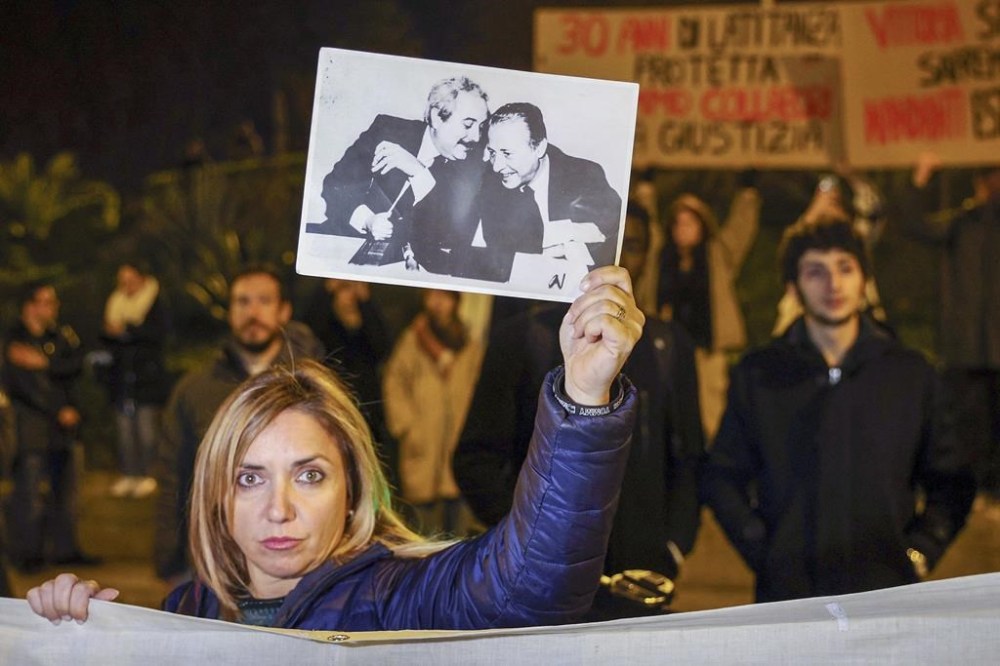
While a fugitive, Messina Denaro was tried in absentia and convicted of dozens of murders, including helping to plan, along with other Cosa Nostra bosses, a pair of 1992 bombings that killed Italy’s leading anti-Mafia prosecutors — Giovanni Falcone and Paolo Borsellino.
Prosecutors had hoped in vain he would collaborate with them and reveal Cosa Nostra secrets. But according to Italian media reports, Messina Denaro made clear he wouldn’t talk immediately after capture.
When he died, “he took with him his secrets” about Cosa Nostra, state radio said.
After his arrest, Messina Denaro began serving multiple life sentences in a top-security prison in L’Aquila, a city in Italy’s central Apennine mountain area, where he continued to receive chemotherapy for colon cancer. But in the last several weeks, after undergoing two surgeries and with his condition worsening, he was transferred to the prison ward of the hospital where he died.
His silence hewed to the examples of Riina and of the Sicilian Mafia’s other top boss, Bernardo Provenzano, who was captured in a farmhouse in Corleone, Sicily, in 2006, after 37 years in hiding — the longest time on the run for a Mafia boss. Once Provenzano was in police hands, the state’s hunt focused on Messina Denaro, who managed to elude arrest despite numerous reported sightings of him.
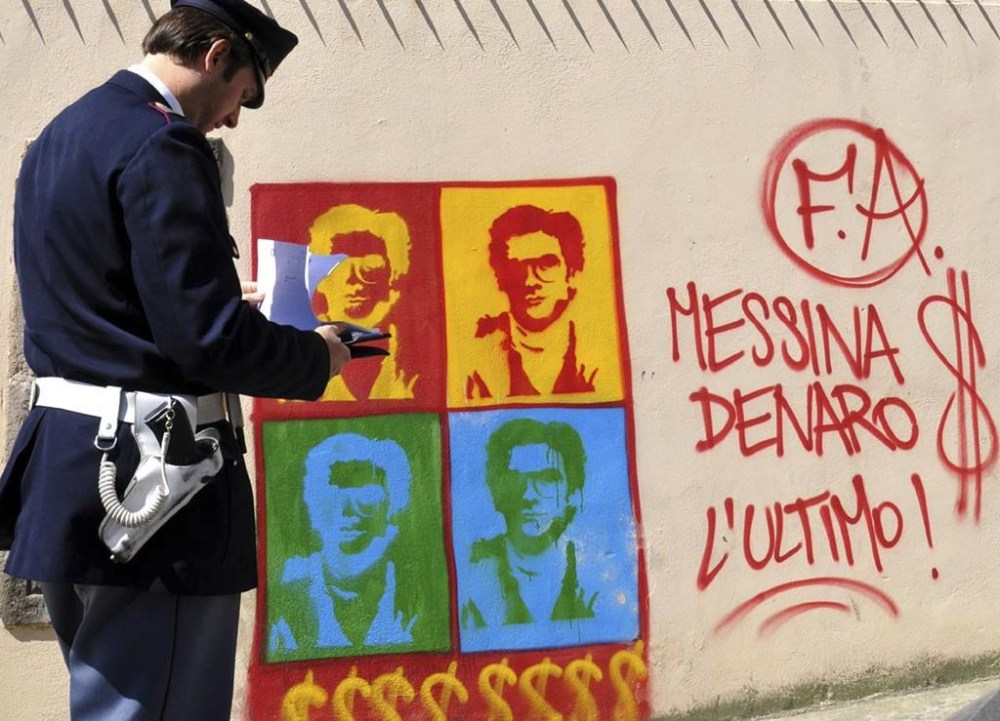
Dozens of lower-level Mafia bosses and foot soldiers did turn state’s evidence following a crackdown on the Sicilian syndicate sparked by the assassinations of Falcone and Borsellino, bombings that also killed Falcone’s wife and several police bodyguards. Among Messina Denaro’s multiple murder convictions was one for the slaying of the young son of a turncoat. The boy was abducted and strangled and his body was dissolved in a vat of acid.
Messina Denaro was also among several Cosa Nostra top bosses who were convicted of ordering a series of bombings in 1993 that targeted two churches in Rome, the Uffizi Galleries in Florence and an art gallery in Milan. A total of 10 people were killed in the Florence and Milan bombings.
The attacks in those three tourist cities, according to turncoats, were aimed at pressuring the Italian government into easing rigid prison conditions for convicted mobsters.
When Messina Denaro was arrested, Palermo’s chief prosecutor, Maurizio De Lucia, declared: “We have captured the last of the massacre masterminds.”
___
D’Emilio reported from Rome.