

Swiss court acquits former Belarusian security operative in case of enforced disappearances
Advertisement
Read this article for free:
or
Already have an account? Log in here »
To continue reading, please subscribe:

Digital Subscription
One year of digital access for only $205*
- Enjoy unlimited reading on winnipegfreepress.com
- Read the E-Edition, our digital replica newspaper
- Access News Break, our award-winning app
- Play interactive puzzles
*First annual payment billed as $205.00 + GST for one year. This annual subscription will automatically renew at $233.00 + GST every 52 weeks (10% off the regular annual price of $259.35). Offer available to new and qualified returning subscribers only. Cancel any time.
To continue reading, please subscribe:
Add Free Press access to your Brandon Sun subscription for only an additional
$1 for the first 4 weeks*
- Enjoy unlimited reading on winnipegfreepress.com
- Read the E-Edition, our digital replica newspaper
- Access News Break, our award-winning app
- Play interactive puzzles
*Your next Brandon Sun subscription payment will increase by $1.00 and you will be charged $17.95 plus GST for four weeks. After four weeks, your payment will increase to $24.95 plus GST every four weeks.
Read unlimited articles for free today:
or
Already have an account? Log in here »
Hey there, time traveller!
This article was published 28/09/2023 (1093 days ago), so information in it may no longer be current.
GENEVA (AP) — A court in northern Switzerland on Thursday acquitted a former security Belarusian operative over the enforced disappearances of three of President Aleksander Lukashenko’s political opponents in the late 1990s, said an advocacy group that spearheaded the case.
Judges in the northern town of Rorschach said they were not convinced that the defendant, Yuri Harauski, a former member of a Belarusian military unit known as SOBR, was involved in the disappearances.
According to the Geneva-based advocacy group TRIAL International, the court ruled that Harauski’s participation in the crimes could not be established beyond reasonable doubt.
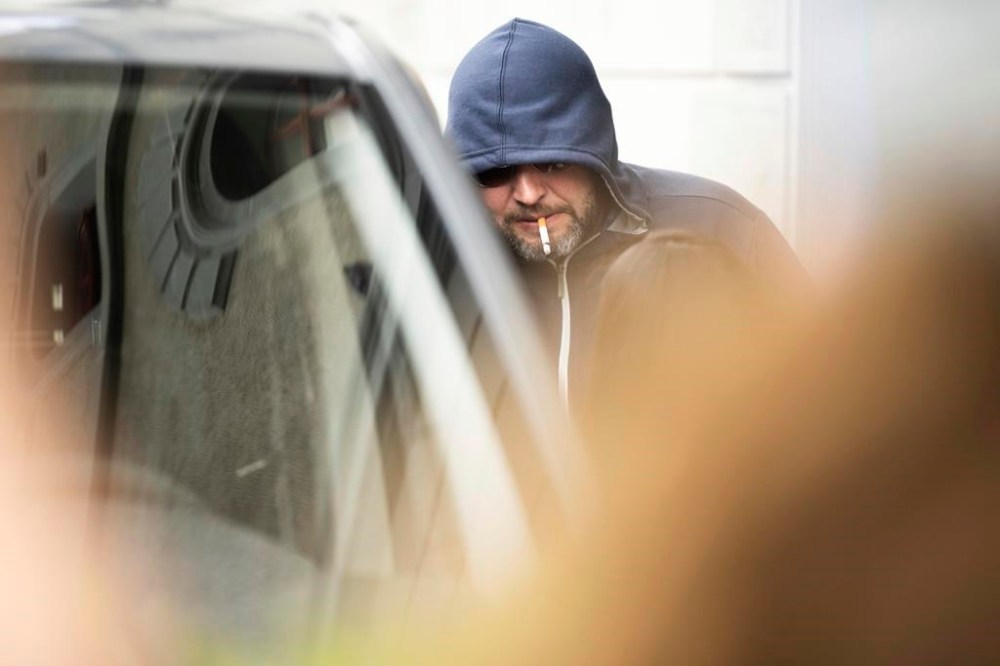
“The families of the victims remain in a state of uncertainty about the exact circumstances of their loved ones’ disappearances,” said the group.
TRIAL International, the International Federation of Human Rights and Viasna — a Belarusian rights group whose founder Ales Bialiatski was a co-winner of the 2022 Nobel Peace Prize — jointly spearheaded the case.
The three organizations “regret today’s verdict and will continue to support the victims in their quest for justice, including during the appeal process,” TRIAL International said. The trial took place over two days last week.
Activists have said the trial marked a pivotal moment in international justice that could trigger prosecutions abroad of other Belarusian officials — including Lukashenko.
The court case was brought under a rarely applied legal principle known as universal jurisdiction, under which foreign courts can prosecute severe crimes that happened in other countries.
Harauski was tried over the enforced disappearances of Yuri Zakharenko, a former interior minister who was fired by Lukashenko in 1996; opposition leader Viktor Gonchar; and publisher Anatoly Krasovsky, the advocacy groups said.
The cantonal government said in a rare statement about the much-publicized case that Harauski had offered “contradictory testimony” during the trial and that it was ultimately “unclear whether and to what extent he was actually involved in the actions brought to trial.”
Harauski lives in Switzerland, where he applied for asylum in 2018. He has made high-profile confessions about his involvement in the kidnapping and murder of Lukashenko’s political opponents in 1999. The motives behind the confessions were not entirely clear.
An extract of the court filing, obtained by The Associated Press, indicated that prosecutors had planned to seek a three-year prison sentence — of which two would be suspended — against Harauski for his alleged role in the disappearances.
Lukashenko’s regime has come under criticism for years, most recently over a crackdown against opposition leaders that began in August 2020 and also over support for Russia’s military invasion of Ukraine last year.