

Why this week’s mass exodus from embattled Nagorno-Karabakh reflects decades of animosity
Advertisement
Read this article for free:
or
Already have an account? Log in here »
To continue reading, please subscribe:

Digital Subscription
One year of digital access for only $205*
- Enjoy unlimited reading on winnipegfreepress.com
- Read the E-Edition, our digital replica newspaper
- Access News Break, our award-winning app
- Play interactive puzzles
*First annual payment billed as $205.00 + GST for one year. This annual subscription will automatically renew at $233.00 + GST every 52 weeks (10% off the regular annual price of $259.35). Offer available to new and qualified returning subscribers only. Cancel any time.
To continue reading, please subscribe:
Add Free Press access to your Brandon Sun subscription for only an additional
$1 for the first 4 weeks*
- Enjoy unlimited reading on winnipegfreepress.com
- Read the E-Edition, our digital replica newspaper
- Access News Break, our award-winning app
- Play interactive puzzles
*Your next Brandon Sun subscription payment will increase by $1.00 and you will be charged $17.95 plus GST for four weeks. After four weeks, your payment will increase to $24.95 plus GST every four weeks.
Read unlimited articles for free today:
or
Already have an account? Log in here »
Hey there, time traveller!
This article was published 28/09/2023 (1107 days ago), so information in it may no longer be current.
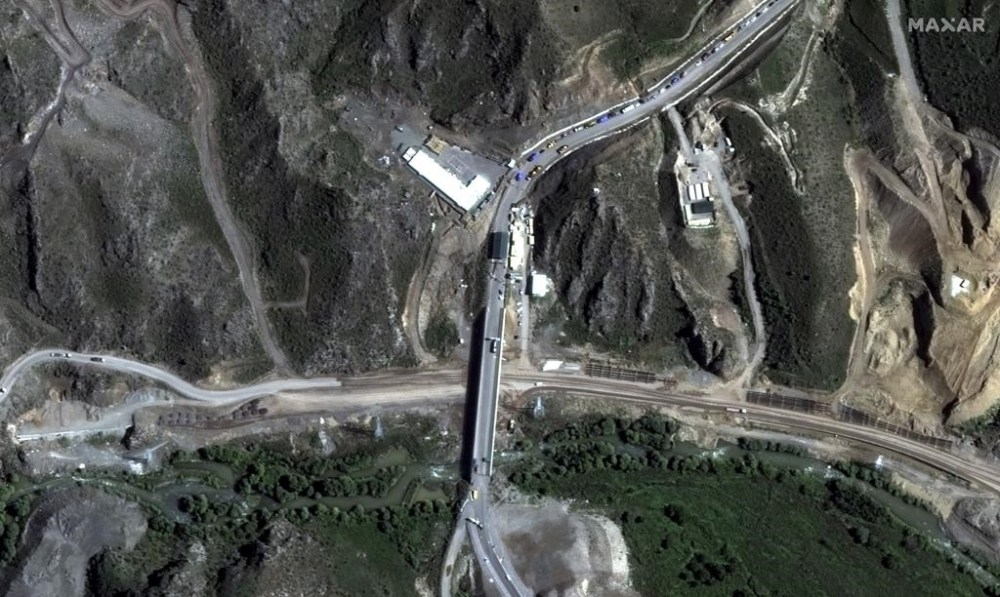
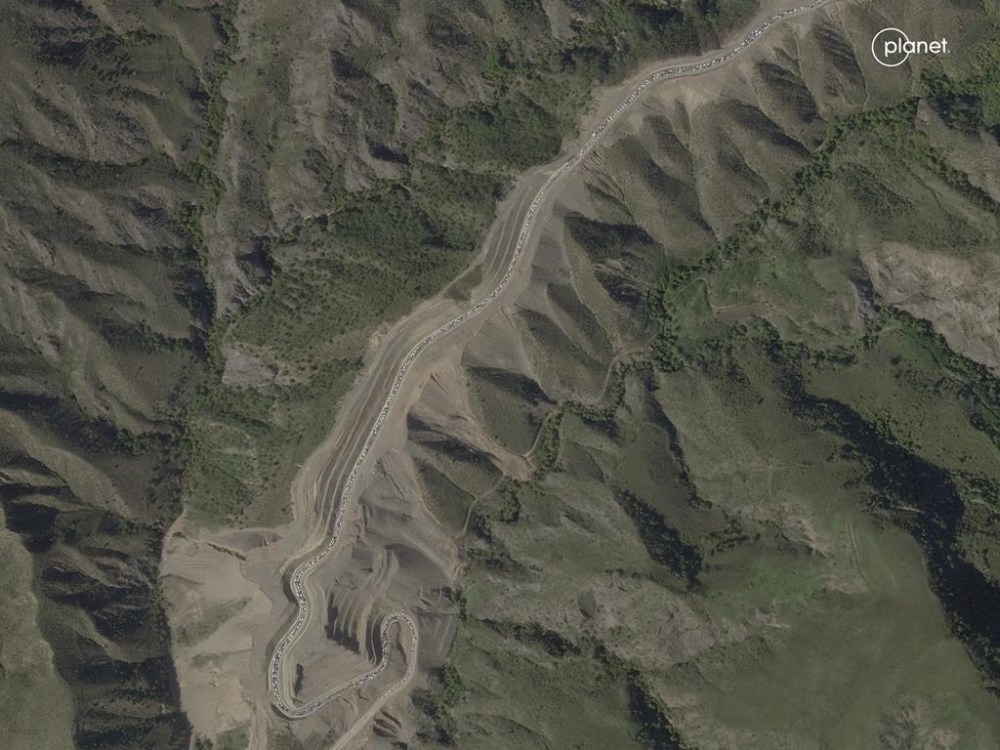
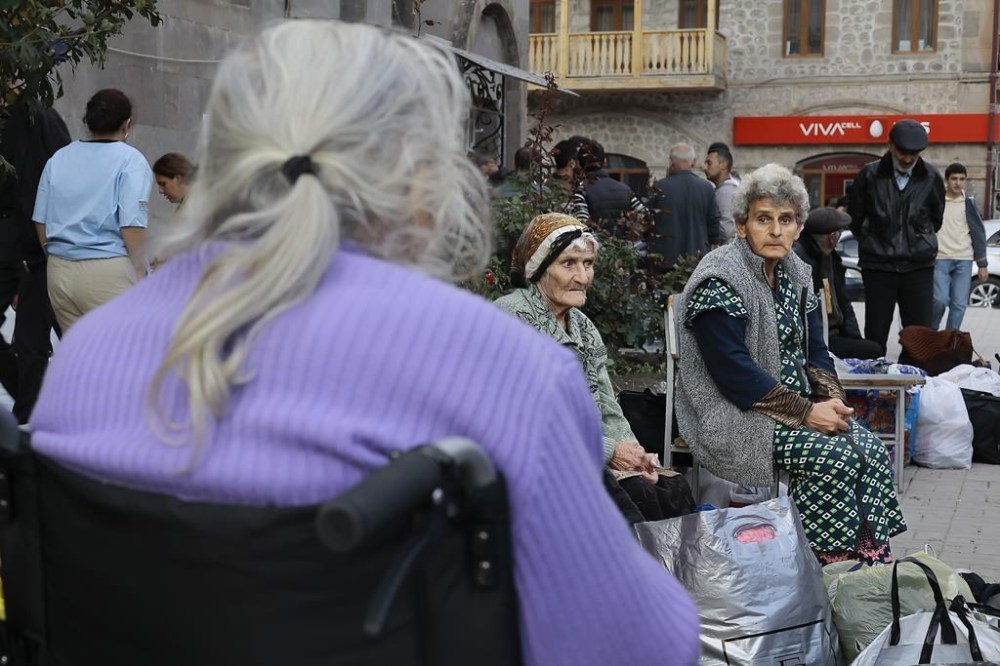
TALLINN, Estonia (AP) — The exodus of ethnic Armenians this week from the region known as Nagorno-Karabakh has been a vivid and shocking tableau of fear and misery. Roads are jammed with cars lumbering with heavy loads, waiting for hours in traffic jams. People sit amid mounds of hastily packed luggage.
As of Thursday, more than 78,300 people had left the breakaway region for Armenia. That’s a huge number — more than half of the population of the region that is located entirely within Azerbaijan.
Still, it’s not the largest displacement of civilians in three decades of conflict between Armenia and Azerbaijan following the 1991 collapse of the Soviet Union.
After ethnic Armenian forces secured control of Nagorno-Karabakh and surrounding territories in 1994, refugee organizations estimated that some 900,000 people had fled to Azerbaijan and 300,000 to Armenia.
When war broke out again in 2020 and Azerbaijan seized more territory, the United Nations High Commissioner for Refugees said 90,000 had gone to Armenia and 40,000 to Azerbaijan.
Those figures underline the fierce animosity between the two countries, and they raise questions about the region’s future.
WHAT IS THE REGION?
Nagorno-Karabakh, with a population of about 120,000, is a mountainous, ethnic Armenian region inside Azerbaijan in the southern Caucasus Mountains.
When both Azerbaijan and Armenia were part of the Soviet Union, the region was designated as an autonomous republic, but as Moscow’s central control of far-flung regions deteriorated, a movement arose in Nagorno-Karabakh for incorporation into Armenia.
Tensions burst into violence in 1988 when more than 30 — some say as many as 200 — ethnic Armenians were killed in a pogrom in the Azerbaijani city of Sumgait. Armenians fled, as did many ethnic Azeris who lived in Armenia. When a full-scale war broke out, the numbers soared. That first war lasted until 1994.
Azerbaijan regained control of parts of Nagorno-Karabakh and large swaths of adjacent territory held by Armenians in a six-week war in 2020, driving out tens of thousands of Armenians that the government in Baku declared to have settled illegally.
WHAT HAPPENED IN RECENT DAYS?
Last week, Azerbaijan launched a blitz that forced the capitulation of Nagorno-Karabakh’s separatist forces and government. On Thursday, the separatist authorities agreed to disband by the end of this year.
The events put the region’s ethnic Armenians on the move out of the territory.
Nagorno-Karabakh and the territory around it have deep cultural and religious significance for Christian Armenians and predominantly Muslim Azeris, and each group denounces the other for alleged efforts to destroy or desecrate monuments and relics.
Armenians were deeply angered by recent video that purportedly showed an Azerbaijani soldier firing at a monastery in the region. Azeris have seethed with resentment at Armenians’ wholesale pillaging of the once-sizable city of Aghdam and the use of its mosque as a cattle barn.
WHY HAVE THE SEPARATISTS QUICKLY GIVEN UP?
A Russian peacekeeping force of about 2,000 was deployed to Nagorno-Karabakh under an armistice that ended the 2020 war. But its inaction in the latest Azerbaijani offensive probably was a key factor in the separatists’ quick decision to give in.
In December, Azerbaijan began blocking the only road leading from Nagorno-Karabakh to Armenia.
Armenians bitterly criticized the peacekeepers for failing to follow their mandate to keep the road open. The blockade caused severe food and medicine shortages in Nagorno-Karabakh. International organizations and governments called repeatedly for Baku to lift the blockade.
Russia, which is fighting a war in Ukraine, seems to be unable or unwilling to take action to keep the road open. That appears to have persuaded the separatists that they would get no support when Azerbaijan launched its blitz.
Nagorno-Karabakh’s forces were small and poorly supplied in comparison with those of Azerbaijan, thanks to the country’s surging oil revenues and support from Turkey.
WHAT WILL THE FUTURE HOLD?
Under last week’s cease-fire, Azerbaijan will “reintegrate” Nagorno-Karabakh, but the terms for that are unclear. Baku repeatedly has promised that the rights of ethnic Armenians will be observed if they stay in the region as Azerbaijani citizens.
That promise appears to have reassured almost no one. Although Armenian Prime Minister Nikol Pashinyan said last week that he saw no immediate need for Armenians to leave, on Thursday he said he expected that none would be left in Nagorno-Karabakh within a few days.
Ethnic Armenians in the region do not trust Azerbaijan to treat them fairly and humanely or grant them their language, religion and culture.
Without an international peacekeeping or police force in the region, ethnic violence would be almost certain to flare.