

New Baltimore police commissioner confirmed by City Council despite recent challenges
Advertisement
Read this article for free:
or
Already have an account? Log in here »
To continue reading, please subscribe:

Digital Subscription
One year of digital access for only $205*
- Enjoy unlimited reading on winnipegfreepress.com
- Read the E-Edition, our digital replica newspaper
- Access News Break, our award-winning app
- Play interactive puzzles
*First annual payment billed as $205.00 + GST for one year. This annual subscription will automatically renew at $233.00 + GST every 52 weeks (10% off the regular annual price of $259.35). Offer available to new and qualified returning subscribers only. Cancel any time.
To continue reading, please subscribe:
Add Free Press access to your Brandon Sun subscription for only an additional
$1 for the first 4 weeks*
- Enjoy unlimited reading on winnipegfreepress.com
- Read the E-Edition, our digital replica newspaper
- Access News Break, our award-winning app
- Play interactive puzzles
*Your next Brandon Sun subscription payment will increase by $1.00 and you will be charged $17.95 plus GST for four weeks. After four weeks, your payment will increase to $24.95 plus GST every four weeks.
Read unlimited articles for free today:
or
Already have an account? Log in here »
Hey there, time traveller!
This article was published 02/10/2023 (1084 days ago), so information in it may no longer be current.
BALTIMORE (AP) — The Baltimore City Council on Monday confirmed Richard Worley as the city’s new police commissioner, a leadership change that comes amid an ongoing push for reform of the embattled agency that began after Freddie Gray’s 2015 death.
Mayor Brandon Scott nominated Worley to replace Michael Harrison, who announced his resignation earlier this summer, several months before his five-year contract was set to expire. Harrison led the New Orleans Police Department through a similar reform process before moving to Baltimore.
While Harrison brought an outsider’s perspective to the job, Worley is a Baltimore native and a longtime department veteran. But critics have questioned whether he is too much of an insider, having served in supervisory positions during problematic periods in the department’s history.
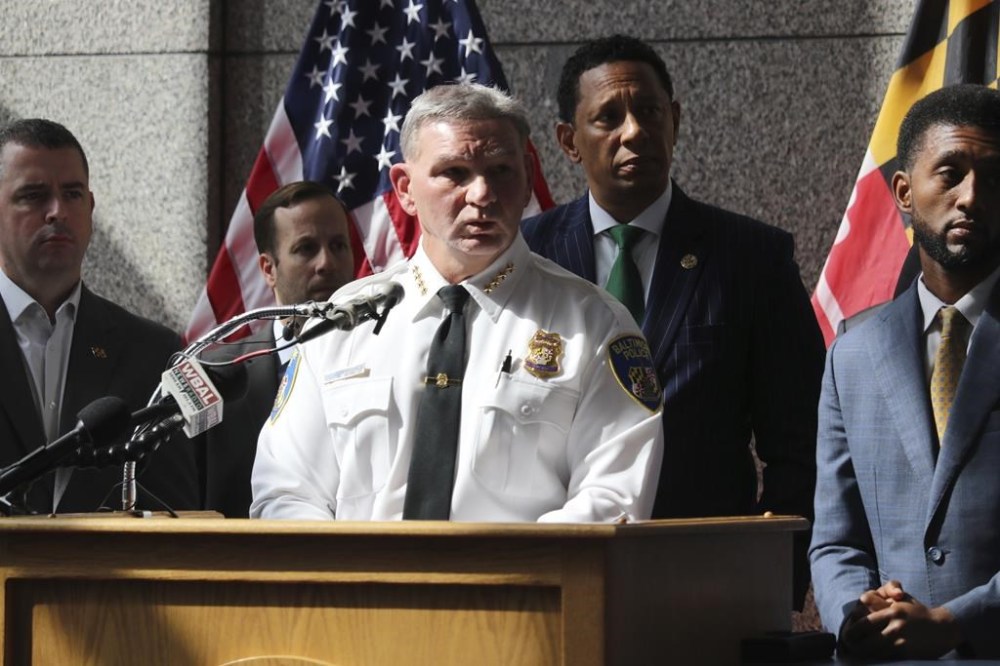
They have also expressed concern over two recent high-profile tragedies that unfolded since Worley took over as acting commissioner when Harrison left — including a block party mass shooting in July and, most recently, the brutal murder last week of a local tech entrepreneur whose alleged killer remained at large despite being firmly on the police’s radar.
Since being nominated, Worley has admitted mistakes and repeatedly cited his passion for community policing, which prioritizes building relationships with residents.
“I’ve dedicated my life to serving the Baltimore City Police Department,” he said during a confirmation hearing last month. “I’ve seen the strategies that have worked to help communities thrive and become safer. But I’ve also seen the policies and mandates that have hurt communities.”
The agency was placed under a federal consent decree in 2017 after Justice Department investigators found a pattern of unconstitutional policing, especially targeting Black residents. The decree, which mandates a series of reforms, remains in effect. And Worley has promised to continue prioritizing that reform process.
Less than a month after Harrison stepped down, Baltimore experienced one of the largest mass shootings in its history when gunfire turned an annual neighborhood block party into a scene of terror and bloodshed. Worley has since faced a litany of questions about how his officers failed to respond to south Baltimore’s Brooklyn Homes public housing development in the hours leading up to the shooting, which claimed two lives and left 28 people injured, mostly teens and young adults.
During the hearing last month, council members once again criticized the department’s lackluster response. Worley acknowledged mistakes by some supervisors and reiterated his commitment to ensuring that all of Baltimore’s neighborhoods receive adequate police services, especially overlooked communities suffering from decades of poverty and disinvestment.
Worley served as deputy commissioner under Harrison, a position he achieved after rising through the department’s ranks over the past 25 years. He pursued a law enforcement career after playing baseball in college and the minor leagues.
After the recent killing of Pava LaPere, a 26-year-old tech CEO whose body was found on the roof of her downtown apartment building, Worley defended the department’s actions in the weeks leading up to her death. Police had been actively searching for her alleged killer, Jason Billingsley, since he was identified as a suspect in a Sept. 19 rape and arson. But they released few details about the crime, which left a woman and man hospitalized with serious burns, and they didn’t alert the community that Billingsley posed a potential public safety risk.
That is because they didn’t believe he was committing “random acts” of violence at the time, Worley told reporters last week, while also admitting that “hindsight’s 20/20.”
The killing marked an exceedingly rare random homicide in a city that has made notable progress in reversing its murder rate over the past several months. So far in 2023, Baltimore homicides are down about 16% compared with this time last year.
While only one council member voted against confirming Worley at a meeting Monday night, several members described their reservations, pledging to hold him accountable moving forward. After the vote, a small group of activists erupted in angry chants. They were escorted out of council chambers screaming.