

North Dakota lawmakers must take ‘painful way’ as they try to fix budget wiped out by court
Advertisement
Read this article for free:
or
Already have an account? Log in here »
To continue reading, please subscribe:

Digital Subscription
One year of digital access for only $205*
- Enjoy unlimited reading on winnipegfreepress.com
- Read the E-Edition, our digital replica newspaper
- Access News Break, our award-winning app
- Play interactive puzzles
*First annual payment billed as $205.00 + GST for one year. This annual subscription will automatically renew at $233.00 + GST every 52 weeks (10% off the regular annual price of $259.35). Offer available to new and qualified returning subscribers only. Cancel any time.
To continue reading, please subscribe:
Add Free Press access to your Brandon Sun subscription for only an additional
$1 for the first 4 weeks*
- Enjoy unlimited reading on winnipegfreepress.com
- Read the E-Edition, our digital replica newspaper
- Access News Break, our award-winning app
- Play interactive puzzles
*Your next Brandon Sun subscription payment will increase by $1.00 and you will be charged $17.95 plus GST for four weeks. After four weeks, your payment will increase to $24.95 plus GST every four weeks.
Read unlimited articles for free today:
or
Already have an account? Log in here »
Hey there, time traveller!
This article was published 13/10/2023 (1097 days ago), so information in it may no longer be current.
BISMARCK, N.D. (AP) — North Dakota lawmakers were already scrambling to fill a giant hole in state government operations left by a surprising state Supreme Court ruling that voided a major budget bill, and their job got even tougher this week when the court issued a new ruling rejecting a request to give officials more time to deal with the budget mess.
Lawmakers might be back at the state Capitol as soon as the week of Oct. 23 for a three- to five-day session, Republican Senate Majority Leader David Hogue told The Associated Press on Friday.
After the court’s Sept. 28 decision put funding for parts of the state government in jeopardy, the justices on Thursday issued a subsequent opinion denying the Republican-controlled Legislature’s requested delay of the court’s decision. The court also rescinded a previous stay that a majority of the justices had apparently granted until Oct. 28.
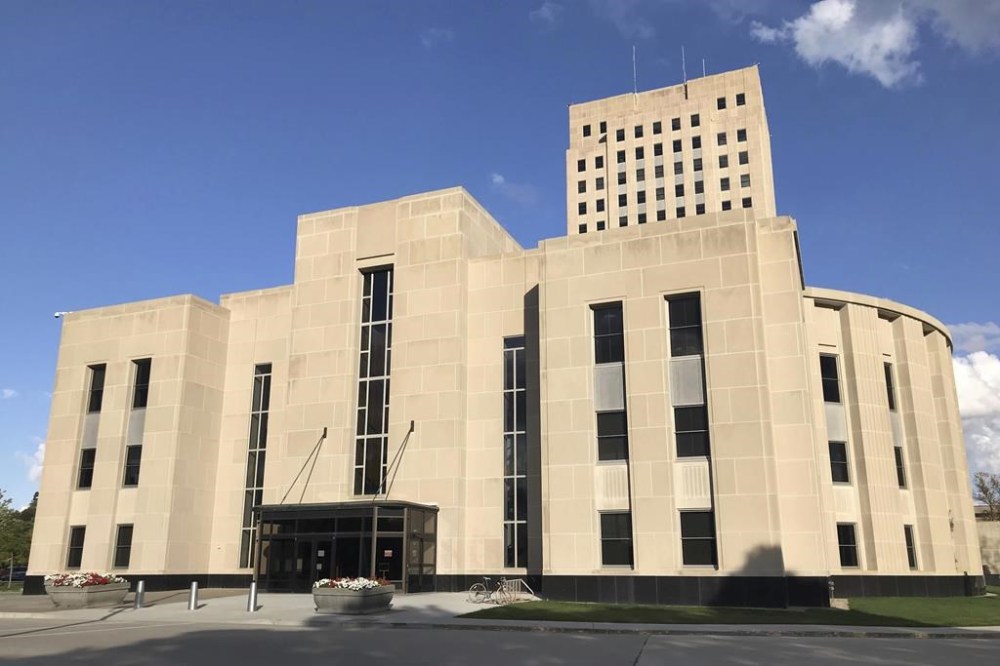
The upcoming session is likely to pull Republican Gov. Doug Burgum, who is running for president, off the campaign trail to focus on the legislation.
The state’s attorney general on Friday decried the court rescinding its stay.
“They reverse themselves from two weeks ago — now it’s going to be done the painful way with a lot of anxiety for state employees and people throughout the government,” North Dakota Attorney General Drew Wrigley told the AP.
Burgum has directed state agencies to mostly refrain from actions requiring budget expenditures from the bill “until a resolution is reached.”
Lawmakers, who usually meet from January through April every two years, are now figuring out scheduling conflicts with crop harvests, scheduled surgeries, weddings and overseas vacations, Hogue said.
Burgum in a statement expressed confidence in the Legislature resolving the situation before Nov. 1 “to avoid any interruptions to state government operations.”
He also told state agency leaders that he and Republican legislative majority leaders don’t expect interruptions to state employees’ pay or operations or impacts to previously approved pay raises.
The Supreme Court invalidated the funding bill for the state Office of Management and Budget, which is usually the last one passed in the biennial session, and often used as a catchall or cleanup bill.
The court ruled the bill was “unconstitutionally enacted and is void” because it goes against a provision limiting bills to just one subject.
The Legislature afterward asked the court to clarify the date that the decision is effective, and for a delay on the ruling’s effective date until Dec. 18, for time for the Legislature to meet.
The Legislature could reconvene using the five days remaining from its constitutional limit of 80 days every two years to meet in session. Otherwise, Burgum could call a special session.
No decision has been made as to a reconvened or special session, Hogue said.
Funding in the voided bill totaled about $322 million for the state’s 2023-25 budget cycle, according to Legislative Budget Analyst and Auditor Allen Knudson.
Many transfers in the bill have already been made or committed, said Republican state Treasurer Thomas Beadle, whose office is documenting where all the money has gone if funds have to be reconciled or “clawed back.”
Not everything in the final bill passed. Burgum in May vetoed some items, including major policy changes for the state’s $9 billion oil tax savings.
The Legislature may be able to include all of the voided bill’s provisions into 14 bills, Legislative Council Director John Bjornson said Friday. A top legislative panel is set to meet Tuesday to discuss session plans.
The court ruled on the bill because of a lawsuit brought by the board that oversees the state’s government retirement plans. The board argued it’s unconstitutional for state lawmakers to sit on the board, and targeted a section of the bill that increased legislative membership from two to four.
An all-Republican House-Senate panel negotiated the final version of the bill, which passed before 3 a.m. on a weekend, ending the session after four months.