

Theodore Roosevelt National Park to reduce bison herd from 700 to 400 animals
Advertisement
Read this article for free:
or
Already have an account? Log in here »
To continue reading, please subscribe:

Digital Subscription
One year of digital access for only $205*
- Enjoy unlimited reading on winnipegfreepress.com
- Read the E-Edition, our digital replica newspaper
- Access News Break, our award-winning app
- Play interactive puzzles
*First annual payment billed as $205.00 + GST for one year. This annual subscription will automatically renew at $233.00 + GST every 52 weeks (10% off the regular annual price of $259.35). Offer available to new and qualified returning subscribers only. Cancel any time.
To continue reading, please subscribe:
Add Free Press access to your Brandon Sun subscription for only an additional
$1 for the first 4 weeks*
- Enjoy unlimited reading on winnipegfreepress.com
- Read the E-Edition, our digital replica newspaper
- Access News Break, our award-winning app
- Play interactive puzzles
*Your next Brandon Sun subscription payment will increase by $1.00 and you will be charged $17.95 plus GST for four weeks. After four weeks, your payment will increase to $24.95 plus GST every four weeks.
Read unlimited articles for free today:
or
Already have an account? Log in here »
Hey there, time traveller!
This article was published 13/10/2023 (1072 days ago), so information in it may no longer be current.
National park officials are planning to gather and reduce the bison herd in Theodore Roosevelt National Park in North Dakota, rehoming the animals to a number of Native American tribes.
The “bison capture” is scheduled to start on Saturday and continue through the week in the park’s South Unit near Medora. The operation will be closed to the public for safety reasons.
The park plans to reduce its roughly 700 bison to 400. The park will remove bison of differing ages.
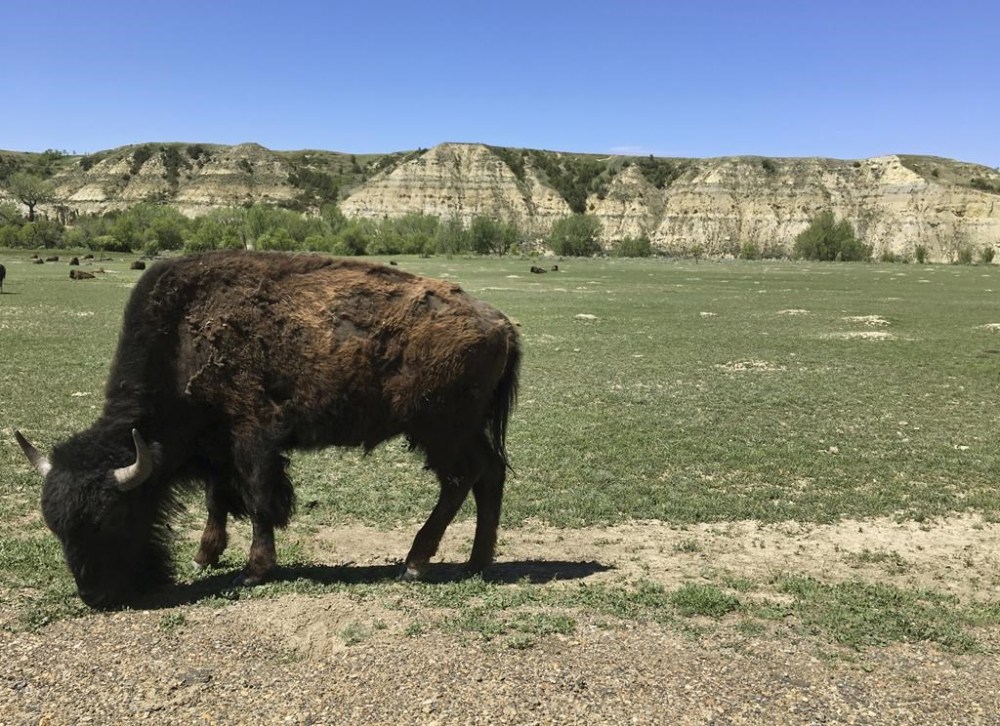
Bison removed from the park will be rehomed and come under tribal management, InterTribal Buffalo Council Executive Director Troy Heinert told The Associated Press.
The bison will provide genetic diversity and increase numbers of existing tribal herds, he said. The Mandan, Hidatsa and Arikara Nation and the Standing Rock Sioux Tribe will receive bison; more bison could go to other tribes, depending on demographics, said Heinert, who is Sicangu Lakota.
A helicopter will herd bison into a holding area, with a survey of the landscape and a population count before the gathering of the bison.
The park alternates captures every year between its North Unit and South Unit, to maintain the numbers of the herd due to limited space and grazing and for herd health reasons, Deputy Superintendent Maureen McGee-Ballinger told the AP.