

Azerbaijanis who fled a separatist region decades ago ache to return, but it could be a long wait
Advertisement
Read this article for free:
or
Already have an account? Log in here »
To continue reading, please subscribe:

Digital Subscription
One year of digital access for only $205*
- Enjoy unlimited reading on winnipegfreepress.com
- Read the E-Edition, our digital replica newspaper
- Access News Break, our award-winning app
- Play interactive puzzles
*First annual payment billed as $205.00 + GST for one year. This annual subscription will automatically renew at $233.00 + GST every 52 weeks (10% off the regular annual price of $259.35). Offer available to new and qualified returning subscribers only. Cancel any time.
To continue reading, please subscribe:
Add Free Press access to your Brandon Sun subscription for only an additional
$1 for the first 4 weeks*
- Enjoy unlimited reading on winnipegfreepress.com
- Read the E-Edition, our digital replica newspaper
- Access News Break, our award-winning app
- Play interactive puzzles
*Your next Brandon Sun subscription payment will increase by $1.00 and you will be charged $17.95 plus GST for four weeks. After four weeks, your payment will increase to $24.95 plus GST every four weeks.
Read unlimited articles for free today:
or
Already have an account? Log in here »
Hey there, time traveller!
This article was published 14/10/2023 (1072 days ago), so information in it may no longer be current.
BAKU, Azerbaijan (AP) — As a young man starting out as a dentist, Nazim Valiyev was forced to flee his home as ethnic violence roiled a separatist region inside Azerbaijan. More than three decades later, with his medical career over after a stroke, the 60-year-old hopes he can return there, now that it is back under Azerbaijani control.
It could still be years, however, before he realizes his dream.
Valiyev is among the estimated 700,000 Azerbaijanis who fled or were forced out of the region they call Karabakh amid violence that flared beginning in 1988 and then grew into an outright war.
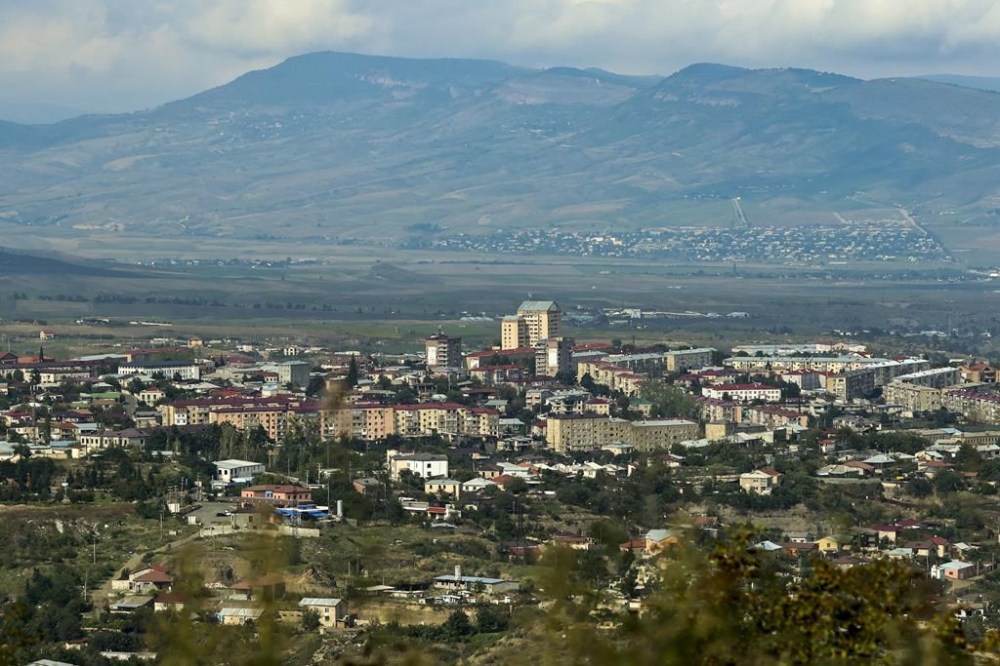
That conflict ended in 1994, with the territory under the control of ethnic Armenian forces supported by their neighboring country. A subsequent war in 2020 returned control of much of the area to Azerbaijan, and a lightning offensive last month forced the Armenian separatists to relinquish the rest of the region known elsewhere as Nagorno-Karabakh.
On Sunday, Azerbaijan’s President Ilham Aliyev raised his nation’s flag over the region’s capital, reaffirming control over it.
Within days of the capitulation, ethnic Armenians streamed out of the region, leaving it nearly empty. A United Nations mission that visited in early October said there may be no more than 1,000 people left in the region whose population was an estimated 120,000 a month ago.
The blinding speed of events raised spirits among those who had fled so long ago and longed to return to its mountains and thick forests.
“I often saw in my dreams how my neighbors and I, as before, were walking in the forest and picking flowers,” Bahar Aliguleyeva said of her childhood memories in the Karabakh capital city of Khankendi, which was called Stepanakert by Armenians.
When she heard that Azerbaijan had regained control of the city she left in 1988 at age 16, “I somehow didn’t even believe it. It’s as if I found myself somewhere between the past and reality, but there is a path to happiness,” she told The Associated Press in Baku, the Azerbaijan capital.
Valiyev, the former dentist, said he thinks about returning every day, “but I understand that this will not be a quick process.”
In 2022, Azerbaijan President Ilham Aliyev established a program called “The Great Return to Azerbaijan’s Liberated Territories” to bring back long-displaced people. It envisions improvements in infrastructure, construction of residences, and laborious, slow-moving efforts to clear the region of mines.
Azerbaijan’s budget for this year allocates about $3.1 billion for reconstruction projects in the region.
So far, only about 2,000 people have returned, but the government aims for 10,000 by the end of the year, according to Fuad Huseynov of the State Committee for Affairs of Refugees and Internally Displaced Persons.
He told AP that the government plans to return 150,000 people by 2027.
“Mines are a huge obstacle, a huge problem. The territories that were under Armenian occupation for 30 years were not only virtually completely razed to the ground, but also mined with mines and other unexploded military ammunition,” he said.
Since the 2020 war, at least 65 people have been killed by mines and another 267 injured in the territories once held by Armenians, according to Azerbaijan’s Mine Action Agency.
If Aliguleyeva and Valiyev and other displaced residents are ever able to return, what they may find could be wrenching. Aliguleyeva is uncertain whether her childhood home is still intact.
Although she was able to contact a former neighbor through social media, “when I asked her to send a photo of the house, she only sent a photo of the courtyard wall.”
Valiyev said his family residence was burned down in 1988, although the separate building where he kept his dental equipment survived. He is eager to go back nonetheless.
“My 5-year-old granddaughter loves it when I tell her about my childhood in Karabakh, and she says that she also wants to grow up there. The past must never be repeated,” he said. “We and the Armenians must start a new life, no matter how difficult it may be. Enmity cannot continue forever, it must remain in the past.”
Overcoming that enmity likely is a more difficult process than rebuilding war-ruined buildings. Although both Valiyev and Aliguliyeva spoke warmly of getting along with their Armenian neighbors when they lived in Khankendi, they also told of the terror they felt when ethnic violence drove them away.
Azerbaijan has repeatedly promised that the rights of ethnic Armenians who want to stay in the region will be respected.
But “such assertions are difficult to accept at face value after the months of severe hardships, decades of conflict, impunity for alleged crimes, in particular during hostilities, and the Azerbaijani government’s overall deteriorating human rights record,” the Human Rights Watch organization said.
___
Associated Press writer Jim Heintz in Tallinn, Estonia, contributed.