

Medical expert testifies restraint actions of Tacoma police killed Washington man
Advertisement
Read this article for free:
or
Already have an account? Log in here »
To continue reading, please subscribe:

Digital Subscription
One year of digital access for only $205*
- Enjoy unlimited reading on winnipegfreepress.com
- Read the E-Edition, our digital replica newspaper
- Access News Break, our award-winning app
- Play interactive puzzles
*First annual payment billed as $205.00 + GST for one year. This annual subscription will automatically renew at $233.00 + GST every 52 weeks (10% off the regular annual price of $259.35). Offer available to new and qualified returning subscribers only. Cancel any time.
To continue reading, please subscribe:
Add Free Press access to your Brandon Sun subscription for only an additional
$1 for the first 4 weeks*
- Enjoy unlimited reading on winnipegfreepress.com
- Read the E-Edition, our digital replica newspaper
- Access News Break, our award-winning app
- Play interactive puzzles
*Your next Brandon Sun subscription payment will increase by $1.00 and you will be charged $17.95 plus GST for four weeks. After four weeks, your payment will increase to $24.95 plus GST every four weeks.
Read unlimited articles for free today:
or
Already have an account? Log in here »
Hey there, time traveller!
This article was published 16/10/2023 (1083 days ago), so information in it may no longer be current.
TACOMA, Wash. (AP) — An expert in forensic pathology testified Monday in the ongoing trial of three Tacoma, Washington, police officers charged with the death of Manuel Ellis that Ellis likely would have lived if not for the officers’ actions to restrain him.
Dr. Roger Mitchell, former chief medical examiner for Washington, D.C., made the statement Monday and last week affirmed ex-Pierce County Medical Examiner Dr. Thomas Clark’s ruling that Ellis died by homicide from oxygen deprivation caused by physical restraint, The Seattle Times reported.
Officers Matthew Collins and Christopher Burbank, both white, are charged with murder and manslaughter in the death of Ellis, a 33-year-old Black man, on March 3, 2020. Officer Timothy Rankine, who is Asian American, is charged with manslaughter.
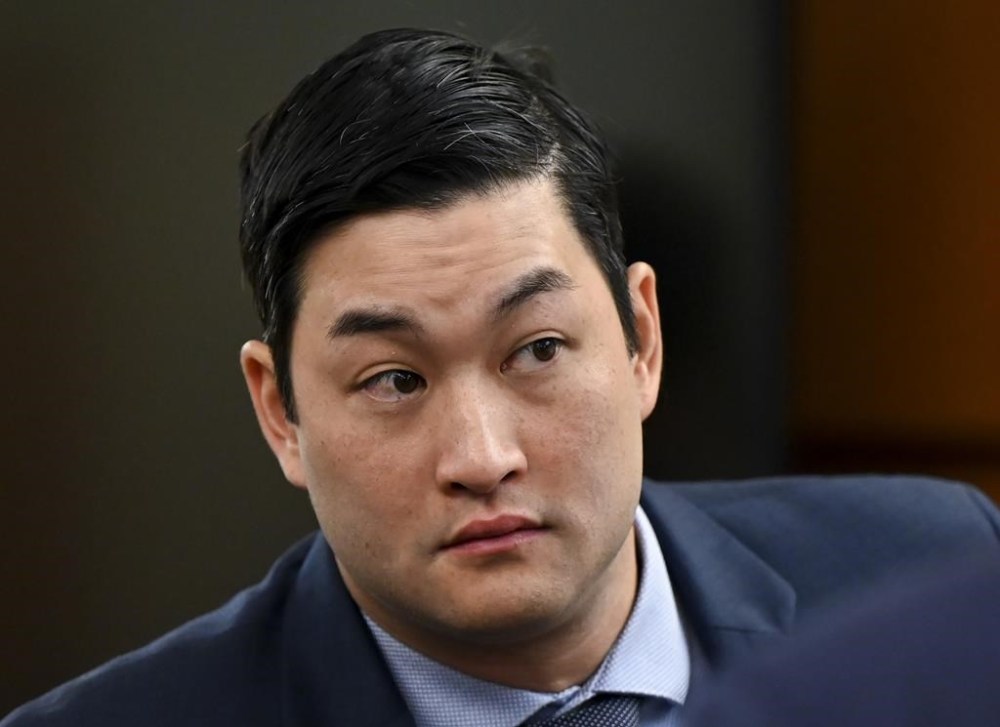
Collins and Burbank were the first officers to engage with Ellis and have said they did so because Ellis, on foot, was hassling people in a car as it passed through an intersection.
All have pleaded not guilty and remain employed by the Tacoma Police Department on paid leave.
Mitchell was questioned by special prosecutor Patty Eakes about medical findings that led him to his conclusion. Key among them, he said, was the presence of acidosis, a condition indicative of insufficient oxygen.
People experiencing low oxygen instinctively seek to breathe, and heavy breathing is the body’s natural cure for acidosis, Mitchell said. Ellis, pressed against the ground by police as he lay on his stomach, couldn’t find a position that allowed him to breathe, Mitchell testified.
Prosecutors previously said Ellis’ last words were “I can’t breathe.”
Defense attorneys have generally argued Ellis died of a methamphetamine overdose.
Collins’ lawyer, Jared Ausserer, later questioned Mitchell about describing himself on social media as “an advocate.” Mitchell, who is Black, said he is an advocate for finding public health solutions to problems that have disproportionately affected Black Americans.
Rankine’s lawyer, Mark Conrad, asked Mitchell whether he drew his conclusions from “circumstantial evidence.”
Mitchell said his conclusion — that restraint caused Ellis to be denied sufficient oxygen — was based on a number of factors: Ellis being placed in a prone position, his handcuffed hands hogtied to his feet, with a spit hood on his head; the presence of food and blood in his airways; and documentation at the scene that Ellis’ heart rate and breathing gradually deteriorated.
Last week two eyewitnesses characterized the officers as the aggressors in the altercation. Lawyers for the officers have said it was Ellis who acted aggressively, prompting them to respond.
Testimony is scheduled to resume Tuesday when the prosecution is expected to call a forensic audio expert to testify.
This is the first trial under a Washington state law that makes it easier to prosecute police who wrongfully use deadly force.
The trial, which started Oct. 3, is expected to run four days per week until December.