

Some 5,000 migrants set out on foot from Mexico’s southern border, tired of long waits for visas
Advertisement
Read this article for free:
or
Already have an account? Log in here »
To continue reading, please subscribe:

Digital Subscription
One year of digital access for only $205*
- Enjoy unlimited reading on winnipegfreepress.com
- Read the E-Edition, our digital replica newspaper
- Access News Break, our award-winning app
- Play interactive puzzles
*First annual payment billed as $205.00 + GST for one year. This annual subscription will automatically renew at $233.00 + GST every 52 weeks (10% off the regular annual price of $259.35). Offer available to new and qualified returning subscribers only. Cancel any time.
To continue reading, please subscribe:
Add Free Press access to your Brandon Sun subscription for only an additional
$1 for the first 4 weeks*
- Enjoy unlimited reading on winnipegfreepress.com
- Read the E-Edition, our digital replica newspaper
- Access News Break, our award-winning app
- Play interactive puzzles
*Your next Brandon Sun subscription payment will increase by $1.00 and you will be charged $17.95 plus GST for four weeks. After four weeks, your payment will increase to $24.95 plus GST every four weeks.
Read unlimited articles for free today:
or
Already have an account? Log in here »
Hey there, time traveller!
This article was published 30/10/2023 (1066 days ago), so information in it may no longer be current.
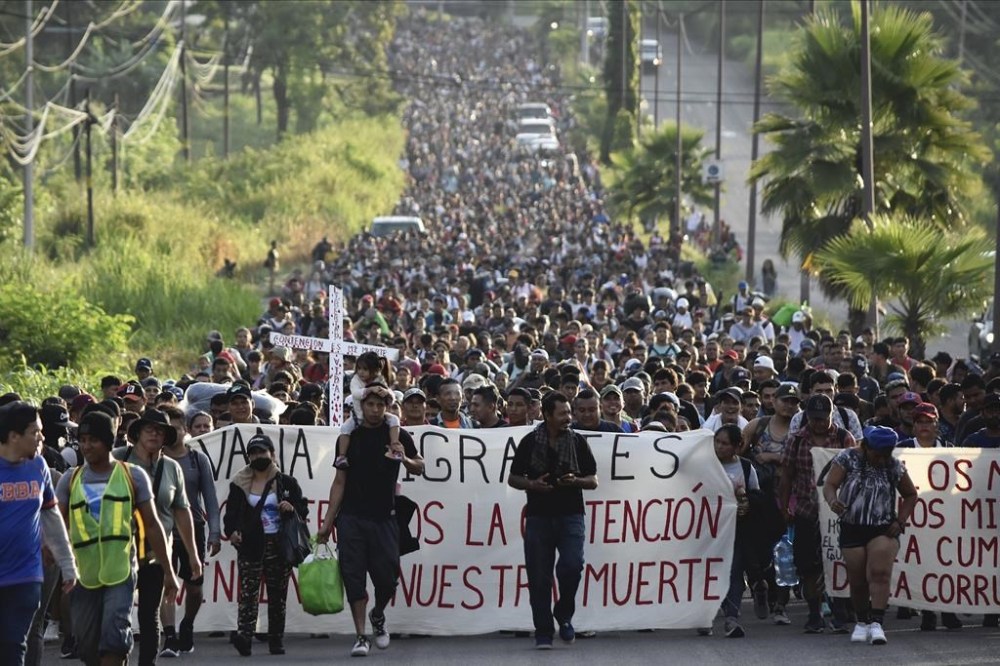
TAPACHULA, Mexico (AP) — About 5,000 migrants from Central America, Venezuela, Cuba and Haiti set out on foot from Mexico’s southern border Monday, walking north toward the U.S.
The migrants complained that processing for refugee or exit visas takes too long at Mexico’s main migrant processing center in the city of Tapachula, near the Guatemalan border. Under Mexico’s overwhelmed migration system, people seeking such visas often wait for weeks or months, without being able to work.
The migrants formed a long line Monday along the highway, escorted at times by police. The police are usually there to prevent them from blocking the entire highway, and sometimes keep them from hitching rides.
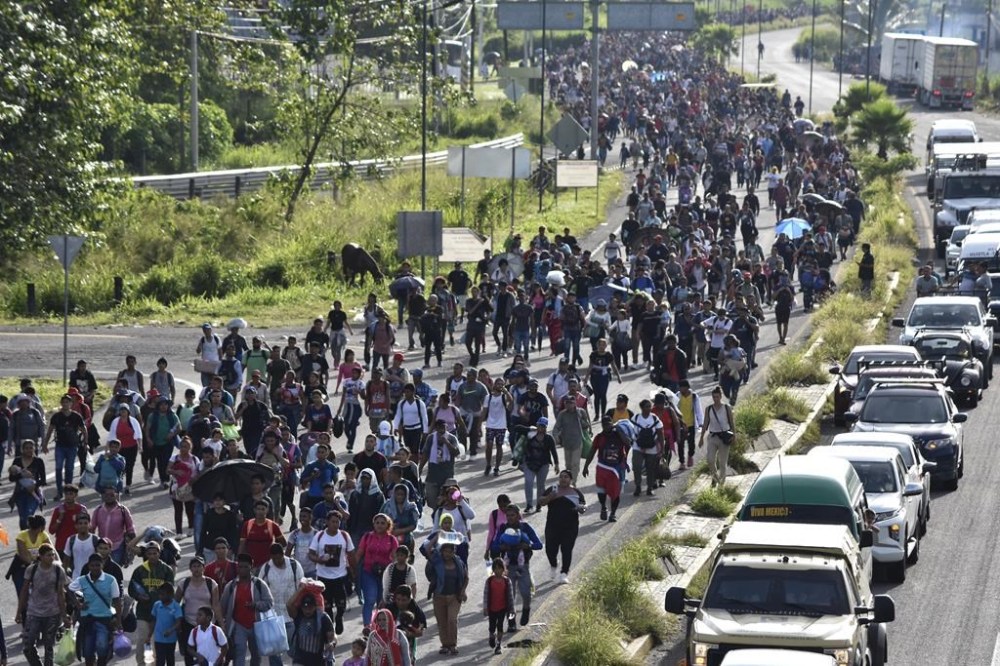
Monday’s march was among the largest since June 2022. Migrant caravans in 2018 and 2019 drew far greater attention. But with as many as 10,000 migrants showing up at the U.S. border in recent weeks, Monday’s march is now just a drop in the bucket.
“We have been travelling for about three months, and we’re going to keep on going,” said Daniel González, from Venezuel. “In Tapachula, nobody helps us.”
Returning to Venezuela is not an option, he said, because the economic situation there is getting worse.
In the past, he said, Mexico’s tactic was largely to wait for the marchers to get tired, and then offer them rides back to their home countries or to smaller, alternative processing centers.
Irineo Mújica, one of the organizers of the march, said migrants are often forced to live on the streets in squalid conditions in Tapachula. He is demanding transit visas that would allow the migrants to cross Mexico and reach the U.S. border.

“We are trying to save lives with this kind of actions,” Mújica said. “They (authorities) have ignored the problem, and left the migrants stranded.”
The situation of Honduran migrant Leonel Olveras, 45, was typical of the marchers’ plight.
“They don’t give out papers here,” Olveras said of Tapachula. “They ask us to wait for months. It’s too long.”
The southwestern border of the U.S. has struggled to cope with increasing numbers of migrants from South America who move quickly through the Darien Gap between Colombia and Panama before heading north. By September, 420,000 migrants, aided by Colombian smugglers, had passed through the gap in the year to date, Panamanian figures showed.
——— Follow AP’s coverage of global migration at https://apnews.com/hub/migration