

Colombia will try to control invasive hippo population through sterilization, transfer, euthanasia
Advertisement
Read this article for free:
or
Already have an account? Log in here »
To continue reading, please subscribe:
Digital Subscription
One year of digital access for only $1.44 a week*
- Enjoy unlimited reading on winnipegfreepress.com
- Read the E-Edition, our digital replica newspaper
- Access News Break, our award-winning app
- Play interactive puzzles
*Billed as $5.77 plus GST every four weeks. After 52 weeks, price increases to the regular rate of $19.95 plus GST every four weeks. Offer available to new and qualified returning subscribers only. Cancel any time.
To continue reading, please subscribe:
Add Free Press access to your Brandon Sun subscription for only an additional
$1 for the first 4 weeks*
- Enjoy unlimited reading on winnipegfreepress.com
- Read the E-Edition, our digital replica newspaper
- Access News Break, our award-winning app
- Play interactive puzzles
*Your next Brandon Sun subscription payment will increase by $1.00 and you will be charged $17.95 plus GST for four weeks. After four weeks, your payment will increase to $24.95 plus GST every four weeks.
Read unlimited articles for free today:
or
Already have an account? Log in here »
Hey there, time traveller!
This article was published 02/11/2023 (973 days ago), so information in it may no longer be current.
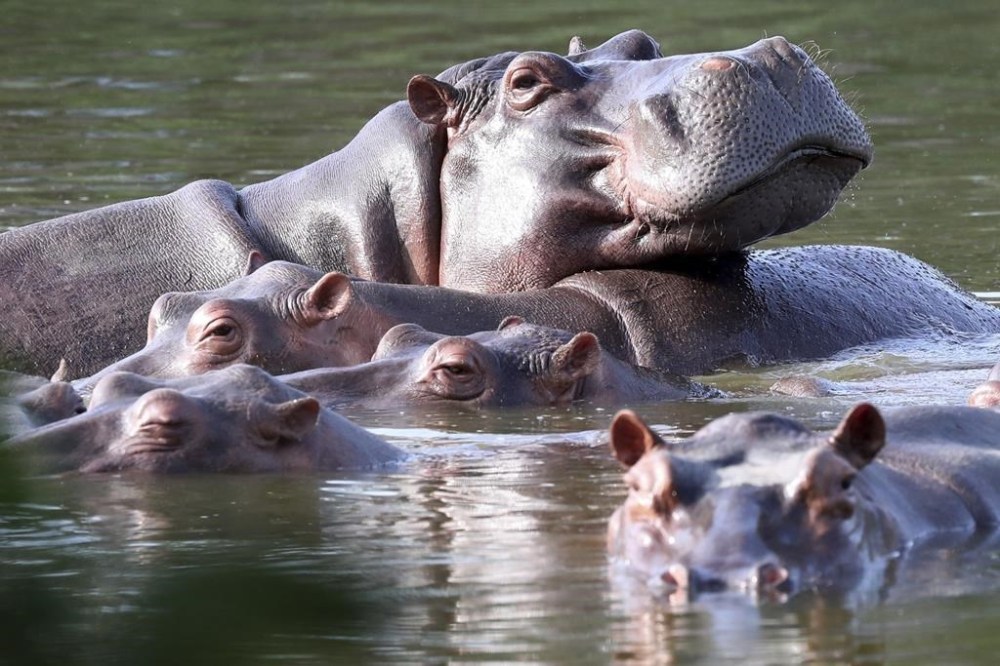
BOGOTA, Colombia (AP) — Colombia will try to control its population of more than 100 hippopotamuses, descendants of animals illegally brought to the country by late drug kingpin Pablo Escobar in the 1980s, through surgical sterilization, the transfer of hippos to other countries and possibly euthanasia, the government said Thursday.
The hippos, which spread from Escobar’s estate into nearby rivers where they flourished, have no natural predators in Colombia and have been declared an invasive species that could upset the ecosystem.
Authorities estimate there are 169 hippos in Colombia, especially in the Magdalena River basin, and that if no measures are taken, there could be 1,000 by 2035.
Environment Minister Susana Muhamad said the first stage of the plan will be the surgical sterilization of 40 hippos per year and this will begin next week.
The procedure is expensive — each sterilization costs about $9,800 — and entails risks for the hippopotamus, including allergic reactions to anesthesia or death, as well as risks to the animal health personnel, according to the ministry. The hippos are dispersed over a large area, and are territorial and often aggressive.
Experts say sterilization alone is not enough to control the growth of the invasive species, which is why the government is arranging for the possible transfer of hippos to other countries, a plan that was announced in March.
Muhamad said Colombian officials have contacted authorities in Mexico, India and the Philippines, and are evaluating sending 60 hippos to India.
“We are working on the protocol for the export of the animals,” she said. “We are not going to export a single animal if there is no authorization from the environmental authority of the other country.”
As a last resort to control the population, the ministry is creating a protocol for euthanasia.
A group of hippos was brought in the 1980s to Hacienda Nápoles, Escobar’s private zoo that became a tourist attraction after his death in 1993. Most of the animals live freely in rivers and reproduce without control.
Residents of nearby Puerto Triunfo have become used to hippos sometimes roaming freely about the town.
Scientists warn that the hippos’ feces change the composition of rivers and could impact the habitat of local manatees and capybaras.

Advertisement Advertise With Us