

Mexican president wants to force private freight rail companies to schedule passenger service
Advertisement
Read this article for free:
or
Already have an account? Log in here »
To continue reading, please subscribe:

Digital Subscription
One year of digital access for only $205*
- Enjoy unlimited reading on winnipegfreepress.com
- Read the E-Edition, our digital replica newspaper
- Access News Break, our award-winning app
- Play interactive puzzles
*First annual payment billed as $205.00 + GST for one year. This annual subscription will automatically renew at $233.00 + GST every 52 weeks (10% off the regular annual price of $259.35). Offer available to new and qualified returning subscribers only. Cancel any time.
To continue reading, please subscribe:
Add Free Press access to your Brandon Sun subscription for only an additional
$1 for the first 4 weeks*
- Enjoy unlimited reading on winnipegfreepress.com
- Read the E-Edition, our digital replica newspaper
- Access News Break, our award-winning app
- Play interactive puzzles
*Your next Brandon Sun subscription payment will increase by $1.00 and you will be charged $17.95 plus GST for four weeks. After four weeks, your payment will increase to $24.95 plus GST every four weeks.
Read unlimited articles for free today:
or
Already have an account? Log in here »
Hey there, time traveller!
This article was published 08/11/2023 (1047 days ago), so information in it may no longer be current.
MEXICO CITY (AP) — Mexico’s president announced Wednesday that he will require private rail companies that mostly carry freight to offer passenger service or else have the government schedule its own trains on their tracks.
President Andrés Manuel López Obrador denied any notion that his decree to be issued later this month amounted to expropriation of private property. He said existing law guarantees passenger trains priority.
“This is not an expropriation, it is in the Constitution and the law,” he said. ”According to the law, passenger trains have priority.”
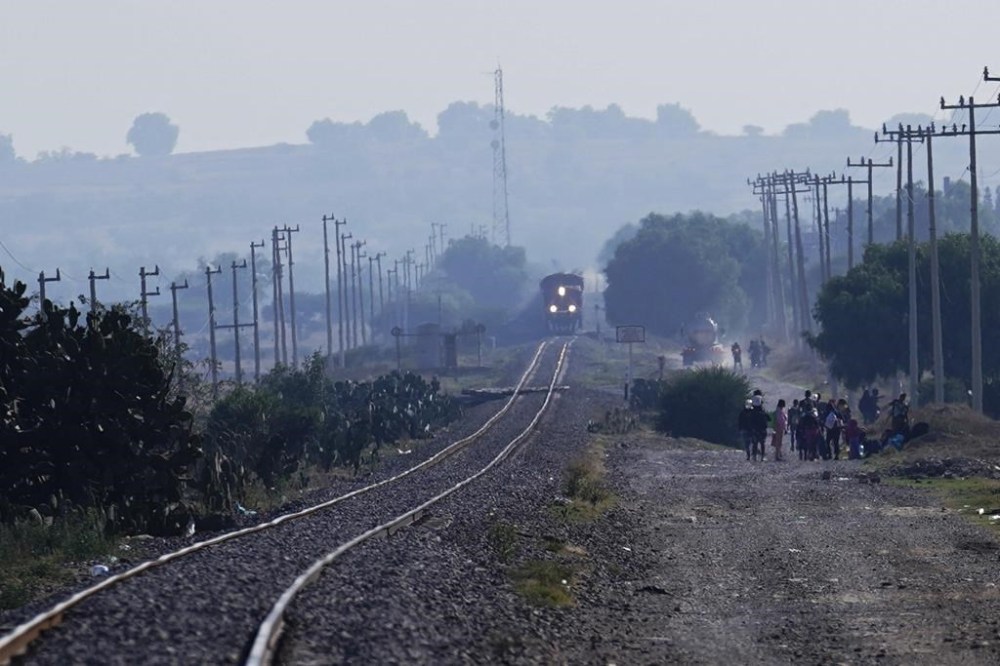
Still, almost no regular passenger service remains in Mexico following a 1995 reform that gave concessions to two private railway companies: Mexico’s Ferromex and a subsidiary of U.S. railway Kansas City Southern.
A few tourist trains run on relatively short, unconnected routes to tourist attractions like northern Mexico’s Copper Canyon and the western tequila-producing region around Jalisco.
López Obrador is known for his nostalgic love of passenger trains, and for state-owned companies in general. In August, he announced the creation of a government airline to be run by the army.
In May, the government sent in marines to seize one of Grupo Mexico’s southern rail lines on national security grounds. López Obrador said the company has since reached an agreement to cede the tracks.
The pet project of his administration is the construction of a $20 billion, 950-mile (1,500-kilometer) line, called the Maya Train, which is meant to run in a rough loop around the Yucatán Peninsula, connecting beach resorts and archaeological sites.
The railway companies did not immediate respond to requests for comment on the president’s plan, in which the firms would be offered first chance to implement passenger trains. If they refuse, the government would schedule its own trains on tracks that are currently used almost exclusively by freight trains.
The president did not mention whether the companies would be offered any government subsidy for passenger service.
Almost all passenger railway services in the world are subsidized to some extent; few make enough money to run on their own, and many lose money.
López Obrador also said the railway network would have to be electrified for passenger service; most freight trains have diesel or diesel-electric locomotives.
Moreover, issues of conflicting schedules, train speeds, stations and rolling stock are likely to arise if passenger and freight trains run on the same tracks.
In most parts of Mexico there are few inner-city train tracks or stations left. Mexico’s old government national railway company offered poor, slow service and lost huge amounts of money before the private concessionary operators took over the lines.
Moreover, even freight service in Mexico has become problematic because of the safety risk posed by thousands of migrants who hop freight trains to ride to the U.S. border.
In September, Ferromex, Mexico’s largest concessionary railway operator, temporarily halted service on some lines in the north of the country, citing about a “half-dozen regrettable cases of injuries or deaths” among migrants hopping freight cars in recent days.