

New drill bores deeper into tunnel rubble in India to create an escape pipe for 40 trapped workers
Advertisement
Read this article for free:
or
Already have an account? Log in here »
To continue reading, please subscribe:

Digital Subscription
One year of digital access for only $205*
- Enjoy unlimited reading on winnipegfreepress.com
- Read the E-Edition, our digital replica newspaper
- Access News Break, our award-winning app
- Play interactive puzzles
*First annual payment billed as $205.00 + GST for one year. This annual subscription will automatically renew at $233.00 + GST every 52 weeks (10% off the regular annual price of $259.35). Offer available to new and qualified returning subscribers only. Cancel any time.
To continue reading, please subscribe:
Add Free Press access to your Brandon Sun subscription for only an additional
$1 for the first 4 weeks*
- Enjoy unlimited reading on winnipegfreepress.com
- Read the E-Edition, our digital replica newspaper
- Access News Break, our award-winning app
- Play interactive puzzles
*Your next Brandon Sun subscription payment will increase by $1.00 and you will be charged $17.95 plus GST for four weeks. After four weeks, your payment will increase to $24.95 plus GST every four weeks.
Read unlimited articles for free today:
or
Already have an account? Log in here »
Hey there, time traveller!
This article was published 16/11/2023 (1036 days ago), so information in it may no longer be current.
LUCKNOW, India (AP) — Rescuers drilled deeper into the rubble of a collapsed road tunnel in northern India on Friday to fix wide pipes for 40 workers trapped underground for a sixth day to crawl to their freedom.
Drilling with a new machine started on Thursday and has covered a stretch of 24 meters (78 feet) so far, Devendra Patwal, a disaster management official, said.
It may require up to 60 meters (195 feet) to enable the trapped workers’ escape, Patwal told The Associated Press on Friday.
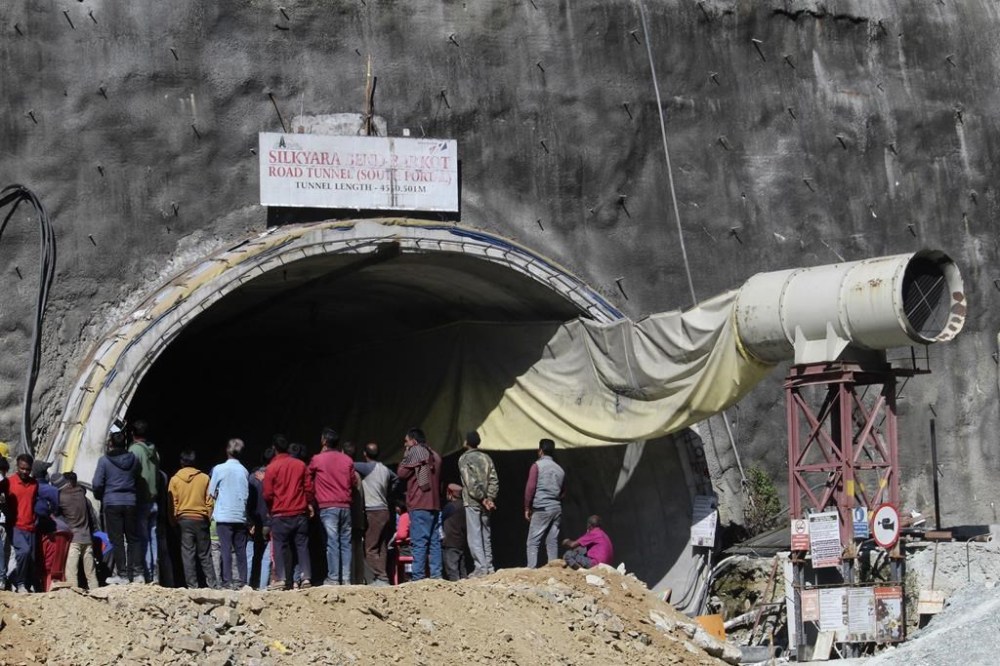
However, the drilling was interrupted on Friday afternoon when damage was caused to some machine bearings by the breaking of rocks and clearing the debris, said Anshu Manish Khalko, director of the National Highway Authority.
The machine is being repaired and anchored, he added.
Khalko said another heavy-duty drilling machine is being brought to the tunnel to continue the drilling uninterrupted. It is expected to reach the site on Saturday.
Earlier, the rescuers had hoped to complete the drilling by Friday night and create an escape tunnel of pipes welded together.
Some of the workers felt fever and body aches Wednesday, but there has been no deterioration in their condition, he said. Nuts, roasted chickpeas, popcorn and medicine are being sent to them via a pipe every two hours.
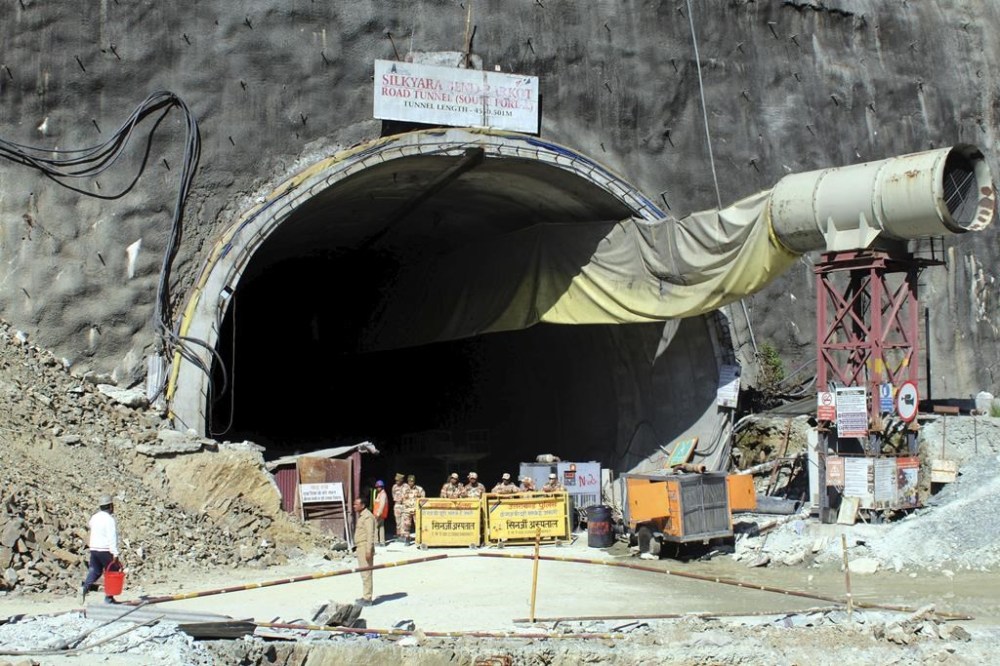
The construction workers have been trapped since Sunday when a landslide caused a portion of the 4.5-kilometer (2.7-mile) tunnel they were building to collapse about 200 meters (500 feet) from the entrance. The hilly area is prone to landslide and subsidence.
The site is in Uttarakhand, a mountainous state dotted with Hindu temples that attract many pilgrims and tourists. Highway and building construction has been constant to accommodate the influx.
The tunnel is part of the busy Chardham all-weather road, a flagship federal project connecting various Hindu pilgrimage sites.
About 200 disaster relief personnel have been at the site using drilling equipment and excavators in the rescue operation, with the plan to push 80-centimeter-wide (2.6-foot-wide) steel pipes through an opening of excavated debris.
A machine used earlier in the week was slow in pushing the pipes through the debris, a state government statement said.
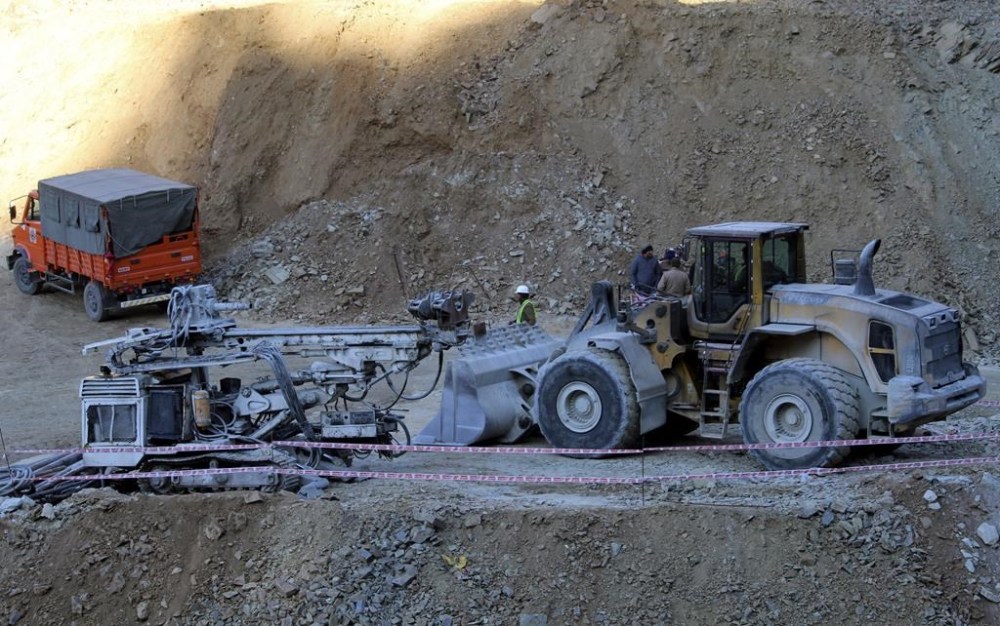
The new American Auger machine has a drilling capacity of up to 5 meters (16 feet) per hour and is equipped with a 990-millimeter (2.9 foot) diameter pipe to clear debris. At times, it is slowed down by the pile of rubble.
State officials have contacted Thai experts who helped rescue a youth soccer team trapped in a cave in Thailand in 2018, state government administrator Gaurav Singh said. They also have approached the Norwegian Geotechnical Institute for possible help.
