

Chinese refugee challenges Australian law that imposes a curfew and tracking bracelet
Advertisement
Read this article for free:
or
Already have an account? Log in here »
To continue reading, please subscribe:

Digital Subscription
One year of digital access for only $205*
- Enjoy unlimited reading on winnipegfreepress.com
- Read the E-Edition, our digital replica newspaper
- Access News Break, our award-winning app
- Play interactive puzzles
*First annual payment billed as $205.00 + GST for one year. This annual subscription will automatically renew at $233.00 + GST every 52 weeks (10% off the regular annual price of $259.35). Offer available to new and qualified returning subscribers only. Cancel any time.
To continue reading, please subscribe:
Add Free Press access to your Brandon Sun subscription for only an additional
$1 for the first 4 weeks*
- Enjoy unlimited reading on winnipegfreepress.com
- Read the E-Edition, our digital replica newspaper
- Access News Break, our award-winning app
- Play interactive puzzles
*Your next Brandon Sun subscription payment will increase by $1.00 and you will be charged $17.95 plus GST for four weeks. After four weeks, your payment will increase to $24.95 plus GST every four weeks.
Read unlimited articles for free today:
or
Already have an account? Log in here »
Hey there, time traveller!
This article was published 23/11/2023 (1021 days ago), so information in it may no longer be current.
CANBERRA, Australia (AP) — Lawyers for a Chinese refugee claim the tough new measures rushed through Australia’s Parliament to mandate curfews and electronic tracking bracelets on some foreigners with criminal records are unconstitutional, challenging them in the High Court.
The man, identified in court documents seen by The Associated Press on Thursday as S151, is one of at least 93 migrants who have been freed in the two weeks since the High Court ruled their indefinite detention in prison-like facilities for foreigners without visas was unconstitutional.
S151 was placed in indefinite detention in 2022 after serving a five-year prison sentence for a crime that was not specified in court documents. Australia accepted in June that S151 fits the definition of a refugee, but refused him a visa. That meant at the time that he could not be deported to China and could not be released in Australia, leaving indefinite detention in a migration facility. But after Parliament passed a raft of emergency laws on Nov. 16, the man was ordered to observe a 10 p.m. to 6 a.m. curfew and wear an electronic ankle bracelet to track his movements at all times, his lawyers wrote in their challenge.
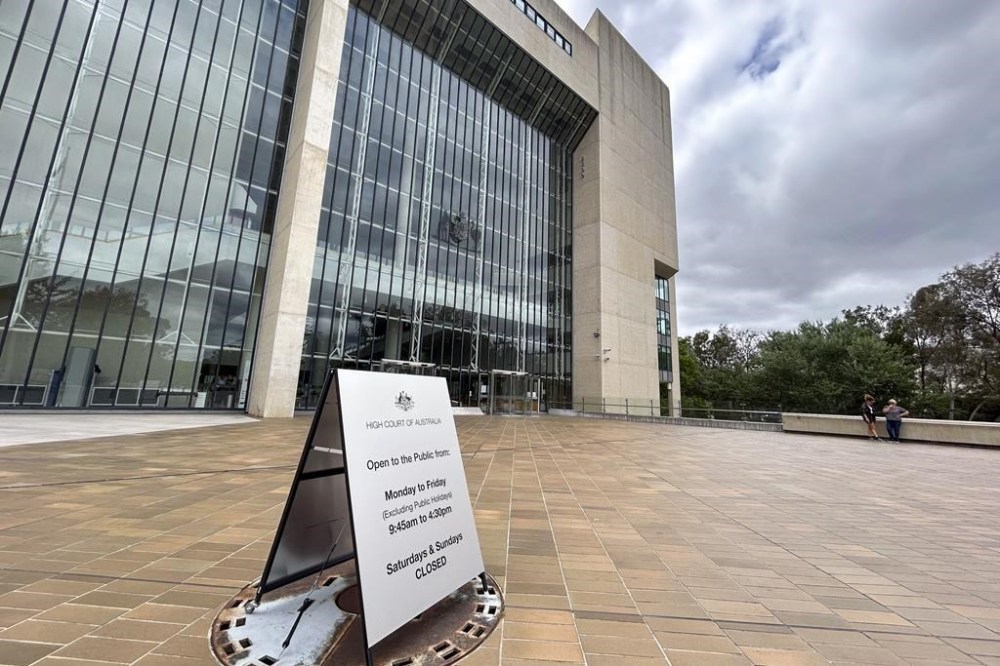
His lawyers filed an application Wednesday in Australia’s highest court asking for the new laws to be declared invalid. The court challenge is the first of what could be several, creating a new complication for a government dealing with community fears over convicts being freed because they can’t be deported.
For almost two decades until the Nov. 8 decision, governments were allowed to keep migrants detained indefinitely if they could not be returned to their homelands. These include refugees and stateless people whom no third country would resettle, usually because of criminal records.
S151, who arrived in Australia on a student visa in 2001, was released from indefinite detention on Nov. 11.
“The imposition of a curfew and mandatory electronic tracking significantly restricts the plaintiff’s liberty, privacy and autonomy,” the lawyers wrote. They argue that the conditions are punitive and breach a constitutional requirement that any punitive measure must be the result of a judicial process, not political.
The government declined to comment Thursday on the legal challenge while it was being considered by the court.
University of New South Wales constitutional lawyer George Williams said there was a potential for more migrants to challenge the new laws that were introduced to Parliament, amended and passed within a few hours.
“It may be reasonable to impose ankle bracelets and the like on some people but not others,” Williams said. “It wouldn’t surprise me if other people come forward, particularly when you’ve got rushed legislation … because there hasn’t been much of an opportunity to get it right.”
Adding to the legal uncertainty, it could be months before the High Court publishes its reasons for outlawing indefinite detention. Decisions are usually announced around three months after a hearing ends, but in the detention case the decision was immediate, apparently catching the government off guard.
The High Court could potentially set an urgent hearing date in the final weeks of the year.