

Hungary set to receive millions in EU money despite Orban’s threats to veto Ukraine aid
Advertisement
Read this article for free:
or
Already have an account? Log in here »
To continue reading, please subscribe:

Digital Subscription
One year of digital access for only $205*
- Enjoy unlimited reading on winnipegfreepress.com
- Read the E-Edition, our digital replica newspaper
- Access News Break, our award-winning app
- Play interactive puzzles
*First annual payment billed as $205.00 + GST for one year. This annual subscription will automatically renew at $233.00 + GST every 52 weeks (10% off the regular annual price of $259.35). Offer available to new and qualified returning subscribers only. Cancel any time.
To continue reading, please subscribe:
Add Free Press access to your Brandon Sun subscription for only an additional
$1 for the first 4 weeks*
- Enjoy unlimited reading on winnipegfreepress.com
- Read the E-Edition, our digital replica newspaper
- Access News Break, our award-winning app
- Play interactive puzzles
*Your next Brandon Sun subscription payment will increase by $1.00 and you will be charged $17.95 plus GST for four weeks. After four weeks, your payment will increase to $24.95 plus GST every four weeks.
Read unlimited articles for free today:
or
Already have an account? Log in here »
Hey there, time traveller!
This article was published 23/11/2023 (1046 days ago), so information in it may no longer be current.
BRUSSELS (AP) — Hungary is set to receive 900 million euros ($981 million) in European Union money, the EU’s executive arm said Thursday, despite the Hungarian prime minister’s attempts to scupper the bloc’s support for Ukraine.
That money comes from the bloc’s REPowerEU program aimed at helping the 27 EU nations recover from the energy crisis that followed Russia’s invasion of Ukraine last year, and reduce their dependance to Russian fossil fuels.
The proposal to unlock the money in pre-financing came as Orban – a frequent critic of the EU and often at odds with European leaders over his government’s record on the rule of law – threatens to derail Ukraine’s ambition to join the bloc, and to block the disbursement of a planned 50 billion euros ($54.5 billion) in aid to Kyiv.
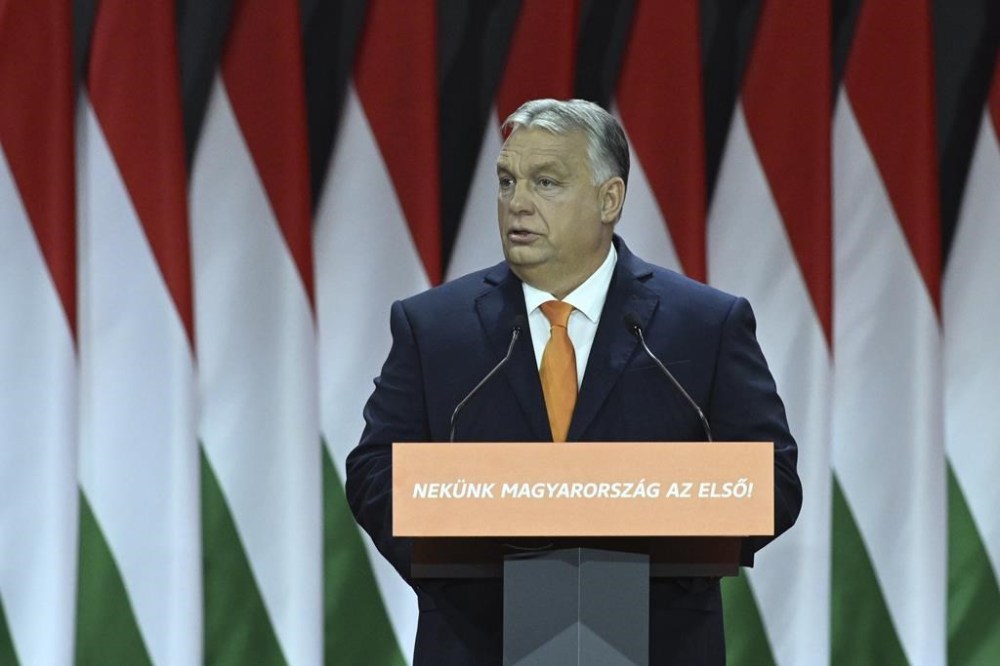
EU leaders will meet in Brussels next month to discuss the opening of formal negotiations on Ukraine’s future accession.
EU member countries have now four weeks to endorse the European Commission’s decision and greenlight the disbursement of money.
The total value of the Hungary’s post-pandemic recovery plan, which includes the REPowerEU chapter, totals 10.4 billion euros ($11.3 billion) in loans and grants. The Commission insisted that Hungary must achieve rule of law reforms for the bulk of that money to be released.
“The Commission will authorize regular disbursements based on the satisfactory completion of the reforms to ensure the protection of the Union’s financial interests, and to strengthen judicial independence, as translated into 27 ‘super milestones,’” the Commission said in a statement.
Hungary, a large recipient of EU funds, has come under increasing criticism for veering away from democratic norms. The Commission has for nearly a decade accused Orban of dismantling democratic institutions, taking control of the media and infringing on minority rights. Orban, who has been in office since 2010, denies the accusations.
Orban has also repeatedly angered the EU since Russia started its war in Ukraine last year. He has criticized the sanctions adopted by member countries against Russia as being largely ineffective and counter-productive, and last month met Vladimir Putin in a rare in-person meeting for the Russian president with a leader of a European Union country.
Last December, the EU froze billions of euros in cohesion funds allocated to Hungary over its failure to implement solid rule-of-law reforms. Although Hungary insists it doesn’t link EU funds to other issues, many in Brussels see its veto threats regarding aid to Ukraine as Orban’s bid to blackmail the bloc into releasing billions in regular EU funds and pandemic recovery cash that has been held up.
The Commission also gave a positive assessment of Poland’s revised recovery plan earlier this week, paving the way for the payment of 5.1 billion euros ($5.56 billion) to Warsaw. The announcement came a month after an election in Poland secured a parliamentary majority to pro-EU parties aligned with Donald Tusk, who is expected to become Poland’s next prime minister. He traveled to Brussels last month to meet with top officials and repair Warsaw’s ties with the bloc, aiming to unlock funds that have been frozen due to democratic backsliding under the outgoing nationalist government.
Related Articles
Trudeau launches EU-Canada Summit in Newfoundland
Advertisement Advertise With Us
Advertisement Advertise With Us