US Navy says it will cost $1.5M to salvage jet plane that crashed on Hawaii coral reef
Advertisement
Read this article for free:
or
Already have an account? Log in here »
To continue reading, please subscribe:
Digital Subscription
One year of digital access for only $1.44 a week*
- Enjoy unlimited reading on winnipegfreepress.com
- Read the E-Edition, our digital replica newspaper
- Access News Break, our award-winning app
- Play interactive puzzles
*Billed as $5.77 plus GST every four weeks. After 52 weeks, price increases to the regular rate of $19.95 plus GST every four weeks. Offer available to new and qualified returning subscribers only. Cancel any time.
To continue reading, please subscribe:
Add Free Press access to your Brandon Sun subscription for only an additional
$1 for the first 4 weeks*
- Enjoy unlimited reading on winnipegfreepress.com
- Read the E-Edition, our digital replica newspaper
- Access News Break, our award-winning app
- Play interactive puzzles
*Your next Brandon Sun subscription payment will increase by $1.00 and you will be charged $17.95 plus GST for four weeks. After four weeks, your payment will increase to $24.95 plus GST every four weeks.
Read unlimited articles for free today:
or
Already have an account? Log in here »
Hey there, time traveller!
This article was published 02/12/2023 (1053 days ago), so information in it may no longer be current.
HONOLULU (AP) — The U.S. Navy estimates it will cost $1.5 million to salvage a jet plane that crashed on a coral reef in Hawaii nearly two weeks ago, officials said Saturday.
Navy spokesman Mohammad Issa said the salvage efforts are focused on protecting the environment and safely recovering the aircraft in a way that retains its combat capability. He said $200,000 has already been spent on the operation.
The Navy plans to use inflatable cylinders to lift and roll the jet plane off the reef where it crashed on Nov. 20.
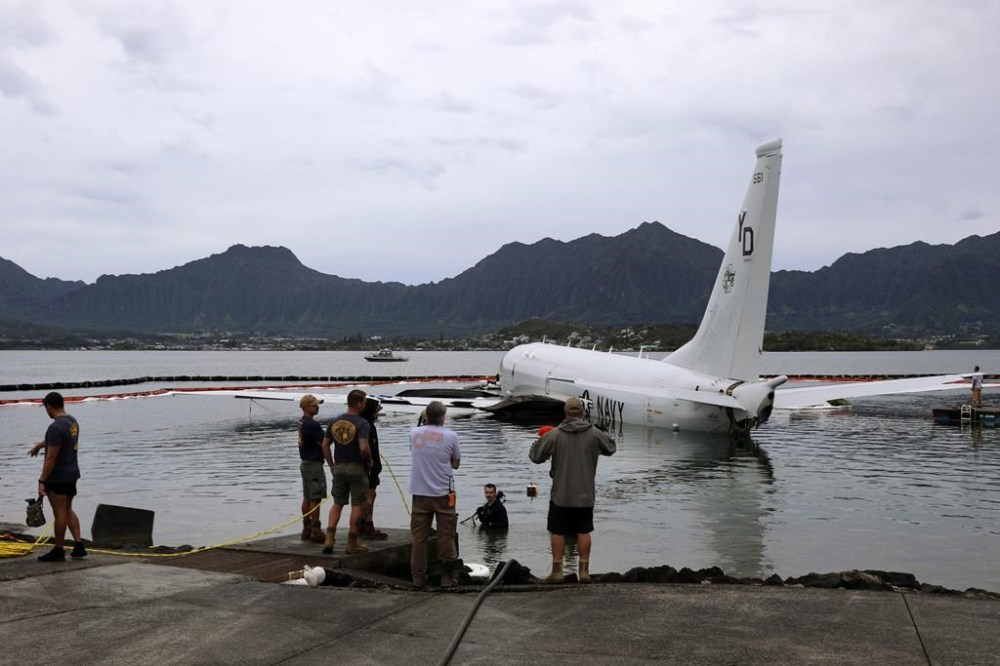
The P-8A, the military’s version of a Boeing 737 jet, slammed into an environmentally sensitive bay about 10 miles (16 kilometers) from Honolulu when it overshot the runway at Marine Corps Base Hawaii. None of the nine people on board were injured. The cause of the crash is under investigation.
Rear Adm. Kevin Lenox, the commander of Carrier Strike Group 3 who is leading the salvage effort, said Friday he is confident the operation can be carried out without further damaging the reef.
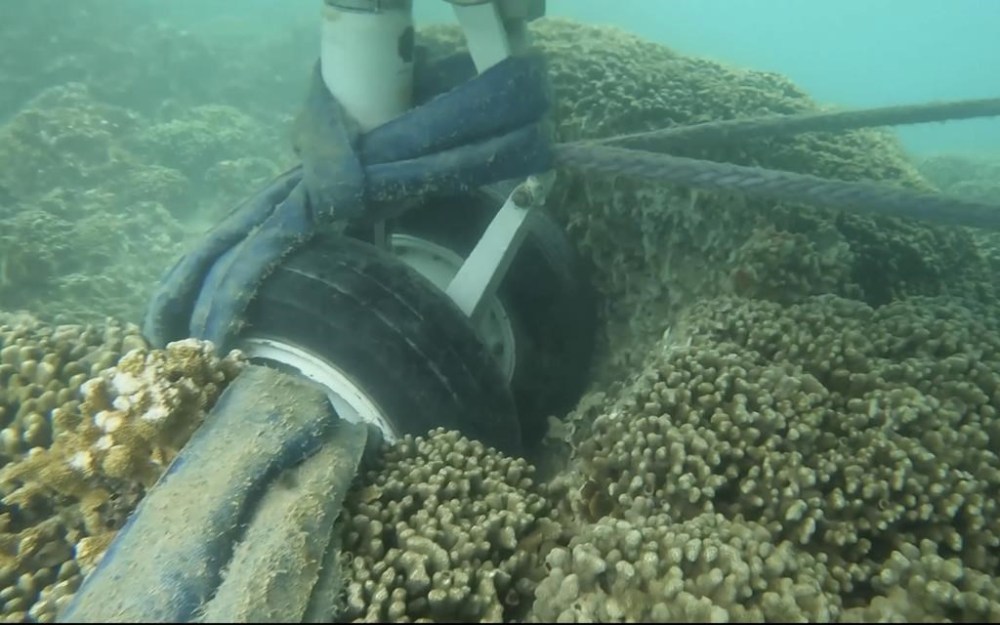
The Navy released underwater video on Wednesday showing the aircraft’s landing gear wheels resting on parts of crushed coral and much of the rest of the plane floating above the reef in Kaneohe Bay.
A Navy team has removed nearly all of the estimated 2,000 gallons (7,500 liters) of fuel from the aircraft.
Hawaii state officials are due to examine the reef for damage once the plane is removed.
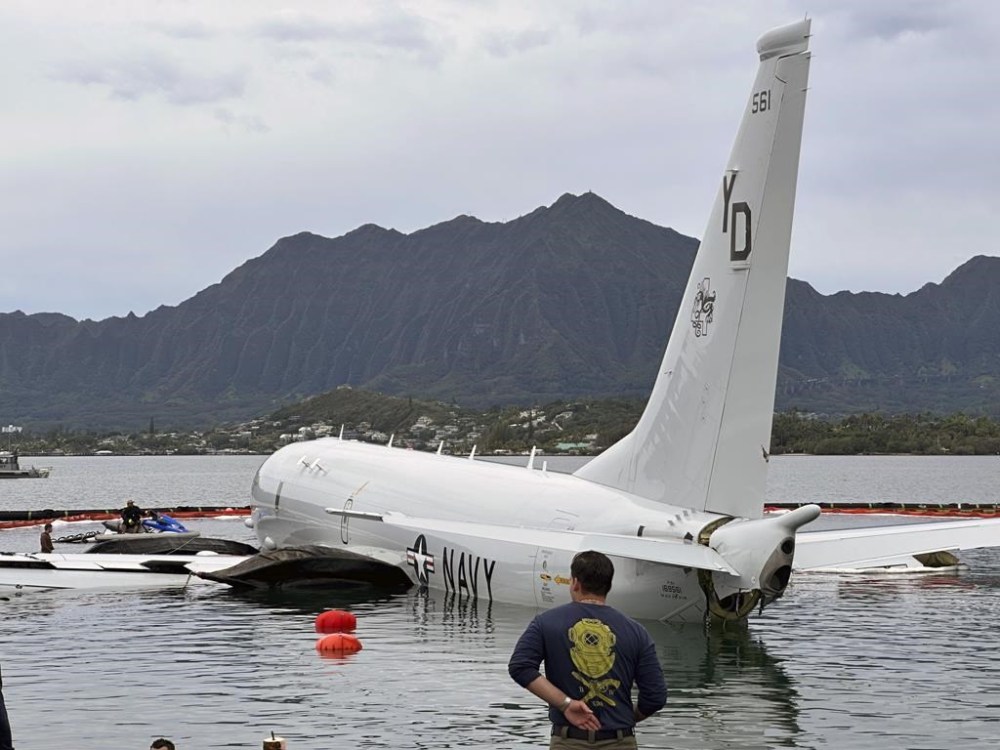
Kaneohe Bay is home to coral reefs and a range of marine life, from sharks to octopus and fish. The area hosts an ancient Hawaiian fishpond being restored by community groups.
Contractors performed a similar feat when they removed a barge weighing 1,000 tons (907 metric tons) from sensitive seagrass habitat in the Outer Banks of North Carolina after Hurricane Florence in 2015.
The plane weighs about 60 tons (54 metric tons).
The Navy considered floating the jet within range of a crane on the runway and then lifting the plane onto land. But Lenox said the inflatable cylinder option was the safer method, was expected to have little to no effect on the coral and would not impact the aircraft.
The jet is in good condition and the Navy hopes to get it flying again, Lenox said.
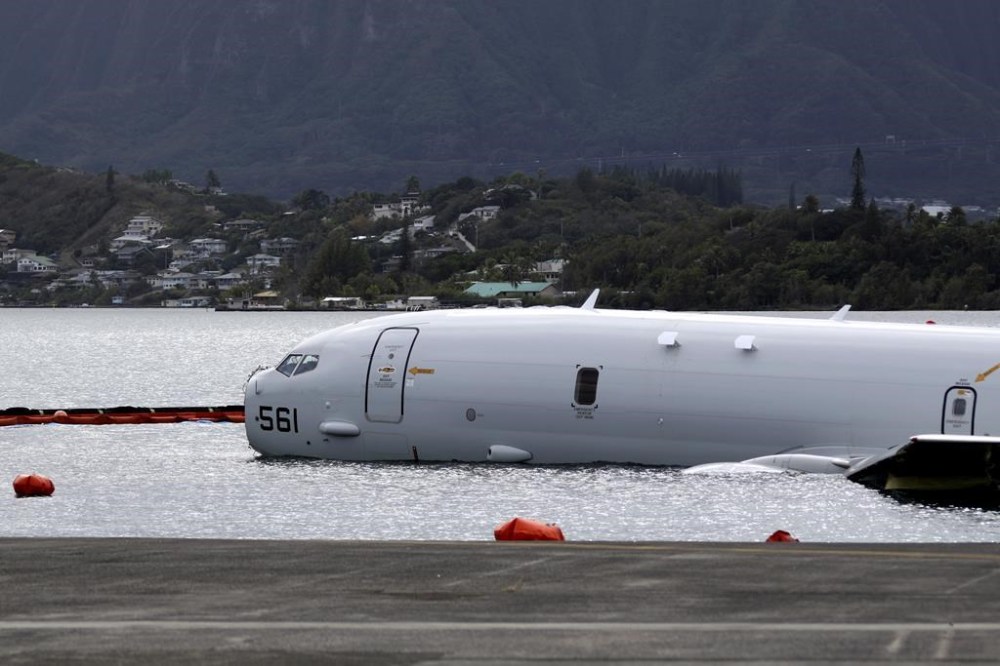
The Navy uses the P-8A to search for submarines and conduct surveillance and reconnaissance.
The Boeing-made plane is assigned to Patrol Squadron 4 stationed at Whidbey Island in Washington state. A separate crew from Whidbey Island has deployed to Hawaii to take over the squadron’s patrol missions near Hawaii.