

AP PHOTOS: 2023 was marked by coups and a Moroccan earthquake on the African continent
Advertisement
Read this article for free:
or
Already have an account? Log in here »
To continue reading, please subscribe:

Digital Subscription
One year of digital access for only $205*
- Enjoy unlimited reading on winnipegfreepress.com
- Read the E-Edition, our digital replica newspaper
- Access News Break, our award-winning app
- Play interactive puzzles
*First annual payment billed as $205.00 + GST for one year. This annual subscription will automatically renew at $233.00 + GST every 52 weeks (10% off the regular annual price of $259.35). Offer available to new and qualified returning subscribers only. Cancel any time.
To continue reading, please subscribe:
Add Free Press access to your Brandon Sun subscription for only an additional
$1 for the first 4 weeks*
- Enjoy unlimited reading on winnipegfreepress.com
- Read the E-Edition, our digital replica newspaper
- Access News Break, our award-winning app
- Play interactive puzzles
*Your next Brandon Sun subscription payment will increase by $1.00 and you will be charged $17.95 plus GST for four weeks. After four weeks, your payment will increase to $24.95 plus GST every four weeks.
Read unlimited articles for free today:
or
Already have an account? Log in here »
Hey there, time traveller!
This article was published 03/12/2023 (1036 days ago), so information in it may no longer be current.
DAKAR, Senegal (AP) — Reports of gunfire in the capital, followed by a television announcement that the president has been deposed by mutinous soldiers. The increasingly familiar storyline unfolded again this year in Africa — first in Niger and then in Gabon.
The resurgence of military coups renewed concerns about democracy backsliding on the continent and also underscored shifting regional alliances at a time when international peacekeeping efforts waned.
Two thousand twenty-three also brought utter devastation when a rare, powerful earthquake struck Morocco in September, damaging thousands of villages in the mountains south of Marrakech and killing nearly 3,000 people.
The earthquake and several aftershocks left people and animals buried underneath mud and cinderblock for days as crews raced up narrow, windy roads to supply rescue and aid efforts. Morocco ultimately accepted search-and-rescue assistance from only four countries — Spain, the United Arab Emirates, Qatar and the United Kingdom — and rebuffed other offers, including from France and the United States. The decision brought questions and criticism as villagers awaited help in the immediate hours after the earthquake.
And 2023 also was marked by several high profile visitors to the continent. Pope Francis journeyed to Congo and South Sudan where he focused on victims of war.
In Kenya, King Charles III expressed “greatest sorrow and the deepest regret” for the violence of the colonial era, though he didn’t explicitly apologize for Britain’s actions in its former colony as many had wanted.
Elections in Africa began with a promising start in February, with little violence surrounding a much anticipated vote in Nigeria. Africa’s most populous nation elected Bola Tinubu, though he ultimately won with less than 50% of the vote. Still, observers largely described the election as an improvement from 2019.
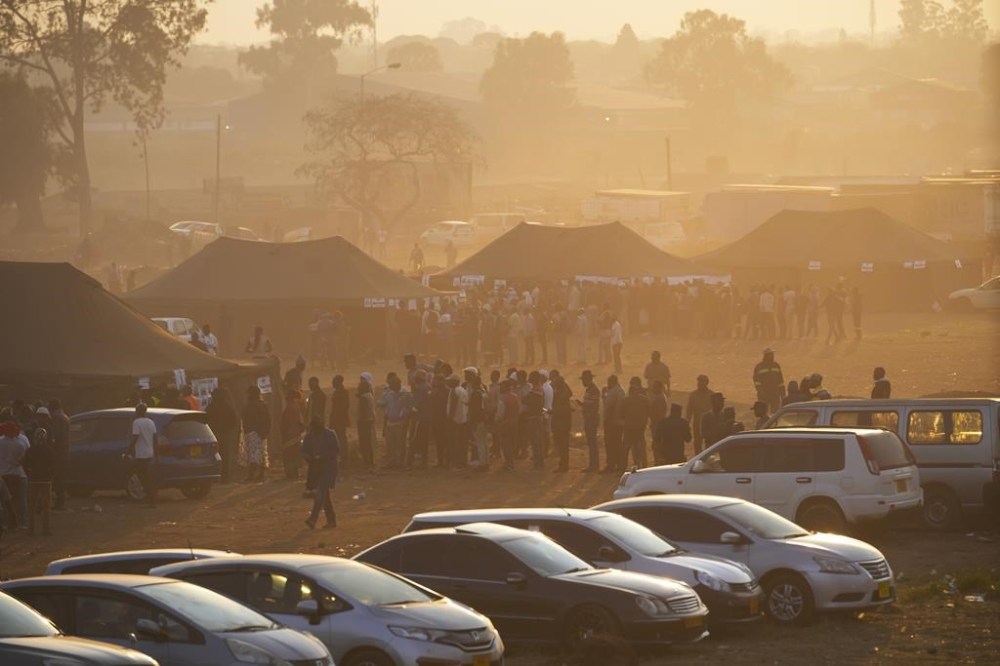
Then in August, Zimbabwean President Emmerson Mnangagwa was declared the winner of a disputed election. Both Western and African observers questioned the credibility of the vote, citing an atmosphere of intimidation ahead of the election.
That same month the president of Gabon was deposed in a coup just hours after officials had announced his re-election. It came only a month after Niger’s leader was overthrown by mutinous soldiers, becoming the third Sahelian state under the rule of a military junta.
The ripple of coups put governments across the region on high alert: Authorities in Sierra Leone arrested more than a dozen people in November, accusing them of launching a failed coup attempt against the president, who had been re-elected only months earlier.
In Senegal, uncertainty over President Macky Sall’s political future fueled weeks of violent protests in the streets. While he ended years of speculation by declaring he would not seek a third term in office, opposition supporters continued to accuse his government of jailing their leader Ousmane Sonko to block his candidacy.
Twenty twenty-three also marked the beginning of the end for the enormous U.N. peacekeeping missions in both Mali and Congo. Leaders of both countries have said that the blue helmets ultimately failed in their efforts to bring about peace.
Congo formally began the departure process by signing agreements with the U.N. to end the mission there after two decades. In Mali, peacekeepers began withdrawing from posts across the north after a decade-long presence. Not long after, the Malian military seized control of the rebel stronghold town of Kidal for the first time since 2012.
Congo also prepared for a Dec. 20 presidential election with incumbent President Felix Tshisekedi facing a familiar field of competitors led by Martin Fayulu and Moise Katumbi. Ongoing violence in the country’s embattled east, however, threatened to derail voting in areas under the control of M23 rebels. Civilians in the region also faced mounting attacks from ADF militants claiming links to the Islamic State group.
___
Associated Press writer Sam Metz in Rabat, Morocco, contributed to this report.