

In Mexico, Yellen announces economics sanctions as the US aims to crack down on fentanyl trafficking
Advertisement
Read this article for free:
or
Already have an account? Log in here »
To continue reading, please subscribe:

Digital Subscription
One year of digital access for only $205*
- Enjoy unlimited reading on winnipegfreepress.com
- Read the E-Edition, our digital replica newspaper
- Access News Break, our award-winning app
- Play interactive puzzles
*First annual payment billed as $205.00 + GST for one year. This annual subscription will automatically renew at $233.00 + GST every 52 weeks (10% off the regular annual price of $259.35). Offer available to new and qualified returning subscribers only. Cancel any time.
To continue reading, please subscribe:
Add Free Press access to your Brandon Sun subscription for only an additional
$1 for the first 4 weeks*
- Enjoy unlimited reading on winnipegfreepress.com
- Read the E-Edition, our digital replica newspaper
- Access News Break, our award-winning app
- Play interactive puzzles
*Your next Brandon Sun subscription payment will increase by $1.00 and you will be charged $17.95 plus GST for four weeks. After four weeks, your payment will increase to $24.95 plus GST every four weeks.
Read unlimited articles for free today:
or
Already have an account? Log in here »
Hey there, time traveller!
This article was published 06/12/2023 (1030 days ago), so information in it may no longer be current.
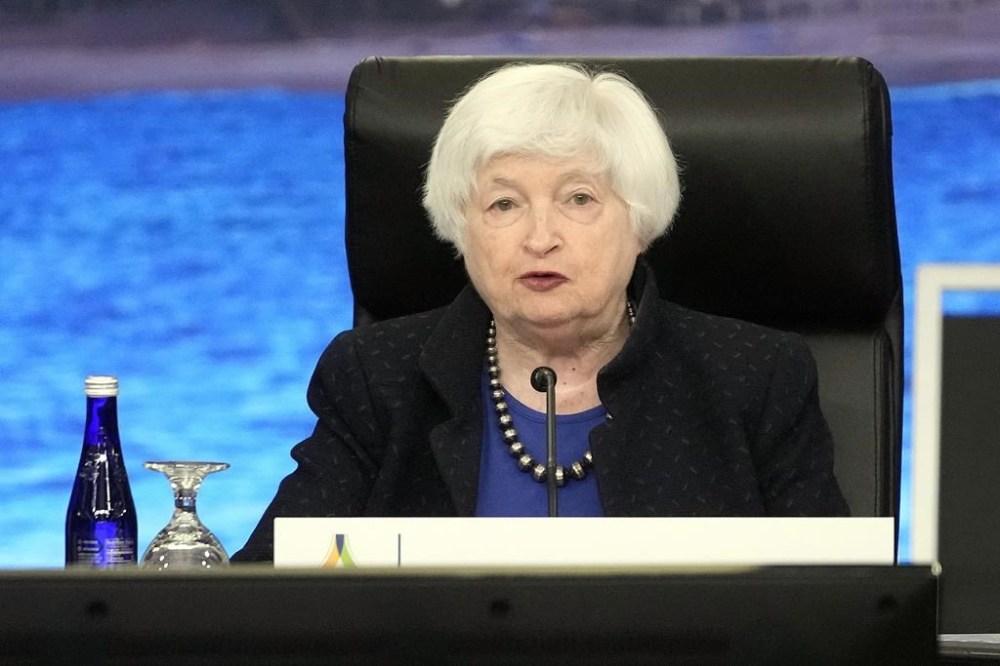
WASHINGTON (AP) — Treasury Secretary Janet Yellen on Wednesday announced economic sanctions against 15 people and two companies that the United States says are linked to a Mexican drug cartel as she visited Mexico City for talks with officials about efforts to fight fentanyl trafficking.
“We cannot end the U.S. opioid crisis and achieve greater security without looking beyond our borders,” she said.
Yellen traveled to Mexico this week after the Treasury Department announced a strike force to help combat illicit fentanyl trafficking as the U.S. and China step up efforts to stop the movement of the powerful opioid and drug-making materials into the U.S. When President Joe Biden and Chinese leader Xi Jinping met in California in November, they announced that China would instruct chemical companies to curtail shipments of the materials used to produce fentanyl to Latin America.
The new sanctions were imposed on 15 Mexicans and two Mexican-based companies linked, directly or indirectly, to the Beltran Leyva drug cartel, according to the Treasury Department. Mexican musician Oscar Manuel Gastelum Iribe and Pedro Inzunza Noriega, whom the U.S. considers cartel leaders, were penalized, along with other members of the group, including its attorney and family members, the Biden administration said.
The Treasury Department said the cartel has been sending tons of cocaine and methamphetamine into the U.S. for decades and has been “heavily involved in the transportation and distribution of deadly drugs, including fentanyl.”
Fentanyl is the deadliest drug in the U.S. today. The Centers for Disease Control and Prevention estimates that 71,000 people died from overdosing on synthetic opioids such as fentanyl in 2021, compared with almost 58,000 in 2020.
The opioid epidemic has cost America nearly $1.5 trillion in 2020, according to the congressional Joint Economic Committee.
Mexico and China are the primary source countries for fentanyl and fentanyl-related substances trafficked directly into the U.S., the Drug Enforcement Administration says. Nearly all the precursor chemicals that are needed to make fentanyl are coming from China.
“Drug trafficking organizations generate billions of dollars in illicit proceeds every year,” Yellen said. “They hold some in cash, some in investments, such as in real estate, and, increasingly, though still in small amounts, in digital assets. U.S. financial institutions are vulnerable, such as through exposure to drug trafficking organizations using shell companies.”
The sanctions block access to U.S. property and bank accounts and prevent the targeted people and companies from doing business with Americans.