

United Nations bemoans struggles to fund peacekeeping as nations demand withdrawal of missions
Advertisement
Read this article for free:
or
Already have an account? Log in here »
To continue reading, please subscribe:

Digital Subscription
One year of digital access for only $205*
- Enjoy unlimited reading on winnipegfreepress.com
- Read the E-Edition, our digital replica newspaper
- Access News Break, our award-winning app
- Play interactive puzzles
*First annual payment billed as $205.00 + GST for one year. This annual subscription will automatically renew at $233.00 + GST every 52 weeks (10% off the regular annual price of $259.35). Offer available to new and qualified returning subscribers only. Cancel any time.
To continue reading, please subscribe:
Add Free Press access to your Brandon Sun subscription for only an additional
$1 for the first 4 weeks*
- Enjoy unlimited reading on winnipegfreepress.com
- Read the E-Edition, our digital replica newspaper
- Access News Break, our award-winning app
- Play interactive puzzles
*Your next Brandon Sun subscription payment will increase by $1.00 and you will be charged $17.95 plus GST for four weeks. After four weeks, your payment will increase to $24.95 plus GST every four weeks.
Read unlimited articles for free today:
or
Already have an account? Log in here »
Hey there, time traveller!
This article was published 07/12/2023 (1036 days ago), so information in it may no longer be current.
ACCRA, Ghana (AP) — The United Nations’ top peacekeeping official defended the organization’s missions worldwide as concerns grow that they’ve gone into retreat as African leaders demand their withdrawal from Mali to Congo.
Under Secretary-General for Peace Operations Jean-Pierre Lacroix said Wednesday that the force operates on a $5.5 billion budget, which is less than that of the New York City Police Department, even though its force is much larger, with 70,000 personnel worldwide. He told delegates at a U.N. peacekeeping ministerial meeting in the Ghanaian capital, Accra, that efforts had been hampered by divisions among member states.
The majority of U.N. peacekeeping missions are in Africa, including in Central African Republic, Sudan and Western Sahara. However, they’ve faced increasing blowback and scrutiny over their ability to successfully carry out their missions, including protests in Congo from residents claiming peacekeepers did little to protect them from armed groups.
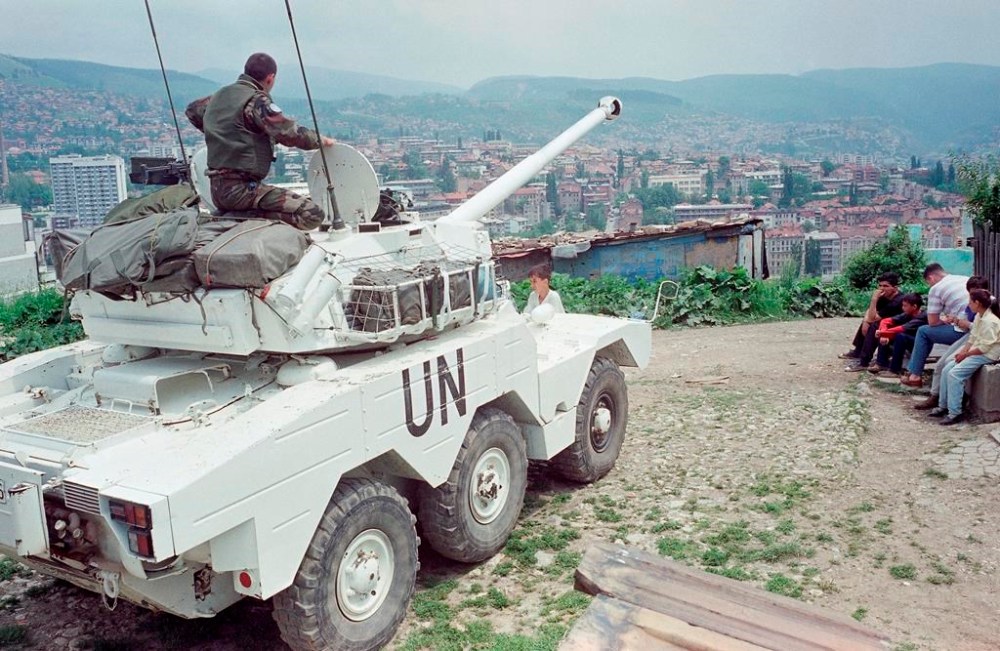
The operations, which require approval from the U.N. Security Council to be extended, have gradually gone into retreat in Africa. In June, leaders in Mali requested the United Nations withdraw peacekeeping forces. Leaders from Congo made a similar request to the Security Council in September.
Congolese President Felix-Antoine Tshisekedi said then that the mission had failed to confront fighting, but on Wednesday Lacroix defended the force, telling reporters that the U.N. had received feedback from residents that they wanted the peacekeepers to do more.
“Peacekeeping can only operate if the U.N. has the sovereign support,” Lacroix said of Congo.
The two-day ministerial meeting in Accra is taking place as polarizing divides emerge among United Nations member states about wars in Ukraine and Gaza. Institutions like the United Nations Security Council — which has a mandate to maintain international peace and security — have struggled to reach consensus on Israel’s latest war with Hamas militants that began in October when it launched a deadly incursion into southern Israel.
Though Lacroix lamented how the peacekeeping budget was a mere 0.3% of global military spending, he also noted that it provides a good return on investment as peacekeepers save lives for relatively little cost.
Peacekeepers, he said, operate in the face of armed groups, terrorists and criminal networks with access to lethal weaponry. They work among improvised explosive devices and face growing threats from “the weaponization of digital tools,” he said, including hate speech and disinformation that often has fueled violence against peacekeepers and the communities they’re tasked with protecting.
“Despite the challenges we are facing, we continue to do our utmost to strengthen the impact and effectiveness of these operations. We continue to do what we can to advance political solutions and support sustainable peace, including through facilitating political settlements and supporting locally led conflict resolution,” Lacroix said.
Though Congolese leaders have asked the U.N. to begin withdrawing, Lacroix said peacekeepers were providing logistical support for this month’s elections at the request of authorities, particularly in North and South Kivu and Ituri provinces. Since 1999, peacekeepers have been in Congo’s impoverished but mineral-rich east, where rebel groups including M23 have long clashed with the government.
Ghana Vice President Mahamadu Bawumia said U.N. member states should work to improve peacekeeping missions rather than give up on them. He also noted growing risks to peacekeepers that threaten their ability to carry out their mandates and stabilize the regions where they operate.
___
This story corrects a previous version that stated the U.N. employed 30,000 peacekeepers. It has more than 70,000, which is roughly 30,000 more than the NYPD.
Related Articles
Desperation grows among Palestinians trapped with little aid as Israel battles Hamas in Gaza
Advertisement Advertise With Us
Advertisement Advertise With Us