

United Arab Emirates acknowledges mass trial of prisoners previously reported during COP28
Advertisement
Read this article for free:
or
Already have an account? Log in here »
To continue reading, please subscribe:

Digital Subscription
One year of digital access for only $205*
- Enjoy unlimited reading on winnipegfreepress.com
- Read the E-Edition, our digital replica newspaper
- Access News Break, our award-winning app
- Play interactive puzzles
*First annual payment billed as $205.00 + GST for one year. This annual subscription will automatically renew at $233.00 + GST every 52 weeks (10% off the regular annual price of $259.35). Offer available to new and qualified returning subscribers only. Cancel any time.
To continue reading, please subscribe:
Add Free Press access to your Brandon Sun subscription for only an additional
$1 for the first 4 weeks*
- Enjoy unlimited reading on winnipegfreepress.com
- Read the E-Edition, our digital replica newspaper
- Access News Break, our award-winning app
- Play interactive puzzles
*Your next Brandon Sun subscription payment will increase by $1.00 and you will be charged $17.95 plus GST for four weeks. After four weeks, your payment will increase to $24.95 plus GST every four weeks.
Read unlimited articles for free today:
or
Already have an account? Log in here »
Hey there, time traveller!
This article was published 06/01/2024 (964 days ago), so information in it may no longer be current.
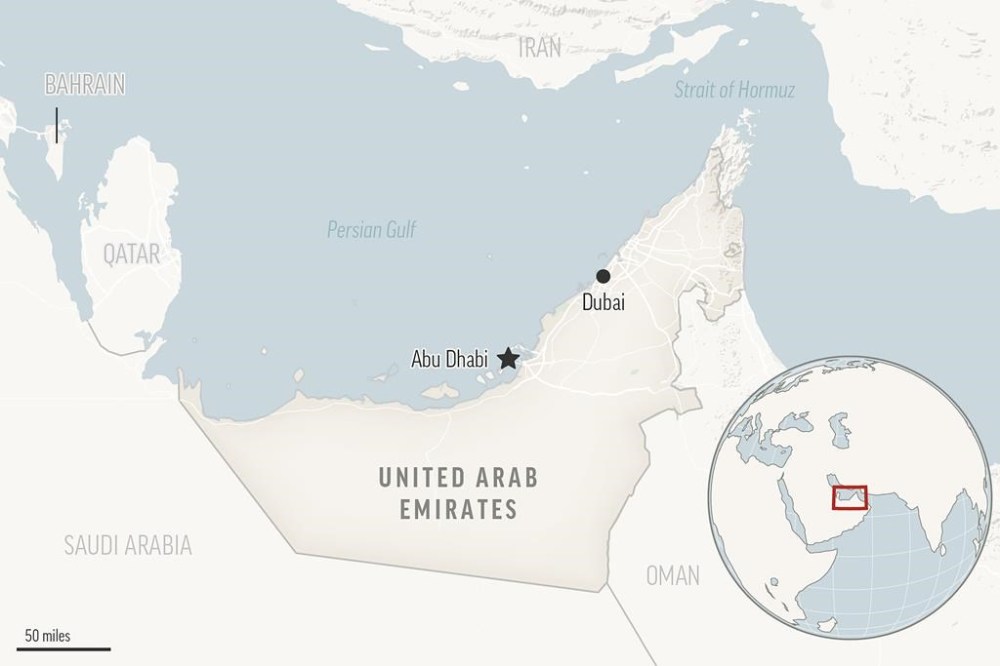
DUBAI, United Arab Emirates (AP) — The United Arab Emirates on Saturday acknowledged it is conducting a mass trial of 84 inmates previously reported by dissidents as it hosted the United Nations COP28 climate talks last month.
The trial likely includes a prominent activist lauded by rights group abroad.
The state-run WAM news agency quoted the country’s attorney general, Hamad al-Shamsi, as saying the 84 defendants face charges of “establishing another secret organization for the purpose of committing acts of violence and terrorism on state territory.”
The statement did not name the suspects, though it described “most” of those held as members of the Muslim Brotherhood, a pan-Arab Islamist group long targeted in the autocratic UAE as a threat to its hereditary rulers.
Al-Shamsi said the accused all had a lawyer assigned to them and that after nearly six months of research, prosecutors referred the accused to trial. The statement said the trial was still going on.
In December, the trial was first reported by the Emirates Detainees Advocacy Center, a group run by an Emirati — also called Hamad al-Shamsi — who lives in exile in Istanbul after being named on a terrorism list by the UAE himself. That group said 87 defendants faced trial. The different numbers of defendants reported by the UAE and the group could not be immediately reconciled.
Among those likely charged in the case is Ahmed Mansoor, the recipient of the Martin Ennals Award for Human Rights Defenders in 2015. Mansoor repeatedly drew the ire of authorities in the UAE by calling for a free press and democratic freedoms in this federation of seven sheikhdoms.
Mansoor was targeted with Israeli spyware on his iPhone in 2016 likely deployed by the Emirati government ahead of his 2017 arrest and sentencing to 10 years in prison over his activism.
During COP28, Amnesty International and Human Rights Watch held a demonstration in which they displayed Mansoor’s face in the U.N.-administered Blue Zone at the summit in a protest carefully watched by Emirati officials.
Another person likely charged is activist Nasser bin Ghaith, an academic held since August 2015 over his tweets. He was among dozens of people sentenced in the wake of a wide-ranging crackdown in the UAE following the 2011 Arab Spring protests. Those demonstrations saw the Islamists rise to power in several Mideast nations, though the Gulf Arab states did not see any popular overthrow of their governments.
The UAE, while socially liberal in many regards compared with its Middle Eastern neighbors, has strict laws governing expression and bans political parties and labor unions. That was seen at COP28, where there were none of the typical protests outside of the venue as activists worried about the country’s vast network of surveillance cameras.