

DC to consider major new public safety bill to stem rising violent crime
Advertisement
Read this article for free:
or
Already have an account? Log in here »
To continue reading, please subscribe:

Digital Subscription
One year of digital access for only $205*
- Enjoy unlimited reading on winnipegfreepress.com
- Read the E-Edition, our digital replica newspaper
- Access News Break, our award-winning app
- Play interactive puzzles
*First annual payment billed as $205.00 + GST for one year. This annual subscription will automatically renew at $233.00 + GST every 52 weeks (10% off the regular annual price of $259.35). Offer available to new and qualified returning subscribers only. Cancel any time.
To continue reading, please subscribe:
Add Free Press access to your Brandon Sun subscription for only an additional
$1 for the first 4 weeks*
- Enjoy unlimited reading on winnipegfreepress.com
- Read the E-Edition, our digital replica newspaper
- Access News Break, our award-winning app
- Play interactive puzzles
*Your next Brandon Sun subscription payment will increase by $1.00 and you will be charged $17.95 plus GST for four weeks. After four weeks, your payment will increase to $24.95 plus GST every four weeks.
Read unlimited articles for free today:
or
Already have an account? Log in here »
Hey there, time traveller!
This article was published 10/01/2024 (991 days ago), so information in it may no longer be current.
WASHINGTON (AP) — Public safety legislation unveiled Wednesday by local lawmakers in the nation’s capital is aimed at bringing down spiraling violent crimes rates that have stoked public anxiety and prompted congressional scrutiny.
The measure largely repackages and consolidates previous proposals and temporary anti-crime legislation, including stiffer penalties for a host of gun-related offenses and wider leeway for judges to detain suspects prior to their trial.
“Pretty much everything in here are bills that were introduced, had a hearing and had a public process,” said Ward 2 Councilmember Brooke Pinto, who chairs the Council’s judiciary and public safety committee.
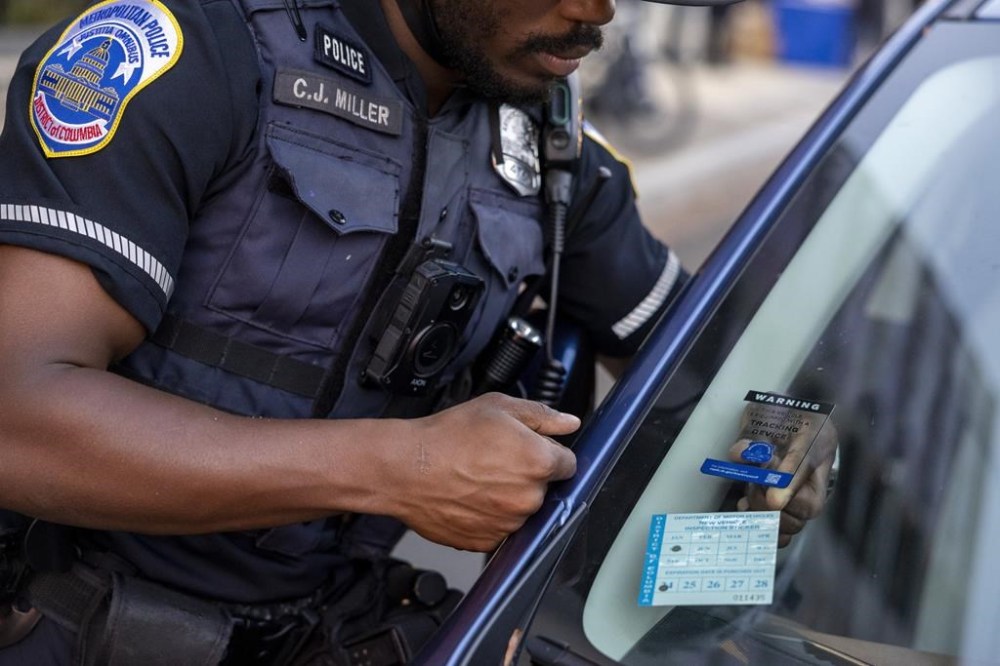
Homicides jumped by 35% in 2023 in Washington while car thefts and carjackings both essentially doubled. The carjacking victims in D.C. last year included a U.S. Congressmen and a diplomat from the United Arab Emirates. Deputy Mayor for Public Safety Lyndsey Appiah openly admitted before a congressional hearing last year that the District is in the midst of a crime crisis.
Violent crime jumped in several American cities during the COVID-19 pandemic and lockdown. But while homicides have dropped post-pandemic in places like New York City, Chicago, Philadelphia and Baltimore, the trends have only accelerated in Washington.
The proposed bill loosens restrictions for police officers on physically handling suspects and when they are authorized to engage in vehicular pursuits. It would also allow police officer to review their own body camera footage prior to making their report in cases not involving serious use of force.
Certain elements seem sure to be hotly debated on the 13-member D.C. Council, which is split between judicial reformers and those pushing for more aggressive policing and prosecutions. One potentially controversial proposal would allow the Metropolitan Police Department to declare 1,000 square foot areas of the city as “drug free zones” for 120 hours, or five days. Loitering in those zones would be heavily restricted and those inside would have to essentially justify their presence there.
“It gives the police discretion to make that determination … that this area can not be frequented,” Pinto said, adding that the measure is meant to cool off blocks that have witnessed recent cycles of violence and retaliation.
Pinto said she hopes to bring the bill to the D.C. Council floor next week with a proper vote scheduled for late January.
“My hope and expectation is that the council supports this common sense package,” she said.
The proposal has already received an endorsement from Washington Mayor Muriel Bowser, who has worked closely with Pinto on recent other crime legislation. Bowser has fought multiple battles with the council over criminal justice issues; last year she vetoed a sweeping rewrite of the District’s criminal code claiming that the reduction in maximum sentences on some major crimes “sent the wrong message” in the midst of a crime wave.
The council overrode her veto but Republicans in Congress took up Bowser’s cause and drew enough Democratic support to cancel the legislation — an embarrassing reversal for the Council.
Bowser expressed her support for Pinto’s bill, which incorporates several elements of previous proposals endorsed by the mayor’s office.
“We know that driving down crime requires us to send a clear message that if you make our city less safe, if you bring violence to our community, you will be held accountable,” Bowser said in a statement Wednesday. “I look forward to signing this bill into law and urge the Council to move with urgency to unanimously pass this legislation.”
But judicial reform advocates quickly dismissed the proposal as an extension of the same ineffective enforcement-heavy tactics that have been rolled back and declared ineffective around the country.
“It’s just doubling down on the solutions that are failing,” said Patrice Sulton head of the D.C. Justice Lab. Sulton, who played a major role in the rejected criminal code rewrite, said the bill appeared to be “ghost written” by U.S. Attorney Matthew Graves’ office, which handles most felony prosecutions due to Washington’s status as a non-state.
The American Civil Liberties Union also blasted several of the proposals as either archaic or unconstitutional.
“The proposed changes to body-worn camera provisions would spread distrust of police. Such distrust undermines the legitimacy of law enforcement and erodes any sense of cooperation between harmed communities and the police,” ACLU-D.C. Policy Counsel Melissa Wasser said in a statement. “Similarly, failed and ineffective ‘drug-free’ zones do little to prevent crime; instead, they open the door for police officers to harass people and violate our rights. The District can’t make it a crime to simply stand around.”