

Germany approves the export of air-defense missiles to Saudi Arabia, underlining a softer approach
Advertisement
Read this article for free:
or
Already have an account? Log in here »
To continue reading, please subscribe:

Digital Subscription
One year of digital access for only $205*
- Enjoy unlimited reading on winnipegfreepress.com
- Read the E-Edition, our digital replica newspaper
- Access News Break, our award-winning app
- Play interactive puzzles
*First annual payment billed as $205.00 + GST for one year. This annual subscription will automatically renew at $233.00 + GST every 52 weeks (10% off the regular annual price of $259.35). Offer available to new and qualified returning subscribers only. Cancel any time.
To continue reading, please subscribe:
Add Free Press access to your Brandon Sun subscription for only an additional
$1 for the first 4 weeks*
- Enjoy unlimited reading on winnipegfreepress.com
- Read the E-Edition, our digital replica newspaper
- Access News Break, our award-winning app
- Play interactive puzzles
*Your next Brandon Sun subscription payment will increase by $1.00 and you will be charged $17.95 plus GST for four weeks. After four weeks, your payment will increase to $24.95 plus GST every four weeks.
Read unlimited articles for free today:
or
Already have an account? Log in here »
Hey there, time traveller!
This article was published 10/01/2024 (983 days ago), so information in it may no longer be current.
BERLIN (AP) — The German government has approved the export of air-defense missiles to Saudi Arabia, underlining a softening of its hard line of recent years toward arms exports to the kingdom.
Government spokesperson Steffen Hebestreit on Wednesday confirmed a report by news magazine Der Spiegel that Germany’s Security Council, made up of Chancellor Olaf Scholz and several other ministers, approved the export of 150 air-to-air missiles for the Iris-T air defense system at the end of 2023.
The government of then-Chancellor Angela Merkel imposed a ban on arms exports to Saudi Arabia following the killing of Saudi journalist Jamal Khashoggi at the kingdom’s consulate in Istanbul in 2018. It later made a conditional exception for systems developed jointly with other countries.
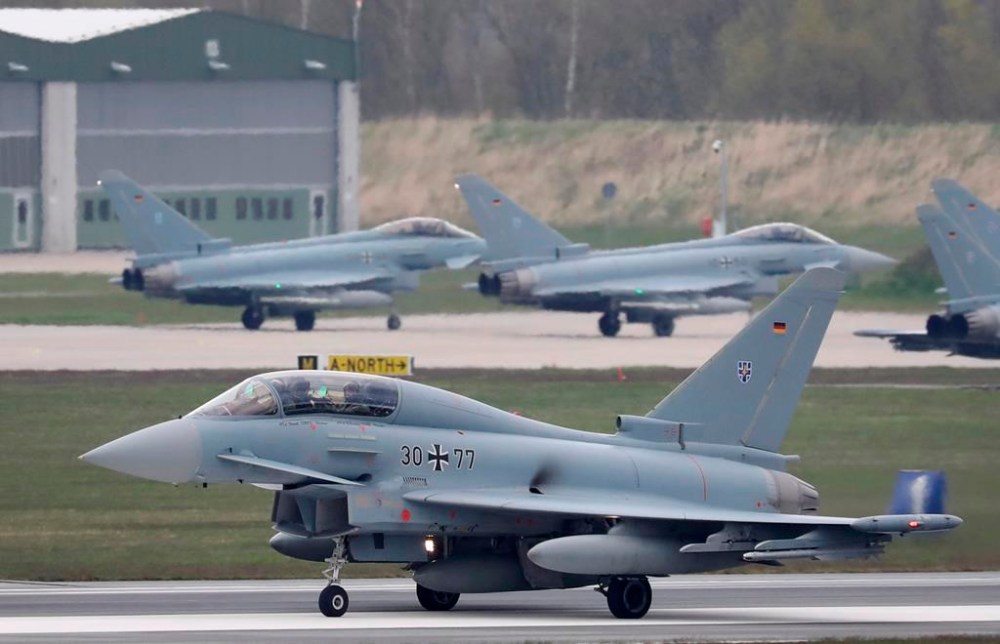
News of the Iris-T export approval comes after Foreign Minister Annalena Baerbock said Sunday that Germany is open to delivering more Eurofighter jets, made by a multinational consortium in which Berlin is involved, to Saudi Arabia. The government had previously opposed doing so in Germany’s current parliamentary term, which is due to end in the fall of 2025.
In their coalition agreement in late 2021, the current governing parties said that they wouldn’t approve weapons exports to countries that are “demonstrably directly involved in the war in Yemen.”
Hebestreit said Monday that Scholz shares Baerbock’s position. He said the government had re-evaluated the impact of the so-called “Yemen clause” on Saudi Arabia in light of developments in that conflict.
He also pointed to what he called a “very constructive position” of Saudi Arabia toward Israel following the Oct. 7 attack on Israel by Hamas and said the Saudi air force had shot down missiles fired toward Israel by Yemen’s Houthi rebels.
A tentative cease-fire between the Houthis and a Saudi-led coalition fighting on behalf of Yemen’s exiled government has held for months despite that country’s long war.