

Elmore Nickleberry, a Memphis sanitation worker who marched with Martin Luther King, has died at 92
Advertisement
Read this article for free:
or
Already have an account? Log in here »
To continue reading, please subscribe:

Digital Subscription
One year of digital access for only $205*
- Enjoy unlimited reading on winnipegfreepress.com
- Read the E-Edition, our digital replica newspaper
- Access News Break, our award-winning app
- Play interactive puzzles
*First annual payment billed as $205.00 + GST for one year. This annual subscription will automatically renew at $233.00 + GST every 52 weeks (10% off the regular annual price of $259.35). Offer available to new and qualified returning subscribers only. Cancel any time.
To continue reading, please subscribe:
Add Free Press access to your Brandon Sun subscription for only an additional
$1 for the first 4 weeks*
- Enjoy unlimited reading on winnipegfreepress.com
- Read the E-Edition, our digital replica newspaper
- Access News Break, our award-winning app
- Play interactive puzzles
*Your next Brandon Sun subscription payment will increase by $1.00 and you will be charged $17.95 plus GST for four weeks. After four weeks, your payment will increase to $24.95 plus GST every four weeks.
Read unlimited articles for free today:
or
Already have an account? Log in here »
Hey there, time traveller!
This article was published 12/01/2024 (972 days ago), so information in it may no longer be current.
MEMPHIS, Tenn. (AP) — Elmore Nickleberry, a longtime Memphis sanitation worker who participated in the pivotal 1968 strike that brought the Rev. Martin Luther King Jr. to the city where the civil rights leader was killed, has died at age 92.
Nickleberry died on Dec. 30 in Memphis, according to an obituary by R.S. Lewis and Sons Funeral Home, which handled his services. A cause of death was not disclosed.
Nickleberry was one of about 1,300 Black sanitation workers who formed a union and went on strike after two colleagues, Echol Cole and Robert Walker, were crushed by a faulty garbage truck compactor as they sought shelter from a rainstorm in the back of the truck on Feb. 1, 1968. Many struggled to pay bills and feed their families as they held out for better pay, working conditions and benefits.
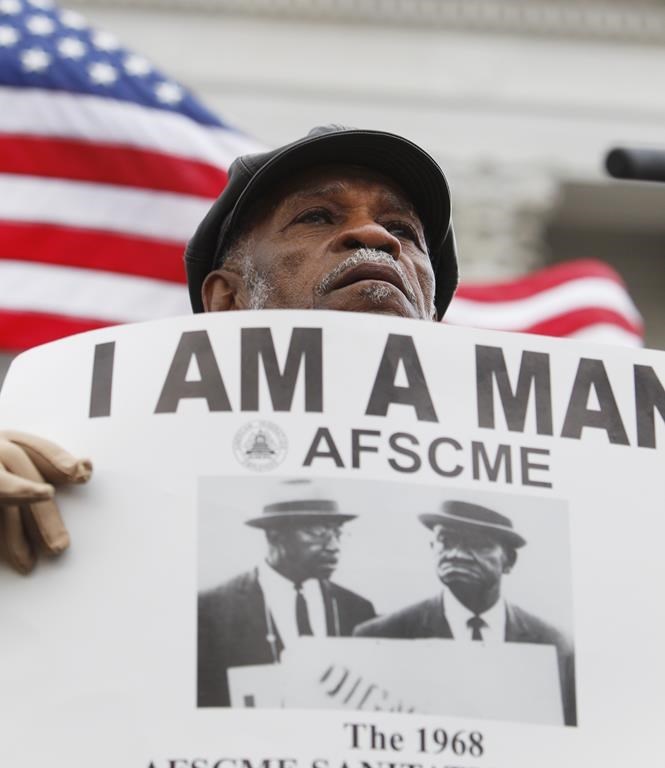
“We didn’t have a place to shower, wash our hands, nothing,” Nickleberry told the Associated Press in a 2018 interview.
King came to Memphis to support the strike and build support for his Poor People’s Movement. He led a march on Beale Street on March 28, 1968, that turned violent when police and protesters clashed. Nickleberry was one of the marchers who joined King that day in the Mississippi River city.
“A lot of people got hit and started running. I got hit on the arm, so I went down to the river,” Nickleberry said. “A lot of people got dogs sicked on them … It was bad during that time. Really bad.”
King had planned another march but he was fatally shot while standing on the balcony of the Lorraine Motel on April 4. The sanitation workers eventually struck a deal for higher pay and improved conditions.
“When he came, all of us were happy, because we figured if he came to town, we would get better working conditions,” Nickleberry said. “Dr. King was a great man.”
On the 50th anniversary of King’s assassination, Nickleberry recalled the famous “Mountaintop” speech King delivered on a stormy night at the Mason Temple the night before he died.
“He knew something was going to happen. He could feel it,” Nickleberry said. “When he spoke like that, he had the power in his voice.”
Nickleberry worked for the Memphis sanitation department for 65 years. He served in the U.S. Army and was honorably discharged before going to work for the department at the age of 21.
“I stood outside the gate for two weeks trying to get a job,” Nickleberry said. “Then a man told me, ‘Boy, you’ve been coming here for two weeks, a week or two.’ I said. ‘Yes sir.’ He said, ‘Come on in boy.’ I went on in, and the next day I started picking up garbage.”
Nickleberry and other sanitation workers received several awards in later years. A memorial near the Clayborn Temple, where organizers passed out the famous “I Am A Man” placards they would carry during protests, honors their legacy.
“The efforts of the strikers, with their iconic “I Am A Man” placards, and of people of good will in Memphis, led to remarkable progress in race relations and labor equity, and forever changed my city for the better,” U.S. Rep. Steve Cohen, a Memphis Democrat, said in a statement after Nickleberry’s death. “The strike and its aftermath were a defining moment for Memphis and for the country.”