

Iran sentences imprisoned Nobel laureate Narges Mohammadi to an additional prison term
Advertisement
Read this article for free:
or
Already have an account? Log in here »
To continue reading, please subscribe:

Digital Subscription
One year of digital access for only $205*
- Enjoy unlimited reading on winnipegfreepress.com
- Read the E-Edition, our digital replica newspaper
- Access News Break, our award-winning app
- Play interactive puzzles
*First annual payment billed as $205.00 + GST for one year. This annual subscription will automatically renew at $233.00 + GST every 52 weeks (10% off the regular annual price of $259.35). Offer available to new and qualified returning subscribers only. Cancel any time.
To continue reading, please subscribe:
Add Free Press access to your Brandon Sun subscription for only an additional
$1 for the first 4 weeks*
- Enjoy unlimited reading on winnipegfreepress.com
- Read the E-Edition, our digital replica newspaper
- Access News Break, our award-winning app
- Play interactive puzzles
*Your next Brandon Sun subscription payment will increase by $1.00 and you will be charged $17.95 plus GST for four weeks. After four weeks, your payment will increase to $24.95 plus GST every four weeks.
Read unlimited articles for free today:
or
Already have an account? Log in here »
Hey there, time traveller!
This article was published 15/01/2024 (974 days ago), so information in it may no longer be current.
DUBAI, United Arab Emirates (AP) — A court in Iran has slapped imprisoned Nobel Peace Prize laureate Narges Mohammadi with an additional sentence of 15 months for allegedly spreading propaganda against the Islamic Republic, her family said Monday.
According to a post on Instagram by Mohammadi ‘s family, the new sentence was handed down on Dec. 19. It said Mohammadi had refused to attend the court sessions.
The verdict also said that after serving her time, Mohammadi would be banned from traveling abroad for two years and would be barred from membership in political and social groups and from having a mobile phone for the same duration.
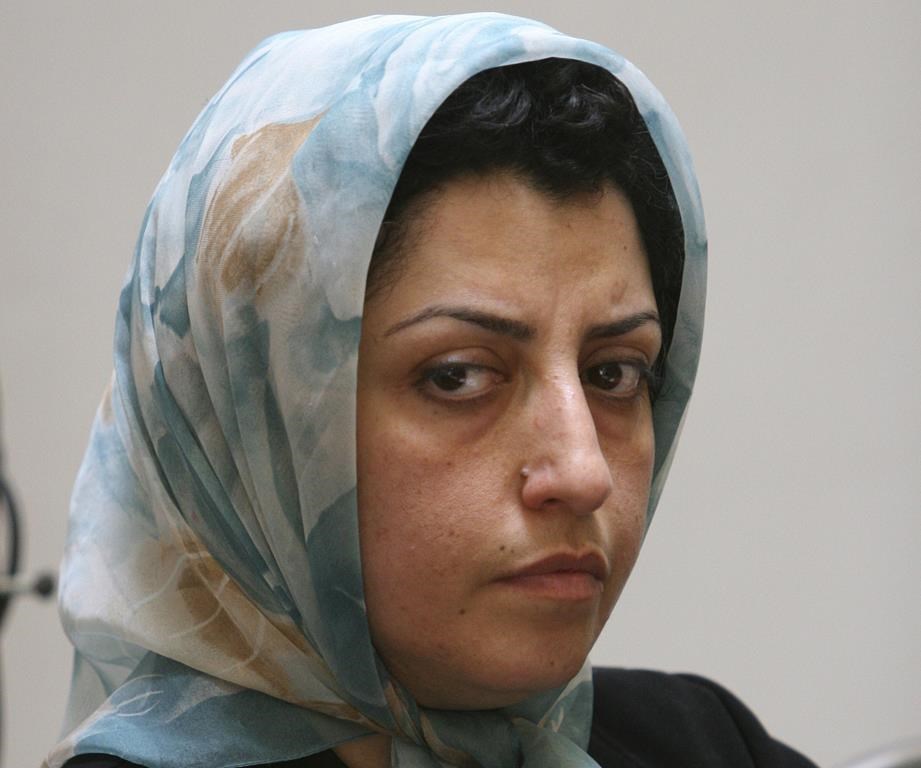
The ruling also banishes her from the capital, Tehran, meaning she would likely have to serve the new sentence in another province in Iran. Mohammadi is held in Tehran’s notorious Evin Prison where she is serving a 30-month sentence for spreading propaganda against the ruling system, disobediences in prison and defamation of authorities.
The latest verdict reflects the Iranian theocracy’s anger that she was awarded the Nobel prize last October for years of activism despite a decadeslong government campaign targeting her.
Mohammadi is the 19th woman to win the Nobel Peace Prize and the second Iranian woman after human rights activist Shirin Ebadi in 2003. The 51-year-old Mohammadi has kept up her activism despite numerous arrests by Iranian authorities and spending years behind bars.
Earlier in November, Mohammadi went on hunger strike over being blocked along with other inmates from getting medical care and to protest the country’s mandatory headscarves for women.
Mohammadi was a leading light for nationwide, women-led protests sparked by the death last year of a 22-year-old woman in police custody that have grown into one of the most intense challenges to Iran’s theocratic government. That woman, Mahsa Amini, had been detained for allegedly not wearing her headscarf to the liking of authorities.
For observant Muslim women, the head covering is a sign of piety before God and modesty in front of men outside their families. In Iran, the hijab — and the all-encompassing black chador worn by some — has long been a political symbol as well, particularly after becoming mandatory in the years following the 1979 Islamic Revolution.
While women in Iran hold jobs, academic positions and even government appointments, their lives are tightly controlled in part by laws like the mandatory hijab. Iran and neighboring, Taliban-ruled Afghanistan remain the only countries to mandate that. Since Amini’s death, however, more women are choosing not to wear the headscarf despite an increasing campaign by authorities targeting them and businesses serving them.