

Lawyers ask federal appeals court to block the nation’s first execution by nitrogen hypoxia
Advertisement
Read this article for free:
or
Already have an account? Log in here »
To continue reading, please subscribe:

Digital Subscription
One year of digital access for only $205*
- Enjoy unlimited reading on winnipegfreepress.com
- Read the E-Edition, our digital replica newspaper
- Access News Break, our award-winning app
- Play interactive puzzles
*First annual payment billed as $205.00 + GST for one year. This annual subscription will automatically renew at $233.00 + GST every 52 weeks (10% off the regular annual price of $259.35). Offer available to new and qualified returning subscribers only. Cancel any time.
To continue reading, please subscribe:
Add Free Press access to your Brandon Sun subscription for only an additional
$1 for the first 4 weeks*
- Enjoy unlimited reading on winnipegfreepress.com
- Read the E-Edition, our digital replica newspaper
- Access News Break, our award-winning app
- Play interactive puzzles
*Your next Brandon Sun subscription payment will increase by $1.00 and you will be charged $17.95 plus GST for four weeks. After four weeks, your payment will increase to $24.95 plus GST every four weeks.
Read unlimited articles for free today:
or
Already have an account? Log in here »
Hey there, time traveller!
This article was published 16/01/2024 (988 days ago), so information in it may no longer be current.
MONTGOMERY, Ala. (AP) — Attorneys for the first inmate slated to be put to death with nitrogen gas have asked a federal appeals court to block the execution scheduled later this month in Alabama.
Kenneth Eugene Smith’s attorneys on Monday asked the 11th U.S. Circuit Court of Appeals to block his Jan. 25 execution. The appellate court will hear arguments in the case on Friday.
The state plans to place a face mask over Smith’s nose and mouth to replace breathable air with pure nitrogen — an inert gas that makes up 78% of the air inhaled by humans — causing him to die from lack of oxygen. The nitrogen gas would be administered for at least 15 minutes or “five minutes following a flatline indication on the EKG, whichever is longer,” according to the state protocol.
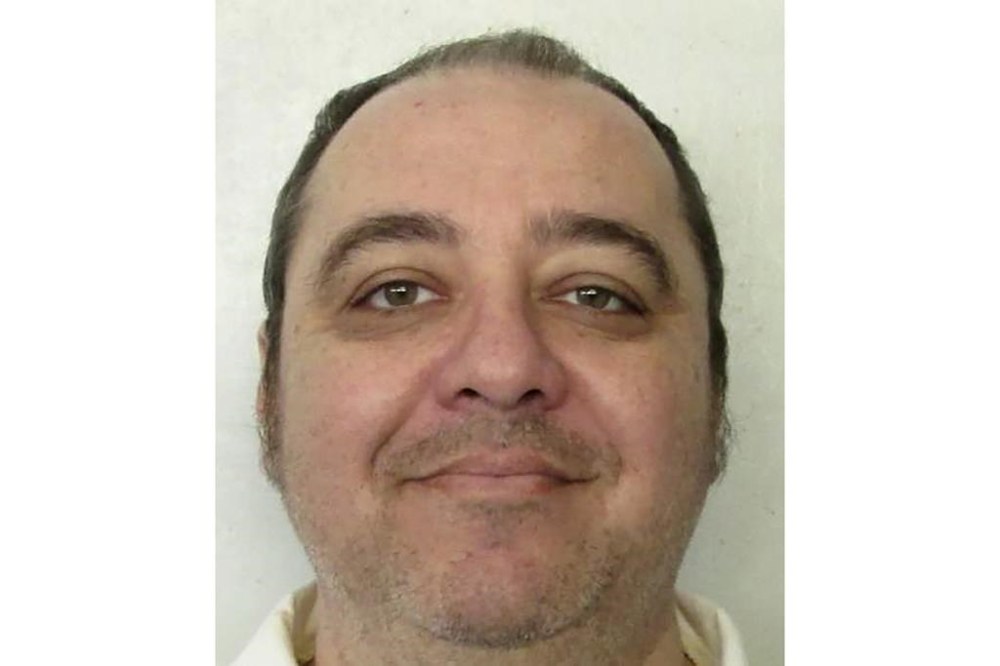
Three states — Alabama, Mississippi and Oklahoma — have authorized nitrogen hypoxia as an execution method, but none have attempted to use it. The question of whether Alabama will ultimately be allowed to attempt the nation’s first execution using nitrogen gas could end up before the U.S. Supreme Court.
Smith’s attorneys appealed a judge’s Jan. 10 decision to let the execution go forward. They argued that the new nitrogen hypoxia protocol is riddled with unknowns and potential problems that could violate the constitutional ban on cruel and unusual punishment. They said the concerns over the novel execution method and how Smith was chosen as the “test subject” should be more fully considered by a court before the execution proceeds.
“Because Mr. Smith will be the first condemned person subject to this procedure, his planned execution is an experiment that would not be performed or permitted outside this context,” Smith’s attorneys wrote in the Monday court filing.
The low-oxygen environment could cause nausea leading Smith to choke to death on his own vomit, his attorneys argued. Or if he is exposed to less than pure nitrogen, they argued he was at risk of feeling the sensation of suffocation or being left in a vegetative state instead of dying.
The Alabama attorney general’s office has called those concerns speculative and argued in court filings that the deprivation of oxygen will “cause unconsciousness within seconds, and cause death within minutes.” The state will file its objection to Smith’s request for a stay later this week.
Smith’s attorneys also argued that the mask placed over his month would also interfere with his ability to pray aloud before his execution and further argued that Alabama violated Smith’s due process rights by setting his execution date while he has ongoing appeals.
The Alabama Supreme Court on Friday rejected Smith’s appeal that it would be unconstitutionally cruel to make a second attempt to execute him after a previous attempt at a lethal injection failed. His attorneys wrote that they intend to appeal that ruling to the U.S. Supreme Court.
Smith was strapped to a gurney in the execution chamber for nearly four hours in 2022 as the state prepared to execute him by lethal injection, his attorneys wrote. The execution was called off before any of the drugs were administered because the execution team could not get the second of two required intravenous lines connected to Smith’s veins.
Smith was one of two men convicted of the 1988 murder-for-hire slaying of a preacher’s wife. Prosecutors said Smith and the other man were each paid $1,000 to kill Elizabeth Sennett. John Forrest Parker, the other man convicted in the slaying, was executed in 2010 by lethal injection.