

A cholera outbreak in Zambia has caused more than 400 deaths and infected 10,000
Advertisement
Read this article for free:
or
Already have an account? Log in here »
To continue reading, please subscribe:

Digital Subscription
One year of digital access for only $205*
- Enjoy unlimited reading on winnipegfreepress.com
- Read the E-Edition, our digital replica newspaper
- Access News Break, our award-winning app
- Play interactive puzzles
*First annual payment billed as $205.00 + GST for one year. This annual subscription will automatically renew at $233.00 + GST every 52 weeks (10% off the regular annual price of $259.35). Offer available to new and qualified returning subscribers only. Cancel any time.
To continue reading, please subscribe:
Add Free Press access to your Brandon Sun subscription for only an additional
$1 for the first 4 weeks*
- Enjoy unlimited reading on winnipegfreepress.com
- Read the E-Edition, our digital replica newspaper
- Access News Break, our award-winning app
- Play interactive puzzles
*Your next Brandon Sun subscription payment will increase by $1.00 and you will be charged $17.95 plus GST for four weeks. After four weeks, your payment will increase to $24.95 plus GST every four weeks.
Read unlimited articles for free today:
or
Already have an account? Log in here »
Hey there, time traveller!
This article was published 17/01/2024 (992 days ago), so information in it may no longer be current.
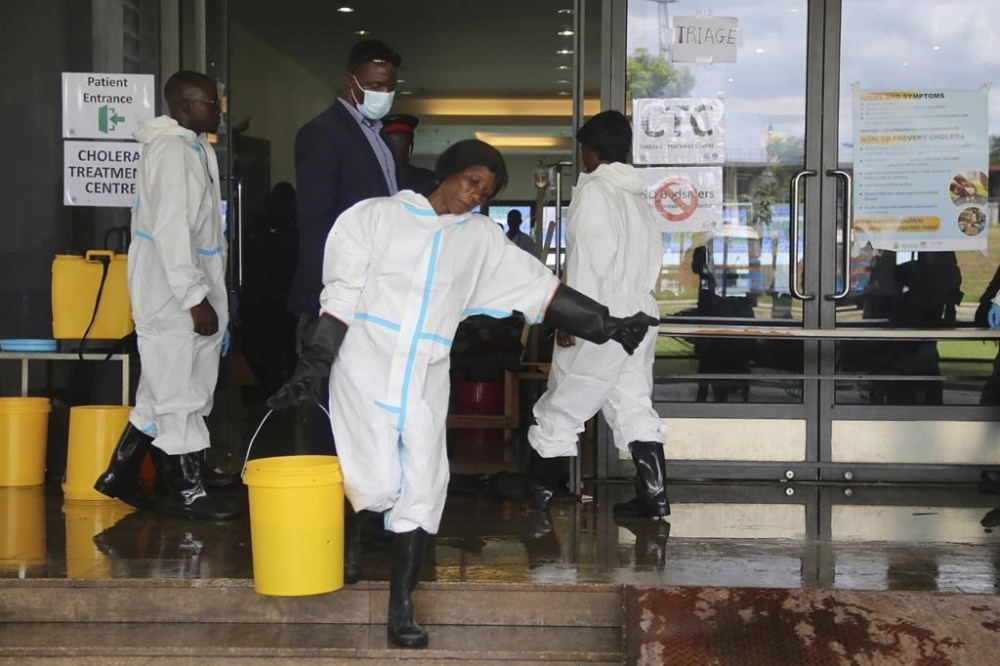
LUSAKA, Zambia (AP) — Zambia is reeling from a major cholera outbreak that has killed more than 400 people and infected more than 10,000, leading authorities to order schools across the country to remain shut after the end-of-year holidays.
A large soccer stadium in the capital city has been converted into a treatment facility.
The Zambian government is embarking on a mass vaccination program and says it’s providing clean water — 2.4 million liters a day — to communities that are affected across the southern African nation.
The national disaster management agency has been mobilized.
Cholera is an acute diarrhea infection caused by a bacteria that is typically spread via contaminated food or water. The disease is strongly linked to poverty and inadequate access to clean water.
The outbreak in Zambia began in October and 412 people have died and 10,413 cases have been recorded, according to the latest count on Wednesday from the Zambia Public Health Institute, the government body that deals with health emergencies.
The Health Ministry says cholera has been detected in nearly half of the country’s districts and nine out of 10 provinces, and the nation of about 20 million people has been recording more than 400 cases a day.
“This outbreak continues to pose a threat to the health security of the nation,” Health Minister Sylvia Masebo said, outlining it was a nationwide problem.
The United Nations Children’s Fund, UNICEF, called the fatality rate of around 4% in the three-month outbreak “a devastatingly high number.” When treated, cholera typically has a death rate of less than 1%.
There have been recent cholera outbreaks in other southern African nations including Malawi, Mozambique and Zimbabwe. More than 200,000 cases and over 3,000 deaths have been reported in southern Africa since the start of 2023, UNICEF said.
Malawi had its worst cholera outbreak in decades in 2023. Last year, the World Health Organization reported that about 30 countries globally, also including Nigeria and Uganda in Africa, suffered serious outbreaks in the last few years.
Cholera barely affects countries in the developed world and can be easily treated but can be quickly fatal if not treated.
More than half — 229 — of the victims in the Zambian outbreak died before being admitted to a health facility, the public health institute said.
Zambia has had several major cholera outbreaks since the 1970s but this one is the worst for 20 years in terms of the caseload, according to Dr. Mazyanga Mazaba, the director of public health policy and communication at the public health institute.
The cholera bacteria can also survive longer in warmer weather and unusually heavy rains and storms in southern Africa have contributed to recent outbreaks, experts say.
WHO said last year that while poverty and conflict remain the main drivers for cholera, climate change has contributed to the disease’s upsurge in many places across the globe since 2021 by making storms wetter and more frequent. A cyclone sparked a spiraling cholera outbreak in Mozambique last year.
Heavy rains and flash flooding in Zambia have converted some neighborhoods into soggy or waterlogged areas.
The Zambian government announced in early January that schools — which were meant to open for the year on Jan. 8 — will only open on Jan. 29. Parents and children were urged to make use of education programs on public TV and radio, a situation that had echoes of the COVID-19 pandemic.
The education minister ordered schools to be cleaned and inspected.
Zambia’s Disaster Management and Mitigation Unit was mobilized and it was delivering large water tanks and trucking in clean water to some neighborhoods daily. Granulated chlorine to treat water was also being provided, it said.

The majority of cases are in the capital, Lusaka, where a 60,000-seat national soccer stadium has been converted into a treatment center and is dealing with around 500 patients at any one time, the health minister said.
She said Zambia had received around 1.4 million doses of the oral cholera vaccine from the WHO and expected more than 200,000 more to arrive soon. Zambian government officials, including Masebo, took a vaccine publicly to encourage others to also do so.
Health experts have previously warned that the numerous cholera outbreaks globally have strained the supply of vaccines, which are mostly distributed to poor countries through an international body run by the U.N. and partners. Vaccines alliance Gavi predicted that the vaccine shortage could last until 2025.
___
AP Africa news: https://apnews.com/hub/africa