

Iraq and US begin formal talks to end coalition mission formed to fight the Islamic State group
Advertisement
Read this article for free:
or
Already have an account? Log in here »
To continue reading, please subscribe:

Digital Subscription
One year of digital access for only $205*
- Enjoy unlimited reading on winnipegfreepress.com
- Read the E-Edition, our digital replica newspaper
- Access News Break, our award-winning app
- Play interactive puzzles
*First annual payment billed as $205.00 + GST for one year. This annual subscription will automatically renew at $233.00 + GST every 52 weeks (10% off the regular annual price of $259.35). Offer available to new and qualified returning subscribers only. Cancel any time.
To continue reading, please subscribe:
Add Free Press access to your Brandon Sun subscription for only an additional
$1 for the first 4 weeks*
- Enjoy unlimited reading on winnipegfreepress.com
- Read the E-Edition, our digital replica newspaper
- Access News Break, our award-winning app
- Play interactive puzzles
*Your next Brandon Sun subscription payment will increase by $1.00 and you will be charged $17.95 plus GST for four weeks. After four weeks, your payment will increase to $24.95 plus GST every four weeks.
Read unlimited articles for free today:
or
Already have an account? Log in here »
Hey there, time traveller!
This article was published 27/01/2024 (938 days ago), so information in it may no longer be current.
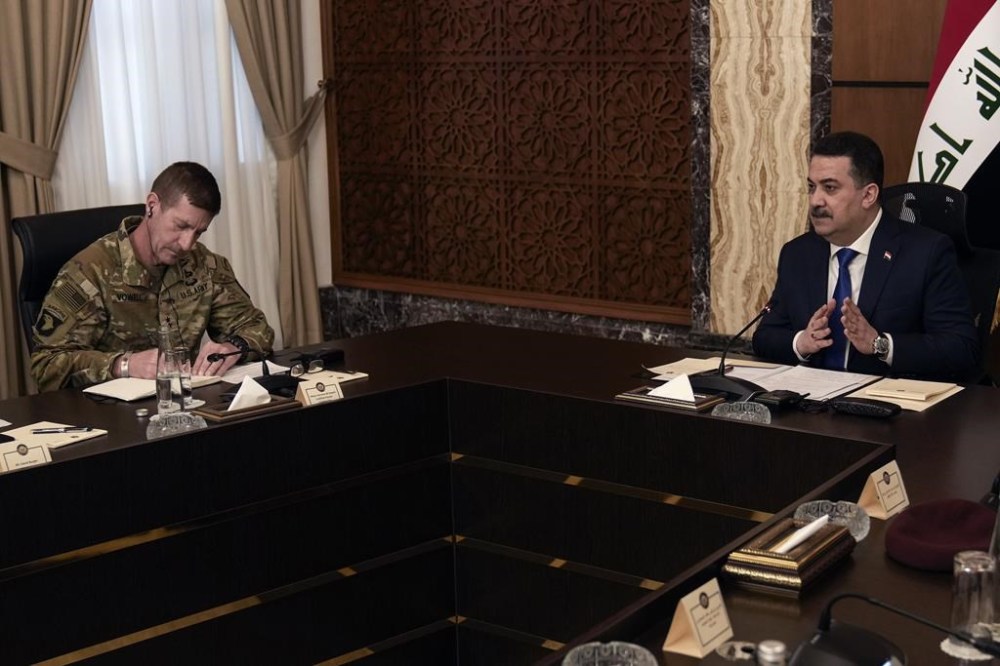
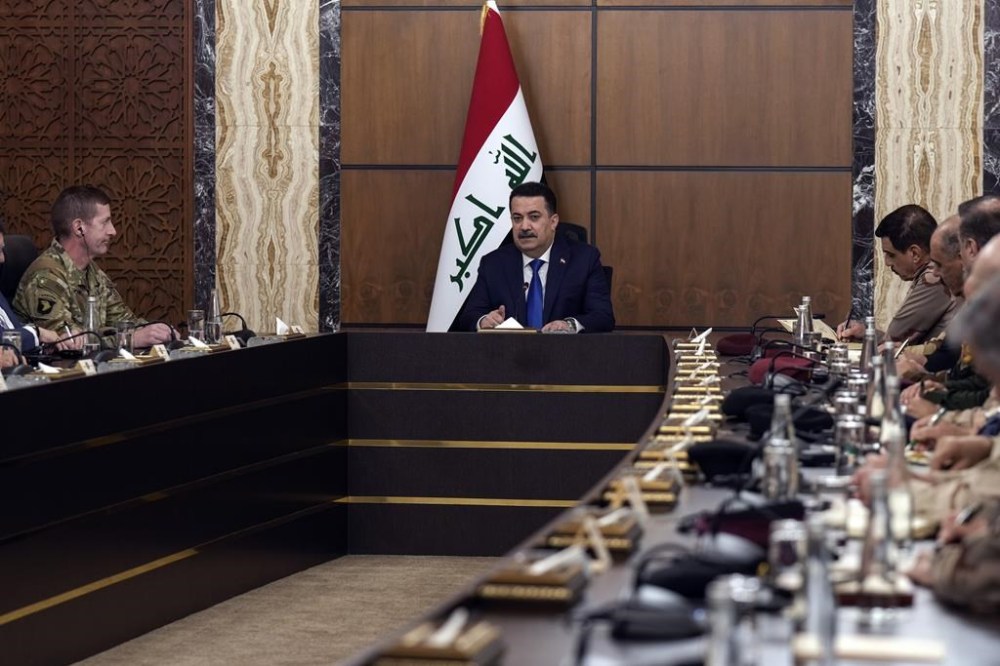
BEIRUT (AP) — The United States and Iraq held a first session of formal talks Saturday in Baghdad aimed at winding down the mission of a U.S.-led military coalition formed to fight the Islamic State group in Iraq.
Iraqi Prime Minister Mohammed Shia al-Sudani said in a statement that he had sponsored “the commencement of the first round of bilateral dialogue between Iraq and the United States of America to end the mission of the Coalition in Iraq.”
A statement released by the coalition said that working groups made up of Iraqi and coalition military officials will assess “the threat of Daesh (IS), operational and environmental requirements and Iraqi Security Force capabilities” and a higher military commission will “work to set the conditions to transition the mission in Iraq.”
The beginning of talks, announced by both countries on Thursday, comes as U.S. forces in Iraq and Syria have been regularly targeted by drone attacks launched by Iran-backed militias against the backdrop of the ongoing Israel-Hamas war.
The U.S. says plans to set up a committee to negotiate the terms of the mission’s end were first discussed last year, and the timing isn’t related to the attacks.
Washington has had a continuous presence in Iraq since its 2003 invasion. Although all U.S. combat forces left in 2011, thousands of troops returned in 2014 to help the government of Iraq defeat IS.
Since the extremist group lost its hold on the territory it once seized, Iraqi officials have periodically called for a withdrawal of coalition forces, particularly in the wake of a U.S. airstrike in January 2020 that killed Iranian Gen. Qassem Soleimani and Iraqi militia leader Abu Mahdi al-Muhandis outside the Baghdad airport.
The issue has surfaced again since Israel launched its major counteroffensive in Gaza following the Oct. 7 Hamas-led attack in southern Israel.
Since mid-October, a group of Iran-backed militias calling itself the Islamic Resistance in Iraq have launched regular attacks on U.S. forces in Iraq and Syria, which the group said are in retaliation for Washington’s support for Israel in the war in Gaza.
Those estimated 2,500 U.S. troops and the bases they serve on have drawn more than 150 missile and drone attacks fired by the militias. Scores of U.S. personnel have been wounded, including some with traumatic brain injuries, during the attacks.
The U.S. has struck militia targets in return, including some linked to the Popular Mobilization Forces, a coalition of mainly Shiite, Iran-backed paramilitary groups that is officially under the control of the Iraqi military. But it largely operates on its own in practice. Iraqi officials have complained that the U.S. strikes are a violation of Iraq’s sovereignty.
U.S. officials have said that talks about setting up a committee to decide on the framework for ending the coalition’s mission were already underway before Oct. 7 and the decision is unrelated to the attacks.
The Islamic Resistance in Iraq nevertheless took credit for the decision in a statement, saying that it “proves that the Americans only understand the language of force.” It vowed to continue its attacks.