

US condemns ban on Venezuelan opposition leader’s candidacy and puts sanctions relief under review
Advertisement
Read this article for free:
or
Already have an account? Log in here »
To continue reading, please subscribe:

Digital Subscription
One year of digital access for only $205*
- Enjoy unlimited reading on winnipegfreepress.com
- Read the E-Edition, our digital replica newspaper
- Access News Break, our award-winning app
- Play interactive puzzles
*First annual payment billed as $205.00 + GST for one year. This annual subscription will automatically renew at $233.00 + GST every 52 weeks (10% off the regular annual price of $259.35). Offer available to new and qualified returning subscribers only. Cancel any time.
To continue reading, please subscribe:
Add Free Press access to your Brandon Sun subscription for only an additional
$1 for the first 4 weeks*
- Enjoy unlimited reading on winnipegfreepress.com
- Read the E-Edition, our digital replica newspaper
- Access News Break, our award-winning app
- Play interactive puzzles
*Your next Brandon Sun subscription payment will increase by $1.00 and you will be charged $17.95 plus GST for four weeks. After four weeks, your payment will increase to $24.95 plus GST every four weeks.
Read unlimited articles for free today:
or
Already have an account? Log in here »
Hey there, time traveller!
This article was published 27/01/2024 (971 days ago), so information in it may no longer be current.
CARACAS, Venezuela (AP) — The U.S. government and nearly 30 conservative world leaders on Saturday condemned the decision of Venezuela’s highest court to block the presidential candidacy of opposition leader María Corina Machado.
The Biden administration, however, remained noncommittal about reimposing economic sanctions on Venezuela, which it has threatened to do if the government of President Nicolás Maduro failed to ensure a level playing field for the country’s presidential election this year.
“The United States is currently reviewing our Venezuela sanctions policy, based on this development and the recent political targeting of democratic opposition candidates and civil society,” U.S. State Department spokesman Matthew Miller said in a statement.
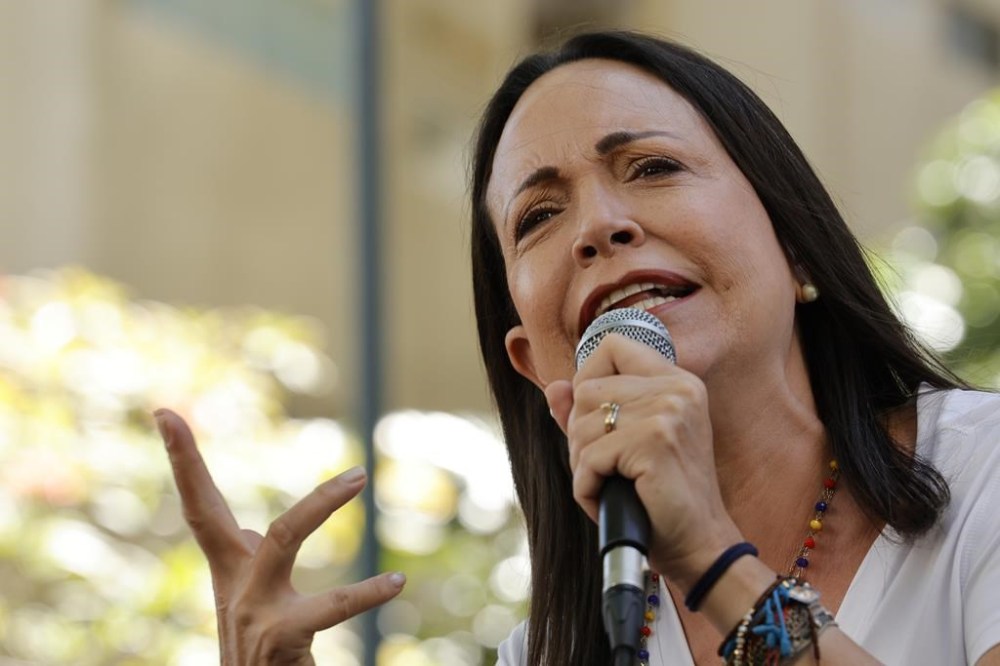
Machado won a presidential primary held in October by the faction of the opposition backed by the U.S. She secured more than 90% of the vote despite the Venezuelan government announcing a 15-year ban on her running for office just days after she formally entered the race in June.
The former lawmaker and longtime government foe was able to participate in the primary because the election was organized by a commission independent of Venezuela’s electoral authorities. Machado insisted throughout the campaign that she never received official notification of the ban and said voters, not ruling-party loyalists, were the rightful decision-makers of her candidacy.
Venezuela’s Supreme Tribunal of Justice on Friday upheld the ban, which was based on alleged fraud and tax violations, and accuses Machado of seeking the economic sanctions the U.S. imposed on Venezuela.
The ruling came more than three months after Maduro and the U.S.-backed opposition reached a deal to work on basic conditions for a fair election. The two sides agreed to hold the election in the second half of 2024, invite international electoral observers, and create a process for aspiring presidential candidates to appeal their bans.
The deal led Washington to ease some economic sanctions on Venezuela’s oil, gas and mining sectors.
Miller said Friday’s decision from Venezuela’s Supreme Tribunal of Justice “runs contrary to the commitments made by Maduro and his representatives” under the agreement signed in October on the Caribbean island of Barbados. He said the appeal process “lacked basic elements, as Machado neither received a copy of the allegations against her nor was afforded the opportunity to respond to those allegations.”
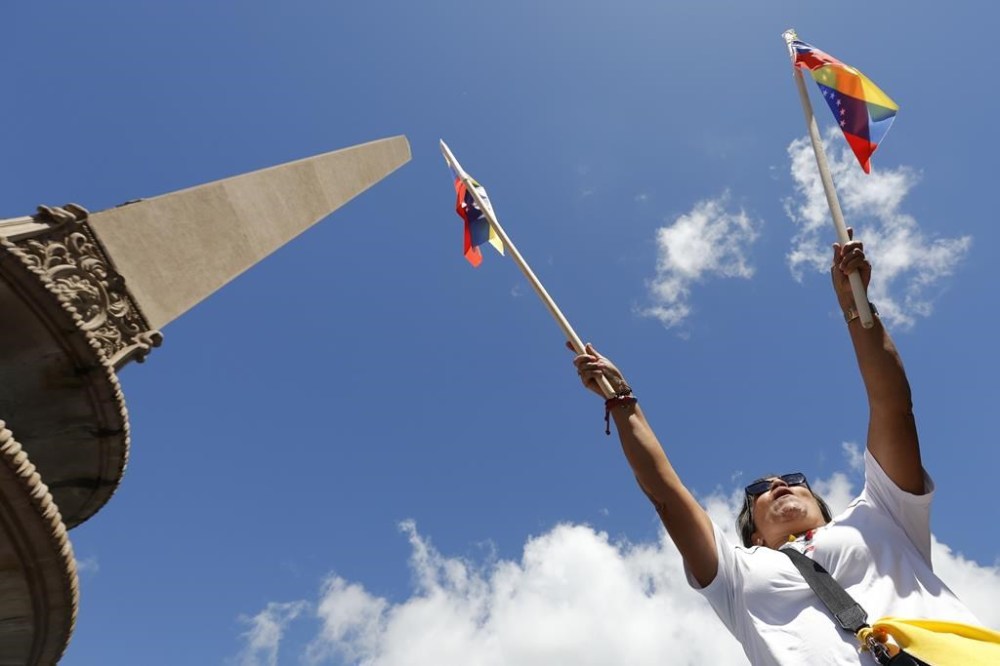
Gerardo Blyde, the chief negotiator for the opposition group known as the Unitary Platform, said Saturday that the court’s ruling violates the Barbados accord. He asked for backing from the international community, specifically the presidents of France, Emmanuel Macron; of Brazil, Luis Inácio Lula da Silva, and of Colombia, Gustavo Petro — all of whom have supported the negotiation process.
Blyde also urged Maduro’s allies to reverse the court’s decision, arguing it constitutes a “violation of due process and the right to due defense” of Machado, who was never granted an opportunity to defend herself.
But Hector Rodríguez, a governor and member of Maduro’s negotiating delegation, told reporters that Venezuela’s government has followed the terms of the accord and plans to hold the presidential election this year. He added that the court’s decision is a thing of the past in the eyes of his delegation.
“What happened at the opposition’s request for an expedited (appeal) process based on the agreement is already an adjudicated matter in Venezuela,” Rodríguez said. “We are not going to have wet rain again. … They are not going to lock us in a permanent dynamic that does not allow us to move forward.”
While the opposition’s candidate remains in doubt, Maduro will be seeking six more years in office. His entire decade-long presidency has been marked by political, social and economic crisis. Under his watch, millions of Venezuelans have fallen into poverty and more than 7.4 million have migrated.
In a statement Saturday, the international nongovernmental organization Democratic Initiative of Spain and the Americas, said that Machado “continues to be the legitimate representative of the Venezuelan opposition and its presidential candidate before the international community.”
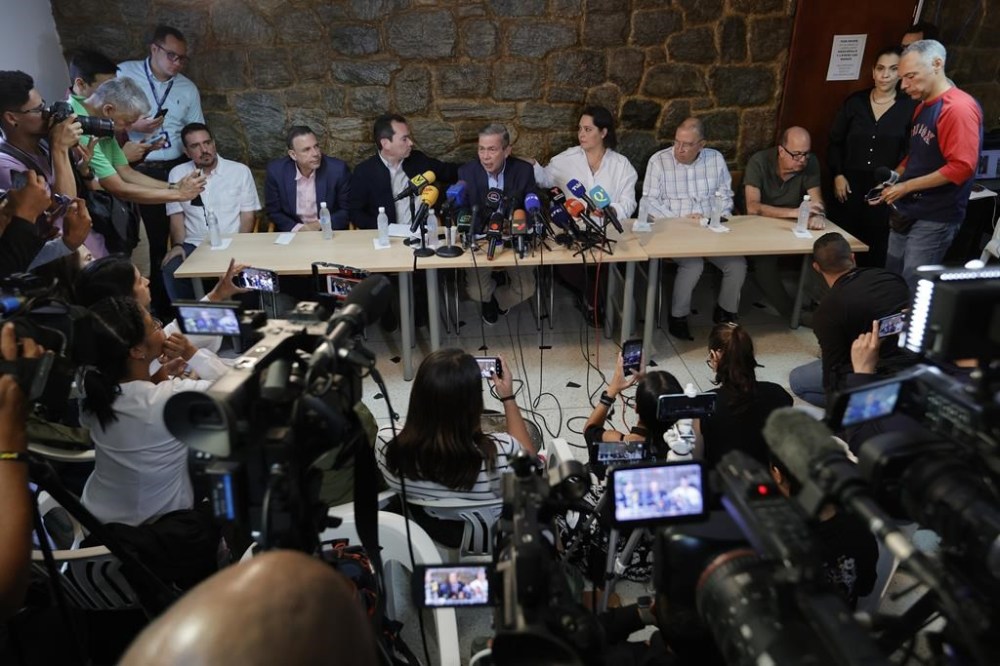
The statement was signed by roughly 30 world leaders of Spain and Latin America, including former Presidents Iván Duque of Colombia, Mauricio Macri of Argentina, and Vicente Fox and Felipe Calderón of Mexico.
The leaders wrote that the actions of Maduro’s government through Venezuela’s highest court, “whose direction has recently been entrusted to a member of the official party … proves his repeated contempt for the essential elements and fundamental components of democracy.”