

Court stormings come in waves after Caitlin Clark incident. Expert says stiffer penalties are needed
Advertisement
Read this article for free:
or
Already have an account? Log in here »
To continue reading, please subscribe:

Digital Subscription
One year of digital access for only $205*
- Enjoy unlimited reading on winnipegfreepress.com
- Read the E-Edition, our digital replica newspaper
- Access News Break, our award-winning app
- Play interactive puzzles
*First annual payment billed as $205.00 + GST for one year. This annual subscription will automatically renew at $233.00 + GST every 52 weeks (10% off the regular annual price of $259.35). Offer available to new and qualified returning subscribers only. Cancel any time.
To continue reading, please subscribe:
Add Free Press access to your Brandon Sun subscription for only an additional
$1 for the first 4 weeks*
- Enjoy unlimited reading on winnipegfreepress.com
- Read the E-Edition, our digital replica newspaper
- Access News Break, our award-winning app
- Play interactive puzzles
*Your next Brandon Sun subscription payment will increase by $1.00 and you will be charged $17.95 plus GST for four weeks. After four weeks, your payment will increase to $24.95 plus GST every four weeks.
Read unlimited articles for free today:
or
Already have an account? Log in here »
Hey there, time traveller!
This article was published 28/01/2024 (977 days ago), so information in it may no longer be current.
Images of students pouring out of the stands at the final buzzer to celebrate with players on the home team following a big win have long been part of college basketball. Usually, no one gets hurt.
But court storming and the safety risks associated with it have received more scrutiny in the week since Iowa star Caitlin Clark collided with an Ohio State fan after the Buckeyes’ upset of the Hawkeyes in Columbus.
There have been at least six more instances since the Clark incident and ESPN analyst Jay Bilas on Saturday called for an end to the tradition. Bilas said during the “College Gameday” show that fans should never be allowed on the court, and his comments went viral.
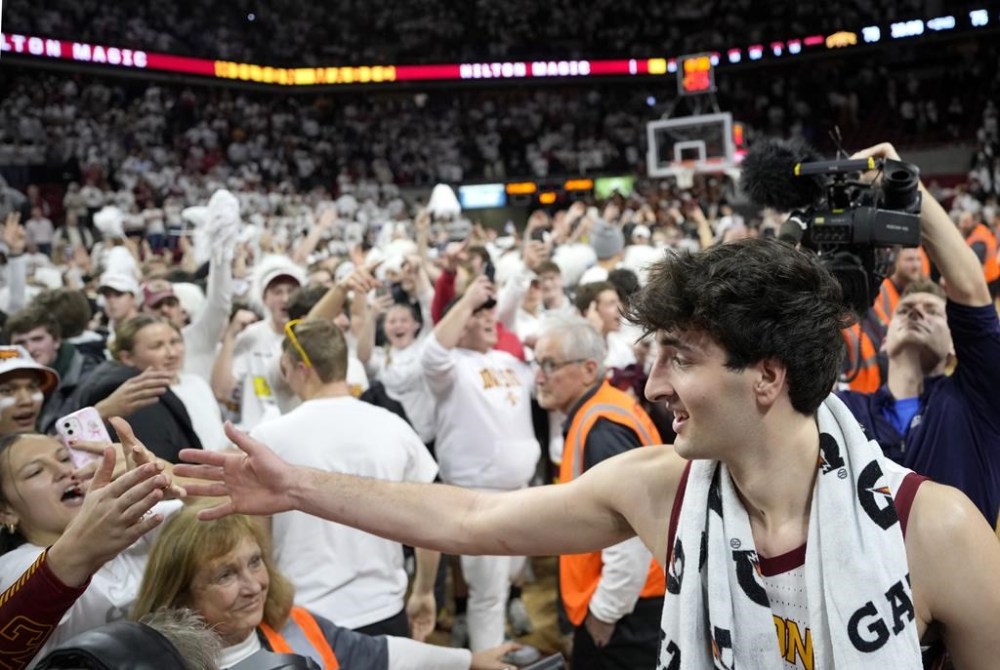
“I know it will keep happening and accept it,” Bilas wrote in a text message to The Associated Press. “But it seems inevitable that something negative will happen, and we’ll act surprised when it was foreseeable.”
A Tulane fan was seen on video making contact with a Memphis player during a court storming in New Orleans hours after the Clark incident on Jan. 21. The Southeastern Conference levied a $100,000 fine against South Carolina after fans rushed onto the court following an upset of Kentucky on Tuesday. Fans also stormed the court at Oregon State on Thursday and at Iowa State, Richmond and Wyoming on Saturday.
Schools are at risk of being fined by their conferences if the storming occurs before the visiting team and game officials have exited safely. Bilas and other observers call the penalties window dressing and say individuals who participate should face consequences, legal or otherwise.
Gil Fried, a business professor at the University of West Florida, provides training in crowd management and for more than 30 years has served as an expert witness in court cases involving injuries sustained at sports and entertainment venues.
Fried said ringing the court with security personnel or putting up barricades would be counterproductive because that would jeopardize people in the stands who get caught in the crush of fans pushing forward.
The best solution, he said, would be for schools to have a clearly stated policy that fans are not allowed on the court and that those who disobey could have their tickets taken away or be banned from the arena.
The challenge would be identifying and rounding up violators. Fried suggested arenas could be equipped with facial recognition technology, which is commonly used in soccer stadiums in Europe and Latin America to prevent hooliganism.
State and privacy laws in the United States could present obstacles to using the technology, and no U.S. colleges have shown interest in it for that purpose, said Micah Willbrand, chief product officer and vice president of enterprise identity for NEC, which creates facial recognition systems for soccer stadiums outside the U.S.
The court storming at Iowa State’s Hilton Coliseum following Saturday’s 79-75 win over No. 7 Kansas was the first in eight seasons. Security personnel in orange vests went onto the court at the final buzzer to separate the players’ handshake line from fans. The Jayhawks, like all visiting teams, then exited on the side of their bench to avoid having to go through fans on the court.
Also, gates installed in front of the ISU student section funneled students in one direction instead of there being a mass flow, slowing down the rush.
Minnesota coach Ben Johnson said nothing good comes from fans mixing with opposing players.
“It takes one kid to mouth something or say something that could start something,” Johnson said. “So the physical part of getting hit is one thing, but in the back of my mind it’s also (that) emotions are heightened.”
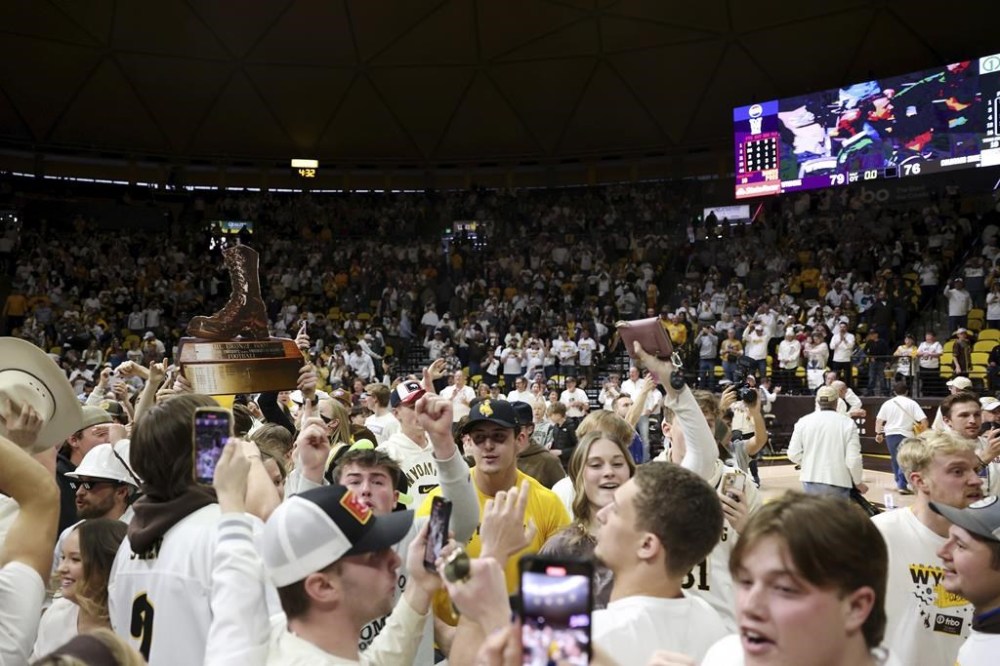
The SEC this year beefed up its fines for court and field storming to $100,000 for a first offense, $250,000 for a second and $500,000 for a third.
SEC spokesman Herb Vincent said there is no fine if the visiting team and game officials have made a safe exit before fans reach the playing surface.
SEC fines are paid to the visiting school if the storming occurred in a conference game. For nonconference games, the money is deposited into the league’s postgraduate scholarship fund. The suggestion is that it stings more for the offending school to fork over money to a conference rival.
Bilas said it’s apparent fines have had little impact, noting that South Carolina President Emeritus Harris Pastides posted on social media that he was among the fans who rushed the court after the Gamecocks’ win over Kentucky.
Bilas said schools use pictures of court storms to promote their programs and in recruiting and noted ESPN and other media companies feature videos of celebrating fans on the court on highlight shows.
“The fact that it is banned and SEC school officials accept and encourage it is a contradiction,” Bilas texted to the AP. “I love the passion and enthusiasm, but fans now believe it is their right. It’s not. At an NFL or NBA game, they’d be arrested.”
___
AP college basketball: https://apnews.com/hub/ap-top-25-college-basketball-poll and https://apnews.com/hub/college-basketball