

Peru gives in to protesters in Machu Picchu and rescinds ticket sales contract with private firm
Advertisement
Read this article for free:
or
Already have an account? Log in here »
To continue reading, please subscribe:

Digital Subscription
One year of digital access for only $205*
- Enjoy unlimited reading on winnipegfreepress.com
- Read the E-Edition, our digital replica newspaper
- Access News Break, our award-winning app
- Play interactive puzzles
*First annual payment billed as $205.00 + GST for one year. This annual subscription will automatically renew at $233.00 + GST every 52 weeks (10% off the regular annual price of $259.35). Offer available to new and qualified returning subscribers only. Cancel any time.
To continue reading, please subscribe:
Add Free Press access to your Brandon Sun subscription for only an additional
$1 for the first 4 weeks*
- Enjoy unlimited reading on winnipegfreepress.com
- Read the E-Edition, our digital replica newspaper
- Access News Break, our award-winning app
- Play interactive puzzles
*Your next Brandon Sun subscription payment will increase by $1.00 and you will be charged $17.95 plus GST for four weeks. After four weeks, your payment will increase to $24.95 plus GST every four weeks.
Read unlimited articles for free today:
or
Already have an account? Log in here »
Hey there, time traveller!
This article was published 31/01/2024 (984 days ago), so information in it may no longer be current.
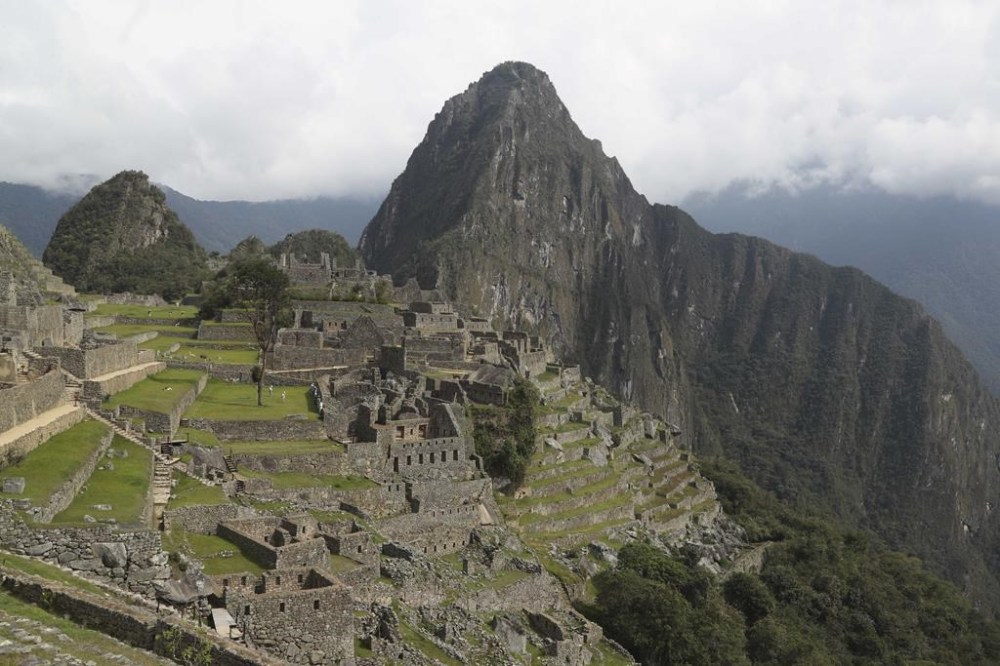
LIMA, Peru (AP) — Peru’s government on Wednesday backtracked on plans to outsource the sale of entry tickets to Machu Picchu to a private company, a week after protesters blocked access to the country’s most famous tourist attraction and rail service to the area was suspended.
Despite the resolution, the streets, hotels and restaurants around the site remained almost deserted.
Eleven days after the government announced the change in the ticketing system, which had been in the hands of a state entity for 15 years, the executive relented and terminated the contract questioned by the local tourism sector.
Peru’s Minister of Culture Leslie Urteaga, who had alleged irregularities and a loss of $1.8 million for tickets not reported by state offices, finally agreed to the protesters’ request after meeting with the regional president of Cusco and the mayor of the Machu Picchu district.
The authorities committed to moving ticket sales to an online platform managed by the national government and rescinded the contract with Joinnus, the virtual ticket sales firm owned by one of the wealthiest economic groups in Peru who had taken over the service in mid January.
Rail service to the area — which had been suspended on Friday — promptly resumed, but visitor arrivals were still slowed to a trickle.
“This seems like the time of the COVID-19 pandemic, you hardly see any people,” said Roger Monzón, an employee at the Inkas Land hotel in the Machu Picchu district, an 18-room building currently housing only two tourists from Portugal.
The few tourists who persisted in visiting the Inca site during the weeklong demonstration, most of them young, had to navigate a longer and more difficult road. They would drive 210 kilometers (130 miles) from Cusco to a hydroelectric plant from where they would walk two hours to reach the Machu Picchu district, where they rested. Then they had to walk to the stone citadel for another 2 1/2 hours.
Four countries — the United States, Germany, France and Brazil — had advised their citizens to be cautious if they were planning to visit Machu Picchu, a World Heritage Site since 1983, citing the potential lack of water and other essentials resulting from transport disruptions.
Tourism is the main economic activity in Cusco, with more than 200,000 people having direct jobs in the sector. In times before the protests, up to 4,500 visitors entered Machu Picchu every day.
There are no official figures on potential losses during the first week of protests, but some tourism unions estimate the damage at about $4.7 million.
“The losses include all sectors that are directly linked to tourism such as tourist agencies, hotels, restaurants, tour guides, but also markets, taxi drivers and peasant communities,” said Elena González, president of the Association of Cusco Tourism Agencies.
___
Follow AP’s coverage of Latin America and the Caribbean at https://apnews.com/hub/latin-america