

In California, Black lawmakers share a reparations plan with few direct payments
Advertisement
Read this article for free:
or
Already have an account? Log in here »
To continue reading, please subscribe:

Digital Subscription
One year of digital access for only $205*
- Enjoy unlimited reading on winnipegfreepress.com
- Read the E-Edition, our digital replica newspaper
- Access News Break, our award-winning app
- Play interactive puzzles
*First annual payment billed as $205.00 + GST for one year. This annual subscription will automatically renew at $233.00 + GST every 52 weeks (10% off the regular annual price of $259.35). Offer available to new and qualified returning subscribers only. Cancel any time.
To continue reading, please subscribe:
Add Free Press access to your Brandon Sun subscription for only an additional
$1 for the first 4 weeks*
- Enjoy unlimited reading on winnipegfreepress.com
- Read the E-Edition, our digital replica newspaper
- Access News Break, our award-winning app
- Play interactive puzzles
*Your next Brandon Sun subscription payment will increase by $1.00 and you will be charged $17.95 plus GST for four weeks. After four weeks, your payment will increase to $24.95 plus GST every four weeks.
Read unlimited articles for free today:
or
Already have an account? Log in here »
Hey there, time traveller!
This article was published 01/02/2024 (958 days ago), so information in it may no longer be current.
SAN FRANCISCO (AP) — California’s Legislative Black Caucus released a slate of reparations bills to implement ideas from the state’s landmark task force on the issue. The proposals include potential compensation for property seized from Black owners, but do not call for widespread direct cash payments to descendants of enslaved Black people.
If approved, the proposals would expand access to career technical education, fund community-driven solutions to violence and eliminate occupational licensing fees for people with criminal records. Another proposal would pay for programs that increase life expectancy, better educational outcomes or lift certain groups out of poverty.
Some of the measures would require amending the state constitution and are likely to face opposition. In 2022, the Democrat-controlled state Senate voted down a proposal to ban involuntary servitude and Democratic Gov. Gavin Newsom has resisted restricting solitary confinement for prison inmates.
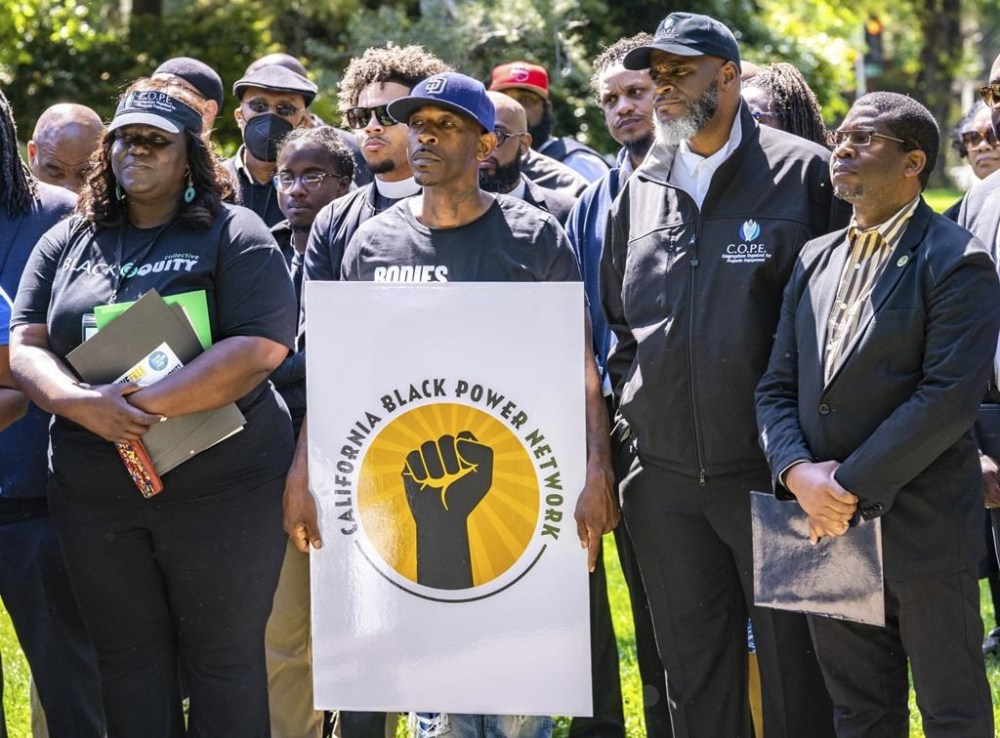
State Sen. Steven Bradford, D-Gardena, said at a news conference Thursday that the Black caucus’ priority list does not preclude individual lawmakers from introducing additional reparations legislation. He cautioned that the journey will be long and difficult, but worth it.
“This is a defining moment not only in California history, but in American history as well,” said Bradford, who served on the nine-person state task force on reparations.
But the 14 proposals are already drawing criticism from advocates who don’t think they go far enough.
Chris Lodgson, an organizer with the Coalition for a Just and Equitable California, which pushed to create the reparations task force, said the proposals are “not reparations.”
“Not one person who is a descendant who is unhoused will be off the street from that list of proposals. Not one single mom who is struggling who is a descendant will be helped,” he said. “Not one dime of the debt that’s owed is being repaid.”
California entered the union as a free state in 1850, but in practice, it sanctioned slavery and approved policies and practices that thwarted Black people from owning homes and starting businesses. Black communities were aggressively policed and their neighborhoods polluted, according to a groundbreaking report released as part of the committee’s work.