

Kosovo’s block on the Serbian currency raises alarm in the EU and US
Advertisement
Read this article for free:
or
Already have an account? Log in here »
To continue reading, please subscribe:

Digital Subscription
One year of digital access for only $205*
- Enjoy unlimited reading on winnipegfreepress.com
- Read the E-Edition, our digital replica newspaper
- Access News Break, our award-winning app
- Play interactive puzzles
*First annual payment billed as $205.00 + GST for one year. This annual subscription will automatically renew at $233.00 + GST every 52 weeks (10% off the regular annual price of $259.35). Offer available to new and qualified returning subscribers only. Cancel any time.
To continue reading, please subscribe:
Add Free Press access to your Brandon Sun subscription for only an additional
$1 for the first 4 weeks*
- Enjoy unlimited reading on winnipegfreepress.com
- Read the E-Edition, our digital replica newspaper
- Access News Break, our award-winning app
- Play interactive puzzles
*Your next Brandon Sun subscription payment will increase by $1.00 and you will be charged $17.95 plus GST for four weeks. After four weeks, your payment will increase to $24.95 plus GST every four weeks.
Read unlimited articles for free today:
or
Already have an account? Log in here »
Hey there, time traveller!
This article was published 04/02/2024 (961 days ago), so information in it may no longer be current.
PRISTINA, Kosovo (AP) — The European Union and the United States expressed their deep concern Sunday after Kosovo banned the use of the Serbian currency and police raided the premises of organizations working with the Serb minority in the north of the country.
In the past week, Kosovo police searched the premises of Serbia-administered institutions and of an ethnic Serb non-governmental organization, confiscating papers and computers believed to hold documentation contrary to the country’s laws.
Some of the documents bore the emblem of the Serbian government in Belgrade, police said, while others referred to illegal parallel structures of government set up by ethnic Serbs but not accepted by Kosovo.
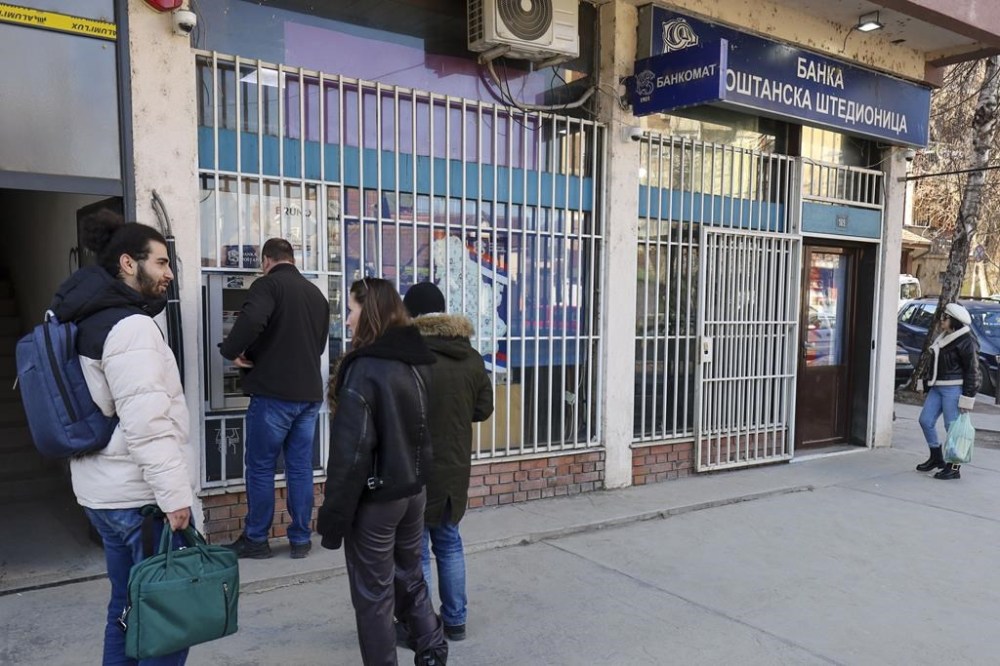
Police closed some of those offices.
Most of Kosovo uses the euro, even though the country isn’t part of the EU. But parts of Kosovo’s north, populated mostly by ethnic Serbs, continue to use the dinar. Many rely on the government of Serbia for financial support, often delivered in dinars in cash.
The U.S. Ambassador in Kosovo, Jeffrey Hovenier, also expressed concerned over the efforts of Kosovo police to seize the vehicle transporting Serbian dinars which are then distributed for “social benefit payments from Serbia.”
A statement from the EU said the closure of those offices would “have negative effects on the daily lives and living conditions of Kosovo Serb communities, as it will restrict their access to basic social services given the apparent absence of alternatives at this moment.”
Starting Feb. 1, Kosovo required ethnic Serbian-dominated areas to adopt the euro currency, which is used in the rest of the country, and abolished the use of the Serbian dinar.
“The EU urges Kosovo to avoid unilateral actions that could raise tensions, and to address these issues through the EU-facilitated dialogue,” the EU statement said.
“These actions are unnecessarily raising ethnic tensions and as a consequence limit the options of the United States to serve as an effective advocate for Kosovo in the international arena,” said Hovenier.
Kosovo has ensured “the new rules do not have a negative impact or penalize the citizens,” according to Deputy Prime Minister Besnik Bislimi.
The European Union and the United States are pressing both countries to implement agreements that Serbian President Aleksandar Vučić and Kosovo Prime Minister Albin Kurti reached in February and March last year.
The EU-facilitated normalization talks have failed to make progress, especially following a shootout last September between masked Serb gunmen and Kosovo police that left four people dead and ratcheted up tensions.
Serbia and Kosovo have both said they want to join the EU, but the bloc’s foreign policy chief, Josep Borrell, has warned that their refusal to compromise is jeopardizing their chances.
Serbian forces fought a 1998-99 war with ethnic Albanian separatists in what was then the province of Kosovo. About 13,000 people, mostly ethnic Albanians, died until a 78-day NATO bombing campaign pushed Serbian forces away. Kosovo eventually declared independence in 2008, but the government in Belgrade doesn’t recognize its neighbor as a separate country.