

Yemen’s presidential council sacks the prime minister
Advertisement
Read this article for free:
or
Already have an account? Log in here »
To continue reading, please subscribe:

Digital Subscription
One year of digital access for only $205*
- Enjoy unlimited reading on winnipegfreepress.com
- Read the E-Edition, our digital replica newspaper
- Access News Break, our award-winning app
- Play interactive puzzles
*First annual payment billed as $205.00 + GST for one year. This annual subscription will automatically renew at $233.00 + GST every 52 weeks (10% off the regular annual price of $259.35). Offer available to new and qualified returning subscribers only. Cancel any time.
To continue reading, please subscribe:
Add Free Press access to your Brandon Sun subscription for only an additional
$1 for the first 4 weeks*
- Enjoy unlimited reading on winnipegfreepress.com
- Read the E-Edition, our digital replica newspaper
- Access News Break, our award-winning app
- Play interactive puzzles
*Your next Brandon Sun subscription payment will increase by $1.00 and you will be charged $17.95 plus GST for four weeks. After four weeks, your payment will increase to $24.95 plus GST every four weeks.
Read unlimited articles for free today:
or
Already have an account? Log in here »
Hey there, time traveller!
This article was published 05/02/2024 (930 days ago), so information in it may no longer be current.
SANAA, Yemen (AP) — Yemen’s internationally recognized presidential council sacked the prime minister Monday in an unexpected move that comes at a time when a U.S.-led coalition has been striking targets of the government’s rivals, the Iranian-backed Houthi rebels.
A decree from the council appointed Foreign Minister Ahmed Awad Bin Mubarak the new prime minister. Bin Mubarak, who is close to Saudi Arabia, replaced Maeen Abdulmalik Saeed, who was Yemen’s premier since 2018.
The council didn’t give a reason behind the reshuffle.
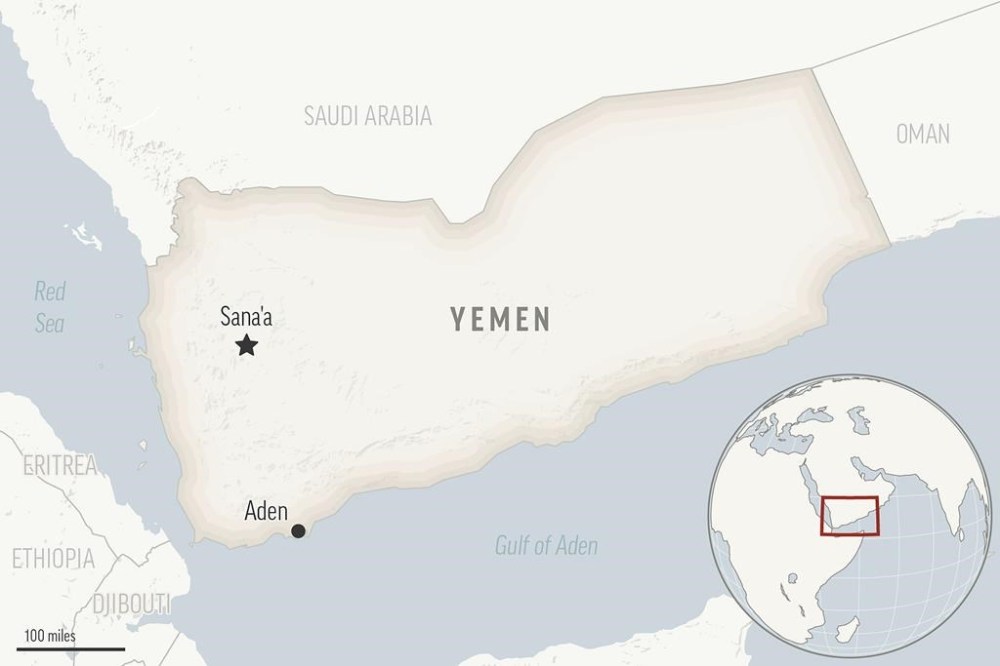
Yemen has been embroiled in a civil war since 2014, when the Houthis overran the capital, Sanaa, and much of the north.
A Saudi-led coalition intervened months later and has been battling the rebels since 2015 to try and restore the internationally recognized government to power.
The war has devastated Yemen, already the poorest Arab country, and created one of the world’s worst humanitarian disasters. More than 150,000 people, including fighters and civilians, have been killed.
In recent months, the Houthis engaged in negotiations with Saudi Arabia, which has sought an exit from the stalemated war. The two sides said they have achieved positive results to revive an expired cease-fire. The Houthi-Saudi talks have been part of broader efforts to find a political settlement to the conflict.
The peace efforts have been hampered since the Israel-Hamas war broke out in October. The Houthis have attacked shipping routes in the Red Sea as part of what they say is their response to Israel’s campaign against the Palestinian militants, who are — like the Houthis — backed by Iran.
The Houthi attacks have prompted the U.S. and Britain to launch waves of strikes on rebel-held areas in Yemen.