

Panama ex-President Ricardo Martinelli receives political asylum from Nicaragua
Advertisement
Read this article for free:
or
Already have an account? Log in here »
To continue reading, please subscribe:

Digital Subscription
One year of digital access for only $205*
- Enjoy unlimited reading on winnipegfreepress.com
- Read the E-Edition, our digital replica newspaper
- Access News Break, our award-winning app
- Play interactive puzzles
*First annual payment billed as $205.00 + GST for one year. This annual subscription will automatically renew at $233.00 + GST every 52 weeks (10% off the regular annual price of $259.35). Offer available to new and qualified returning subscribers only. Cancel any time.
To continue reading, please subscribe:
Add Free Press access to your Brandon Sun subscription for only an additional
$1 for the first 4 weeks*
- Enjoy unlimited reading on winnipegfreepress.com
- Read the E-Edition, our digital replica newspaper
- Access News Break, our award-winning app
- Play interactive puzzles
*Your next Brandon Sun subscription payment will increase by $1.00 and you will be charged $17.95 plus GST for four weeks. After four weeks, your payment will increase to $24.95 plus GST every four weeks.
Read unlimited articles for free today:
or
Already have an account? Log in here »
Hey there, time traveller!
This article was published 07/02/2024 (958 days ago), so information in it may no longer be current.
PANAMA CITY (AP) — Panama’s former President Ricardo Martinelli has received political asylum from Nicaragua days after Panama’s Supreme Court denied his appeal over a money laundering conviction that carried a 10-year sentence.
Martinelli’s attorney Shirley Castañeda said outside the Nicaraguan embassy Wednesday that “his political asylum had already been granted.” Asked why Martinelli had requested asylum, she said “because his life was in danger.”
Nicaragua’s Foreign Affairs Ministry confirmed that it granted Martinelli asylum in a statement Wednesday. It said Martinelli requested asylum on the basis of political persecution and imminent risk to his life. It called on Panama’s government to allow his prompt exit to Nicaragua, to which Panama’s Foreign Affairs Ministry acknowledged that it had received the advisory from Nicaragua.
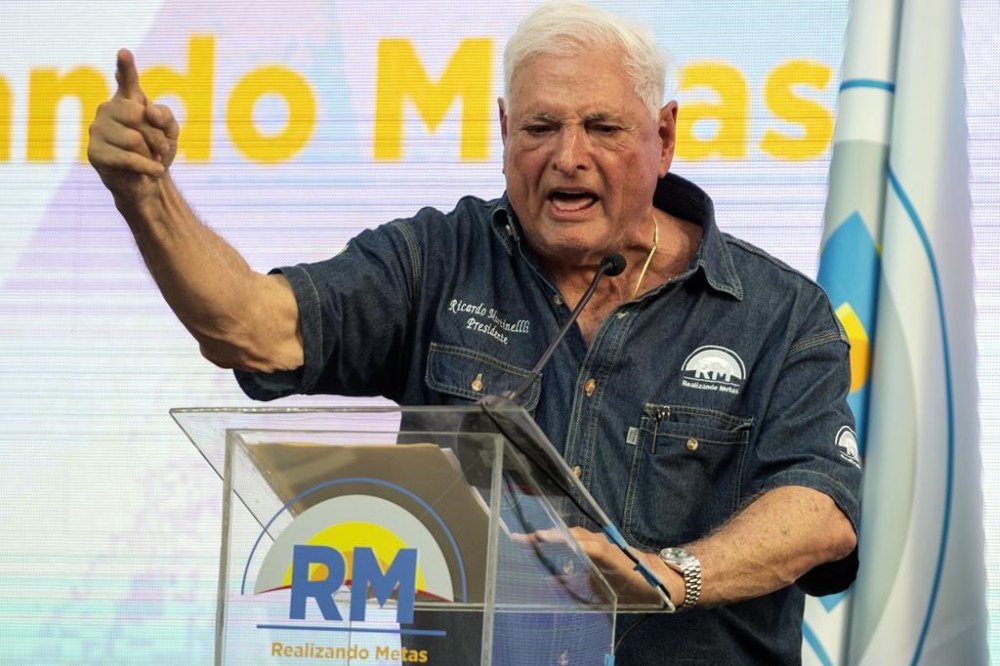
Martinelli, a 71-year-old businessman and supermarket magnate who governed Panama from 2009 to 2014, wrote in a letter released and confirmed as authentic by his team that politically motivated prosecutions had forced him to seek Nicaraguan asylum.
Asylum was necessary to “protect myself from the ongoing lack of legal protection, the denial of justice and my personal safety,” Martinelli wrote.
He also urged his followers to support his running mate, José Raúl Mulino, in the May 5 presidential election and said that he would be with Mulino from day one.
In a press conference Wednesday afternoon, Mulino, alongside Martinelli’s wife, said that Martinelli would remain on the ballot and that after they win office, Martinelli would return to Panama.
On Friday, the Supreme Court denied Martinelli’s final appeal of his money laundering conviction. With his conviction and sentence confirmed, Martinelli would have been ineligible to run for president.
On Saturday, Martinelli had held a rally in Panama’s capital where he defiantly said he would still run in the country’s May 5 election, and denied being guilty of any crimes. However, on Monday, when Martinelli spoke in Congress, he alleged that current President Laurentino Cortizo wanted to imprison and even kill him, and that he was facing imminent arrest.
Luis Eduardo Camacho, Martinelli’s spokesman, said that Martinelli would remain inside the Nicaraguan Embassy in Panama until he received safe passage to Nicaragua.
Martinelli was elected by his party last June as its presidential candidate. He was one of eight hopefuls vying for the presidency.
Article 180 of the country’s constitution says that no one sentenced to five or more years for a crime can be elected president or vice president.
Martinelli was convicted last July of money laundering in a case dating back to 2017 and related to his 2010 purchase of a publishing company that owns national newspapers.
Prosecutors said companies that had won lucrative government contracts during Martinelli’s presidency funneled money to a front company that was then used to purchase the publisher. The transactions involved a complex series of foreign money transfers that came up to $43 million. The front company collecting the money was called “New Business.”
Martinelli was sentenced to more than 10 years in prison and fined $19 million. He had denied wrongdoing and maintained that he was the victim of political persecution. An appeals court ratified the sentence in October.
Martinelli, a populist who oversaw a period of massive infrastructure projects in the country, including construction of the capital’s first metro line, is the first former president convicted of a crime in Panama.
Last year, the United States government barred Martinelli and his immediate family from entering the country, based on what it called his involvement in “significant” corruption.
Martinelli would not be the first ex-president fleeing the law to land in Nicaragua. President Daniel Ortega’s administration granted citizenship to former President Mauricio Funes in 2019. He had enjoyed political asylum in the country since 2016 and faces allegations of illicit enrichment and embezzlement in El Salvador.
____
Follow AP’s coverage of Latin America and the Caribbean at https://apnews.com/hub/latin-america