

Serbia receives another arms delivery from Russia despite international sanctions over Ukraine
Advertisement
Read this article for free:
or
Already have an account? Log in here »
To continue reading, please subscribe:

Digital Subscription
One year of digital access for only $205*
- Enjoy unlimited reading on winnipegfreepress.com
- Read the E-Edition, our digital replica newspaper
- Access News Break, our award-winning app
- Play interactive puzzles
*First annual payment billed as $205.00 + GST for one year. This annual subscription will automatically renew at $233.00 + GST every 52 weeks (10% off the regular annual price of $259.35). Offer available to new and qualified returning subscribers only. Cancel any time.
To continue reading, please subscribe:
Add Free Press access to your Brandon Sun subscription for only an additional
$1 for the first 4 weeks*
- Enjoy unlimited reading on winnipegfreepress.com
- Read the E-Edition, our digital replica newspaper
- Access News Break, our award-winning app
- Play interactive puzzles
*Your next Brandon Sun subscription payment will increase by $1.00 and you will be charged $17.95 plus GST for four weeks. After four weeks, your payment will increase to $24.95 plus GST every four weeks.
Read unlimited articles for free today:
or
Already have an account? Log in here »
Hey there, time traveller!
This article was published 14/02/2024 (962 days ago), so information in it may no longer be current.
BELGRADE, Serbia (AP) — Serbia has received another arms delivery from its ally Russia despite international sanctions on Moscow over its full-scale invasion of Ukraine.
Serbian populist President Aleksandar Vucic on Wednesday presented a Russian anti-drone system for electronic jamming known as Repellent that he recently said “is in our hands.”
He spoke ahead of Serbia’s national day on Thursday.
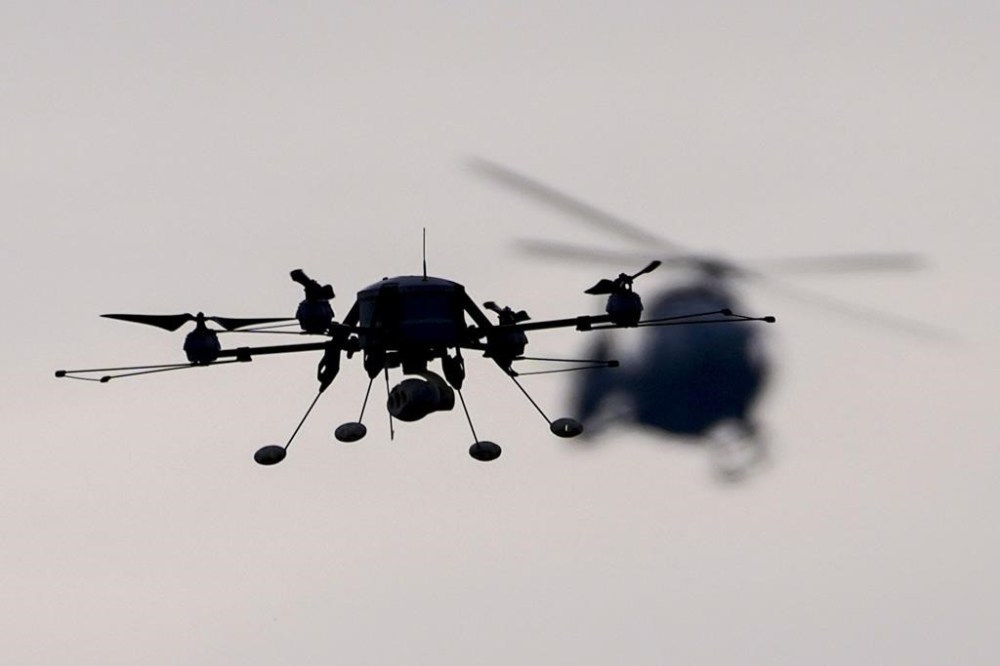
“This is the Repellent. It’s not as strong as Krasukha, but it’s excellent,” Vucic said, referring to a Russian ground-based electronic warfare system.
The delivery reached Serbia a few months ago, even though the country’s airspace is almost completely surrounded by NATO member states that have agreed to Western sanctions against Russia.
Serbia is the only European country that has refused to align with European Union sanctions following Russia’s invasion of Ukraine two years ago. It is also the only European country that continues signing cooperation agreements with Moscow.
Serbia has been told that if it wants to join the EU, it must comply with sanctions.
Most of the recent Serbian military buildup comes from Russia. Other materials come from China as well as some European arms and aircraft manufacturers.
Most of Vucic’s talk about potential threats has been focused on Kosovo, a former Serbian province that declared independence after NATO intervened to stop a bloody Serbian crackdown against ethnic Albanian separatists in 1999.
“If someone tried to carry out an aggression against Serbia as it happened in 1999, technically they would not be able to carry it out in the same way,” Vucic said. “They would have to attack from outside, from a distance, from the Adriatic or Mediterranean Sea, with cruise missiles.”
Advertisement Advertise With Us