

Cambodia to install hundreds of wildlife cameras in an effort to restore its tiger population
Advertisement
Read this article for free:
or
Already have an account? Log in here »
To continue reading, please subscribe:

Digital Subscription
One year of digital access for only $205*
- Enjoy unlimited reading on winnipegfreepress.com
- Read the E-Edition, our digital replica newspaper
- Access News Break, our award-winning app
- Play interactive puzzles
*First annual payment billed as $205.00 + GST for one year. This annual subscription will automatically renew at $233.00 + GST every 52 weeks (10% off the regular annual price of $259.35). Offer available to new and qualified returning subscribers only. Cancel any time.
To continue reading, please subscribe:
Add Free Press access to your Brandon Sun subscription for only an additional
$1 for the first 4 weeks*
- Enjoy unlimited reading on winnipegfreepress.com
- Read the E-Edition, our digital replica newspaper
- Access News Break, our award-winning app
- Play interactive puzzles
*Your next Brandon Sun subscription payment will increase by $1.00 and you will be charged $17.95 plus GST for four weeks. After four weeks, your payment will increase to $24.95 plus GST every four weeks.
Read unlimited articles for free today:
or
Already have an account? Log in here »
Hey there, time traveller!
This article was published 16/02/2024 (962 days ago), so information in it may no longer be current.
PHNOM PENH, Cambodia (AP) — Cambodia will begin installing hundreds of monitoring cameras and import four tigers from India as part of a plan to restore its tiger population, officials said Friday.
Tigers were declared “functionally extinct” in Cambodia in 2016 by the World Wide Fund for Nature. The last tiger spotted in the country was seen in 2007 by a camera trap -– a hidden camera that is triggered by the movement of animals -– in the forests of eastern Mondulkiri province.
Cambodia’s Environment Ministry said it plans to install cameras at one-kilometer intervals in the Cardamom Mountains for use over a three-month period covering both the dry and rainy seasons to monitor wildlife, particularly those preyed upon by tigers such as deer and wild boar.
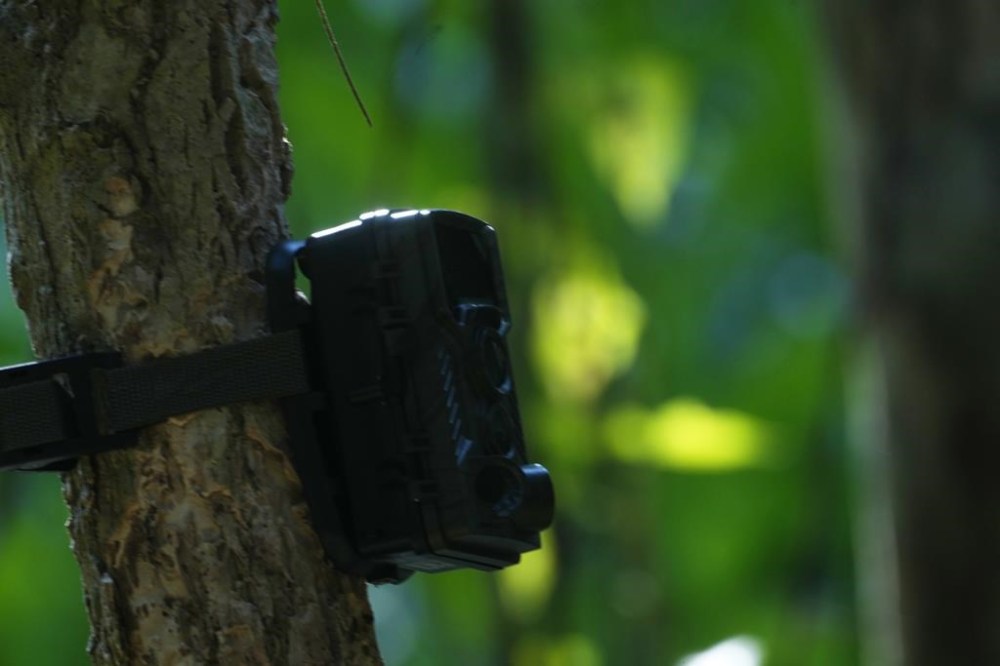
The conservation group Wildlife Alliance, which is working with the ministry on the project, said 410 cameras will be installed.
“This information will aid conservationists in devising plans to bolster big tiger populations, which may involve measures like breeding more wildlife or supplying domestic cattle or buffaloes,” the ministry said in a statement. “It will facilitate the study of the density and distribution of prey species crucial for the survival of big tigers.”
Ministry spokesperson Khvay Atitya said the installation of the camera traps will begin this weekend. He said four tigers, three female and one male, will be sent from India by the end of the year to be settled in a 90-hectare (222-acre) protected zone inside the Tatai Wildlife Sanctuary, which is in the western provinces of Koh Kong and Pursat.
Under an agreement with India, if the pilot plan proceeds smoothly, 12 more tigers will be imported over the following five years, he said.
In 2022, Cambodia and India signed a Memorandum of Understanding on Cooperation in Biodiversity Conservation, Sustainable Wildlife Management, and Strategies to Restore Big Tigers and Their Habitats.
Cambodia’s once-significant undeveloped forest areas were abundant with wildlife. But after the communist Khmer Rouge’s brutal rule in the 1970s left society and the economy devastated, poor rural dwellers scoured the forests for wildlife.
Much of what was found was sold to traders who sent it to China, where many wild animals, including tigers, are believed to possess medicinal and sex-enhancing properties. Poaching is still rampant, and forest cover has been reduced by intense logging.
Worldwide, tigers have been classified as a nearly extinct species. There are about 3,200 tigers in only 13 countries globally, according to WWF, compared to approximately 100,000 in the early 20th century.