

Japan’s new flagship H3 rocket reaches orbit in a key test after failed debut last year
Advertisement
Read this article for free:
or
Already have an account? Log in here »
To continue reading, please subscribe:

Digital Subscription
One year of digital access for only $205*
- Enjoy unlimited reading on winnipegfreepress.com
- Read the E-Edition, our digital replica newspaper
- Access News Break, our award-winning app
- Play interactive puzzles
*First annual payment billed as $205.00 + GST for one year. This annual subscription will automatically renew at $233.00 + GST every 52 weeks (10% off the regular annual price of $259.35). Offer available to new and qualified returning subscribers only. Cancel any time.
To continue reading, please subscribe:
Add Free Press access to your Brandon Sun subscription for only an additional
$1 for the first 4 weeks*
- Enjoy unlimited reading on winnipegfreepress.com
- Read the E-Edition, our digital replica newspaper
- Access News Break, our award-winning app
- Play interactive puzzles
*Your next Brandon Sun subscription payment will increase by $1.00 and you will be charged $17.95 plus GST for four weeks. After four weeks, your payment will increase to $24.95 plus GST every four weeks.
Read unlimited articles for free today:
or
Already have an account? Log in here »
Hey there, time traveller!
This article was published 16/02/2024 (892 days ago), so information in it may no longer be current.
TOKYO (AP) — Japan’s flagship H3 rocket reached orbit and released two small observation satellites in a key second test following a failed debut launch last year, buoying hope for the country in the global space race.
The H3 rocket blasted off from the Tanegashima Space Center on time Saturday morning, two days after its originally scheduled liftoff was delayed by bad weather.
The rocket successfully reached orbit at an altitude of about 670 kilometers (about 420 miles) and released two satellites, the Japan Aerospace Exploration Agency, or JAXA, said.
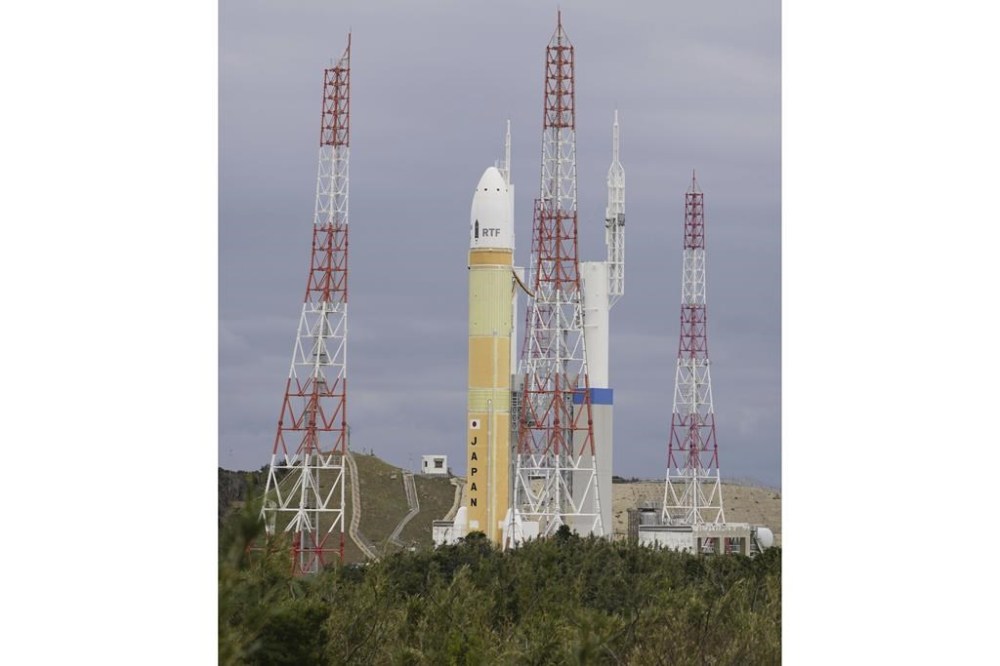
“We feel so relieved to be able to announce the good results,” JAXA President Hiroshi Yamakawa told a news conference.
The H3’s main missions are to secure independent access to space and be competitive as international demand for satellite launches grows. “We made a big first step today toward achieving that goal,” Yamakawa said.
The launch is a boost for Japan’s space program following a recent streak of successes, including a historic precision touchdown on the moon of an unmanned spacecraft last month.
The liftoff was closely watched as a test for Japan’s space development after H3, in its debut flight last March, failed to ignite the second-stage engine. JAXA and its main contractor Mitsubishi Heavy Industries have been developing H3 as a successor to its current mainstay, H-2A, which is set to retire after two more flights.
As the rocket soared and released its first payload successfully, project members at the JAXA command center cheered and hugged each other in livestreaming footage. NHK television showed some staff at a press center crying with relief and joy.
JAXA H3 project manager Masashi Okada called the result “perfect,” saying H3 cleared all missions set for Saturday’s flight. “After a long wait, the newborn H3 finally had its first cry.”
“I now feel a heavy load taken off my shoulders. But now is the real start for H3, and we will work to steadily improve it,” Okada said.
The H3 No. 2 rocket was decorated with thousands of stickers carrying messages sent from well-wishers around the country.
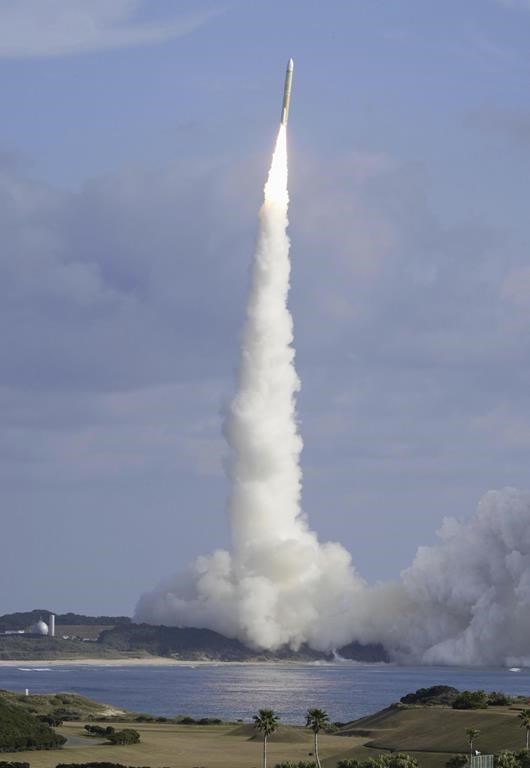
Two microsatellites — observation satellite CE-SAT-IE, developed by Canon Electronics, and TIRSAT, which was co-developed by a number of companies and universities — were piggybacked on the H3 Saturday. Their makers said they were willing to take the chance as they see a growing market in the satellite business.
The 57-meter (187-feet) -long H3 is designed to carry larger payloads than H-2A at much lower costs of about 50 billion yen ($330 million), to be globally competitive.
Masayuki Eguchi, head of defense and space segment at Mitsubishi Heavy, said his company hopes to achieve better price competitiveness after about a dozen more launches.
“I’m delighted to see this incredible accomplishment in the space sector right after the success of the SLIM moon landing,” Prime Minister Fumio Kishida said on X, formerly Twitter. “I expect the Japanese mainstay rocket will steadily make achievement.”
Last month, a H-2A rocket successfully placed a spy satellite into its planned orbit, and days later JAXA’s unmanned spacecraft SLIM made the world’s first “pinpoint” moon landing then captured lunar data.