

Most of Russia’s opposition is either dead, in exile abroad or in prison at home. What happens now?
Advertisement
Read this article for free:
or
Already have an account? Log in here »
To continue reading, please subscribe:

Digital Subscription
One year of digital access for only $205*
- Enjoy unlimited reading on winnipegfreepress.com
- Read the E-Edition, our digital replica newspaper
- Access News Break, our award-winning app
- Play interactive puzzles
*First annual payment billed as $205.00 + GST for one year. This annual subscription will automatically renew at $233.00 + GST every 52 weeks (10% off the regular annual price of $259.35). Offer available to new and qualified returning subscribers only. Cancel any time.
To continue reading, please subscribe:
Add Free Press access to your Brandon Sun subscription for only an additional
$1 for the first 4 weeks*
- Enjoy unlimited reading on winnipegfreepress.com
- Read the E-Edition, our digital replica newspaper
- Access News Break, our award-winning app
- Play interactive puzzles
*Your next Brandon Sun subscription payment will increase by $1.00 and you will be charged $17.95 plus GST for four weeks. After four weeks, your payment will increase to $24.95 plus GST every four weeks.
Read unlimited articles for free today:
or
Already have an account? Log in here »
Hey there, time traveller!
This article was published 18/02/2024 (968 days ago), so information in it may no longer be current.
LONDON (AP) — Alexei Navalny was asked four years ago what he’d tell Russians if he were killed for challenging President Vladimir Putin.
“You’re not allowed to give up,” he told a documentary maker. “If they decide to kill me, it means we are incredibly strong and we need to use this power.”
Russia’s prison agency announced Friday that Navalny had died in the Arctic penal colony where he was serving a 19-year sentence on charges of extremism. His death sparked accusations around the world that he had been killed.
WHAT DOES THE OPPOSITION DO NOW?
Kremlin political critics, turncoat spies and investigative journalists have been killed or assaulted in a variety of ways. The Russian opposition has lost its brightest star with Navalny’s sudden death. Now the question on everyone’s mind: What does it do now?
Most of Russia’s opposition is either dead, scattered abroad in exile or in prison at home. Remaining opposition groups and key political figures have different visions about what Russia should become, and who should lead it. There is not even an anti-war candidate on the ballot to give Putin a token challenge in next month’s election for a sixth term.
THE END OF DISSENT?
Although Navalny’s widow, Yulia Navalnaya, has vowed to continue his work, many are wondering if his elimination from the picture is the end of political dissent in Russia.
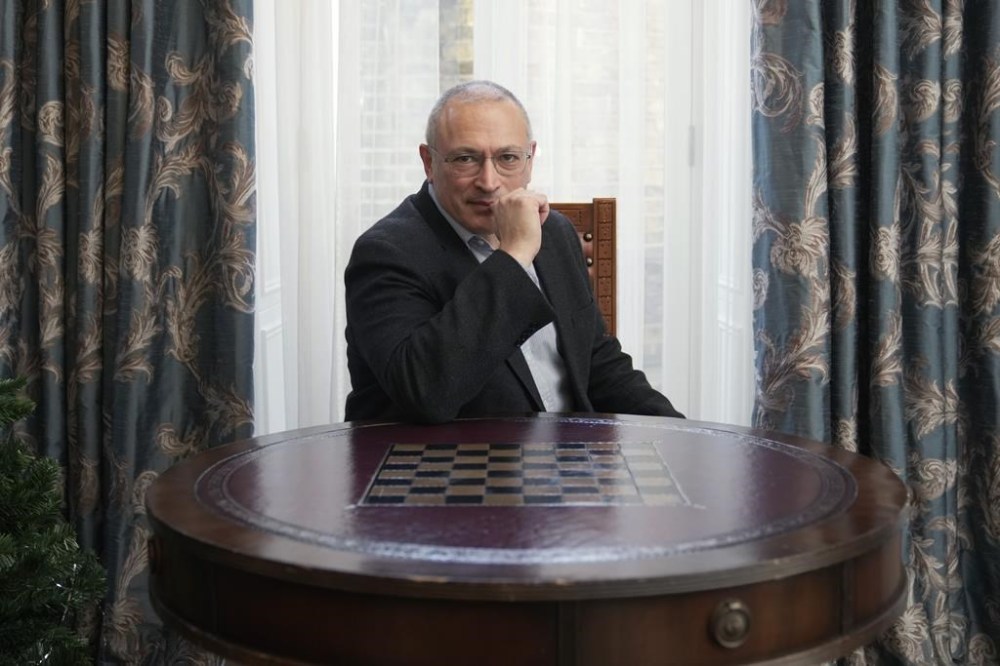
“Alexei Navalny was a very bright and charismatic leader. He had the talent to ignite people, to convince them of the need for change,” said Mikhail Khodorkovsky, a former tycoon who spent a decade in prison in Russia on charges widely seen as political revenge for challenging Putin’s rule in the early 2000s.
“This is a very difficult loss for the Russian opposition,” he told The Associated Press after his death.
Graeme Robertson, a professor of political science at the University of North Carolina at Chapel Hill and author of a book about Putin and contemporary Russian politics, says the biggest problem that has plagued the Russian opposition “is that it has been unable to break out from small liberal circles to attract support from the broader population.”
Khodorkovsky, who lives in London, is one of several Russian opposition politicians trying to build a coalition with grassroots anti-war groups across the world and exiled Russian opposition figures. They include Russian chess legend Garry Kasparov, Mikhail Kasyanov, a former Russian prime minister and Vladimir Kara-Murza. who is currently serving a 25-year prison sentence in Russia for treason after criticizing Russia’s war in Ukraine.
But, in a reflection of how the opposition is splintered, Navalny’s team, and the Anti-Corruption Foundation he founded, are not a part of it.
“We constantly tell the guys from the Anti-Corruption Foundation … that it would be great if we all met not only in front of television cameras, but sat down at the table,” Khodorkovsky said in another interview before Navalny’s death, referring to a television debate in January hosted by the independent Russian TV channel Dozhd.
While Navalny was the first leader to build a national Russian opposition, there were other opposition factions who didn’t like him or his organization.
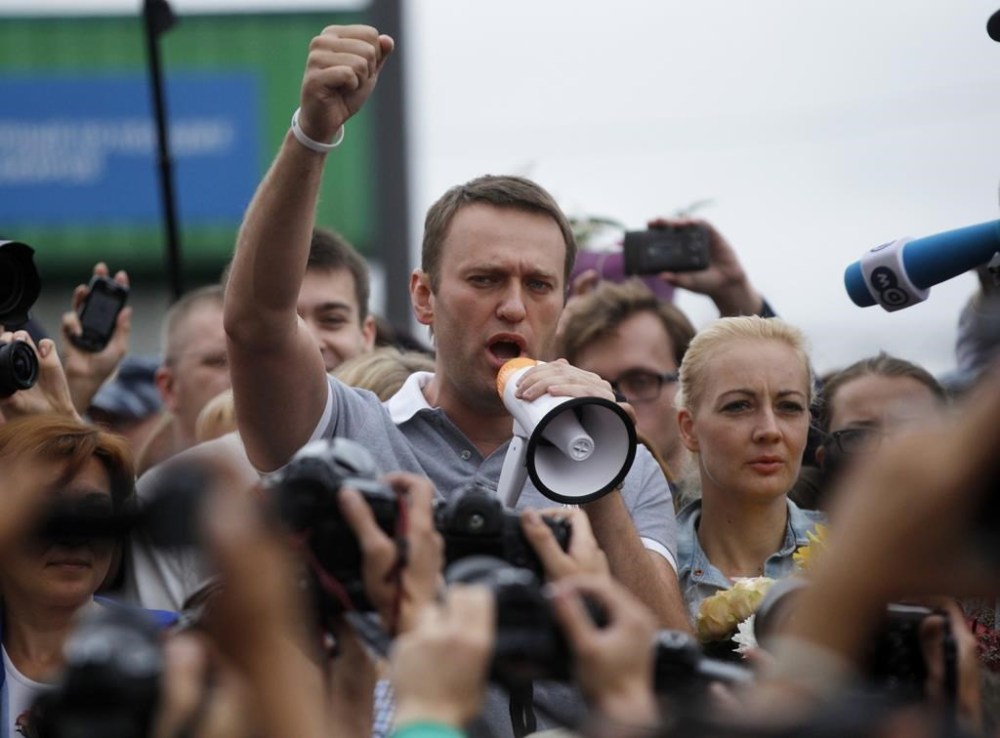
Before his death, there were public and heated disagreements on social media between members of his team and other politicians about how they could challenge Putin in March’s upcoming election.
PUTIN CONSOLIDATES POWER
Meanwhile, the Russian leader has continued to consolidate his grip on power, cracking down on dissent at home, imprisoning critics of the war in Ukraine, and silencing independent media.
Squabbling among the opposition, “doesn’t help,” said Nigel Gould-Davies, a former British ambassador to Belarus and senior fellow for Russia & Eurasia at the International Institute for Strategic Studies in London.
But, even if the opposition were united, he questioned whether “given the instruments of coercion, repression and intimidation available to the Russian state, what difference, at least in the short term, would that make?”
THREE DECADES OF PUTIN
Putin is eyeing at least another six years in the Kremlin, which means he could effectively rule Russia for almost three decades.
Russia’s remaining opposition leaders and activists, largely outside the country, are now grappling with the question of how to mount an effective challenge to the Kremlin. That would mean breaking through state propaganda to reach Russians inside the country and offer them an alternative to the Kremlin’s vision of the future.
It is a difficult task, one which even Navalny struggled with after he returned to Moscow in February 2021 to face certain arrest after recuperating in Germany from a nerve agent poisoning he blamed on the Kremlin.
Shortly after his return while he was in jail, his team released a social media investigation into corruption that was viewed millions of times. It provoked a series of anti-graft protests across Russia but the police brutally cracked down and detained thousands of people.
While Navalny’s team continued to publish successful investigative reports, they ultimately suspended the protests and said they would switch to different tactics.
Although Navalny had his finger on the pulse, and his team succeeded in widely publicizing the investigation, the anti-corruption message ultimately failed to produce political change inside Russia, Robertson said, because most Russians “know their country is badly governed and that their elite is corrupt, but they don’t see it being any other way.”
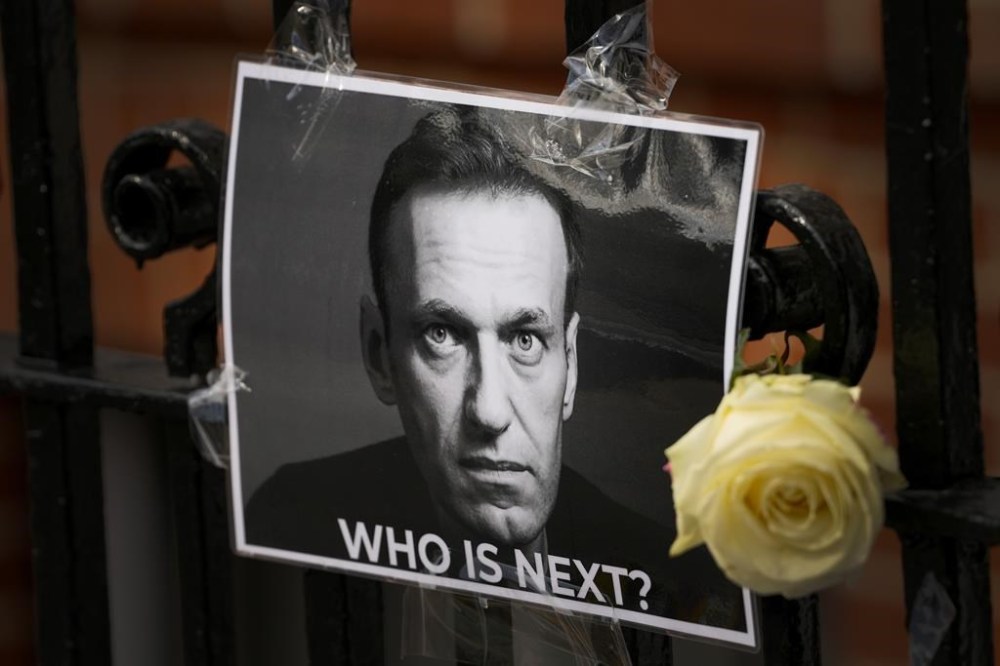
In the three years since Navalny was jailed, Russian authorities have introduced more laws tightening freedom of speech and jailing critics, often ordinary people, sometimes for decades.
Khodorkovsky said the response to Navalny’s death should be to join forces and continue work started before he died, trying to convince ordinary Russians to protest in any way they can during March’s presidential election.
He called on Russians to protest by writing Navalny’s name on the ballot paper during the election. The Russian Anti-War Committee, backed by Khodorkovsky and other politicians, is also asking Russians to attend “Noon against Putin” — calling on people to gather at polling stations at 12 p.m. on March 17 as a signal that they don’t support Putin.
The idea was supported by Navalny in early February.
OPPOSITION IN EXILE
In the meantime, the Russian opposition faces a future largely in exile without one of its brightest leaders.
It will be incredibly difficult, but Russia’s exiled politicians say they are determined that the hope of democracy in their country does not die along with Navalny.
“Putin,” Khodorkovsky said, “must understand that he can kill his political opponent, but not the very idea of a democratic opposition.”