

A World War II bomb prompted an evacuation in England before being taken to sea to be blown up
Advertisement
Read this article for free:
or
Already have an account? Log in here »
To continue reading, please subscribe:
Monthly Digital Subscription
$0 for the first 4 weeks*
- Enjoy unlimited reading on winnipegfreepress.com
- Read the E-Edition, our digital replica newspaper
- Access News Break, our award-winning app
- Play interactive puzzles
*No charge for 4 weeks then price increases to the regular rate of $19.00 plus GST every four weeks. Offer available to new and qualified returning subscribers only. Cancel any time.
Monthly Digital Subscription
$4.75/week*
- Enjoy unlimited reading on winnipegfreepress.com
- Read the E-Edition, our digital replica newspaper
- Access News Break, our award-winning app
- Play interactive puzzles
*Billed as $19 plus GST every four weeks. Cancel any time.
To continue reading, please subscribe:
Add Free Press access to your Brandon Sun subscription for only an additional
$1 for the first 4 weeks*
*Your next subscription payment will increase by $1.00 and you will be charged $16.99 plus GST for four weeks. After four weeks, your payment will increase to $23.99 plus GST every four weeks.
Read unlimited articles for free today:
or
Already have an account? Log in here »
Hey there, time traveller!
This article was published 23/02/2024 (659 days ago), so information in it may no longer be current.
LONDON (AP) — An unexploded World War II bomb was safely transported Friday through the eerily empty streets of the southwestern English port city of Plymouth before being placed on a boat for its next and final journey to sea where it will be blown up by naval divers.
In what prompted one of the largest evacuations in the United Kingdom since the war, a military convoy carried the Nazi-era explosive from a residential backyard in the city to Plymouth’s shoreline.
After a huge security operation, around 10,000 people were told they could now return home.
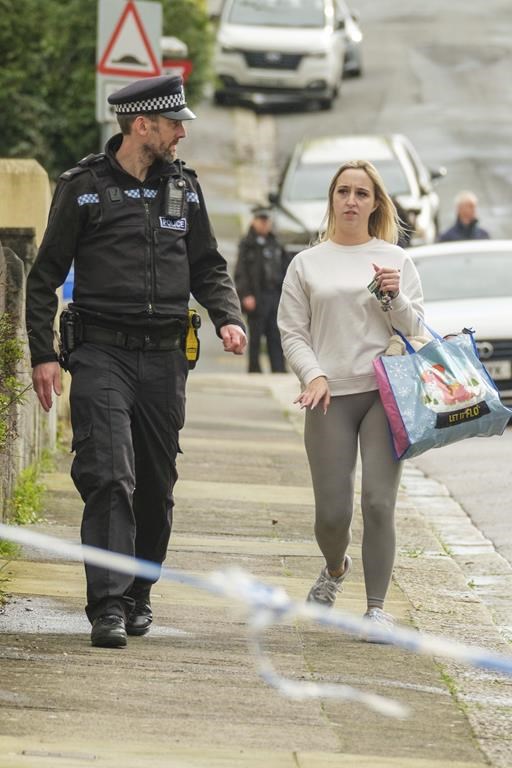
“We have been notified by the military that the operation has been a success and the bomb has been removed,” Plymouth City Council said. “We can now start removing the cordon so people who have been evacuated can return to their homes.”
Many ended up at pubs during the evacuation as residents sought out a safe shelter.
Plymouth, a famous naval port about 240 miles (385 kilometers) southwest of London, is where the Mayflower set sail from in 1620 carrying Pilgrim settlers to America. The city was targeted by Germany’s Luftwaffe during World War II, particularly during the Blitz in 1940 and 1941.
More than 2,500 high explosive bombs were dropped on the city during the war, with many missing their intended target and falling on residential areas. Over the course of the war, more than 1,100 civilians in the city died during the air raids.
The bomb, which was found in a residential yard on Tuesday, was taken to the Torpoint Ferry slipway to be disposed of at sea beyond the breakwater. The bomb is believed to weigh around 500 kilograms (1,100 pounds), according to the U.K. Ministry of Defence, and will no doubt make a mighty splash once it is detonated.
The decision to move the bomb was taken after an assessment by bomb disposal experts concluded that there would be too high a risk of significant damage, including the destruction of a number of houses, if the device were detonated in the yard.
Devon and Cornwall Police Superintendent Phil Williams said moving the bomb was the “least impactful option.”
The main train line into the city was closed as the convoy traveled through the cordon, while ferries were suspended and buses diverted. Schools and nurseries also closed to allow the operation to take place, while all businesses within the cordon were told to evacuate.
Giles Perritt, assistant chief executive Plymouth City Council, said that more than 1,000 staff and officers have been involved in the operation to remove the bomb safely. He thanked colleagues from the military, particularly those “at the wheel.”
Since the end of the World War II, unexploded ordnance have been regularly found across the U.K. An estimated 10% of German bombs that were dropped during the war didn’t go off, leaving many towns and cities in the U.K. littered with dangerous explosives.
When unexploded bombs are found, they are usually detonated on site and don’t spark mass evacuations.