

WWII-era bomb safely detonated at sea after one of the largest peacetime evacuations in UK history
Advertisement
Read this article for free:
or
Already have an account? Log in here »
To continue reading, please subscribe:

Digital Subscription
One year of digital access for only $205*
- Enjoy unlimited reading on winnipegfreepress.com
- Read the E-Edition, our digital replica newspaper
- Access News Break, our award-winning app
- Play interactive puzzles
*First annual payment billed as $205.00 + GST for one year. This annual subscription will automatically renew at $233.00 + GST every 52 weeks (10% off the regular annual price of $259.35). Offer available to new and qualified returning subscribers only. Cancel any time.
To continue reading, please subscribe:
Add Free Press access to your Brandon Sun subscription for only an additional
$1 for the first 4 weeks*
- Enjoy unlimited reading on winnipegfreepress.com
- Read the E-Edition, our digital replica newspaper
- Access News Break, our award-winning app
- Play interactive puzzles
*Your next Brandon Sun subscription payment will increase by $1.00 and you will be charged $17.95 plus GST for four weeks. After four weeks, your payment will increase to $24.95 plus GST every four weeks.
Read unlimited articles for free today:
or
Already have an account? Log in here »
Hey there, time traveller!
This article was published 24/02/2024 (950 days ago), so information in it may no longer be current.
LONDON (AP) — A World War II-era bomb whose discovery prompted one of the largest peacetime evacuations in British history has been detonated at sea, the Ministry of Defense said on Saturday.
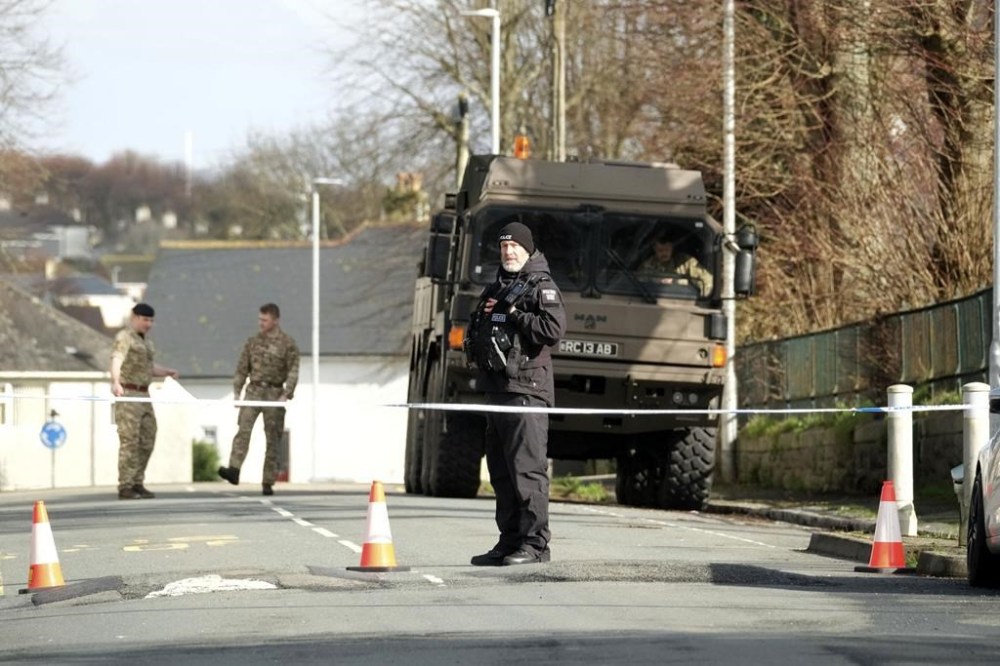
The 500-kilogram (1,100-pound) explosive was discovered Tuesday in the backyard of a home in Plymouth, a port city on the southwestern coast of Britain. More than 10,000 residents were evacuated to ensure their safety as a military convoy transported the unexploded bomb through a densely populated residential area to a ferry slipway, from which it was taken out to sea.
“I think it is fair to say that the last few days will go down in history for Plymouth,” said Tudor Evans, the leader of Plymouth City Council.
Plymouth, home to major naval bases for centuries, was one of the most heavily bombed cities in Britain during the World War II. Fifty-nine separate air raids killed 1,174 civilians, according to local officials. The raids destroyed almost 3,800 homes, and heavily damaged another 18,000.