

Nigeria’s union workers are on strike nationwide over soaring inflation and unmet promises
Advertisement
Read this article for free:
or
Already have an account? Log in here »
To continue reading, please subscribe:

Digital Subscription
One year of digital access for only $205*
- Enjoy unlimited reading on winnipegfreepress.com
- Read the E-Edition, our digital replica newspaper
- Access News Break, our award-winning app
- Play interactive puzzles
*First annual payment billed as $205.00 + GST for one year. This annual subscription will automatically renew at $233.00 + GST every 52 weeks (10% off the regular annual price of $259.35). Offer available to new and qualified returning subscribers only. Cancel any time.
To continue reading, please subscribe:
Add Free Press access to your Brandon Sun subscription for only an additional
$1 for the first 4 weeks*
- Enjoy unlimited reading on winnipegfreepress.com
- Read the E-Edition, our digital replica newspaper
- Access News Break, our award-winning app
- Play interactive puzzles
*Your next Brandon Sun subscription payment will increase by $1.00 and you will be charged $17.95 plus GST for four weeks. After four weeks, your payment will increase to $24.95 plus GST every four weeks.
Read unlimited articles for free today:
or
Already have an account? Log in here »
Hey there, time traveller!
This article was published 27/02/2024 (946 days ago), so information in it may no longer be current.
ABUJA, Nigeria (AP) — Nigeria’s government employees and other union workers began a new nationwide strike Tuesday that threatened to shut down key services while people are angry about soaring inflation and growing economic pain.
Since assuming office in Africa’s most populous country last year, President Bola Tinubu has enacted policies that include doing away with fuel subsidies and unifying the country’s multiple exchange rates, leading to a devaluation of the naira against the dollar.
Gasoline prices have more than doubled and inflation has shot up as a result, reaching close to 30% last month, the highest in nearly three decades, according to the National Bureau of Statistics.
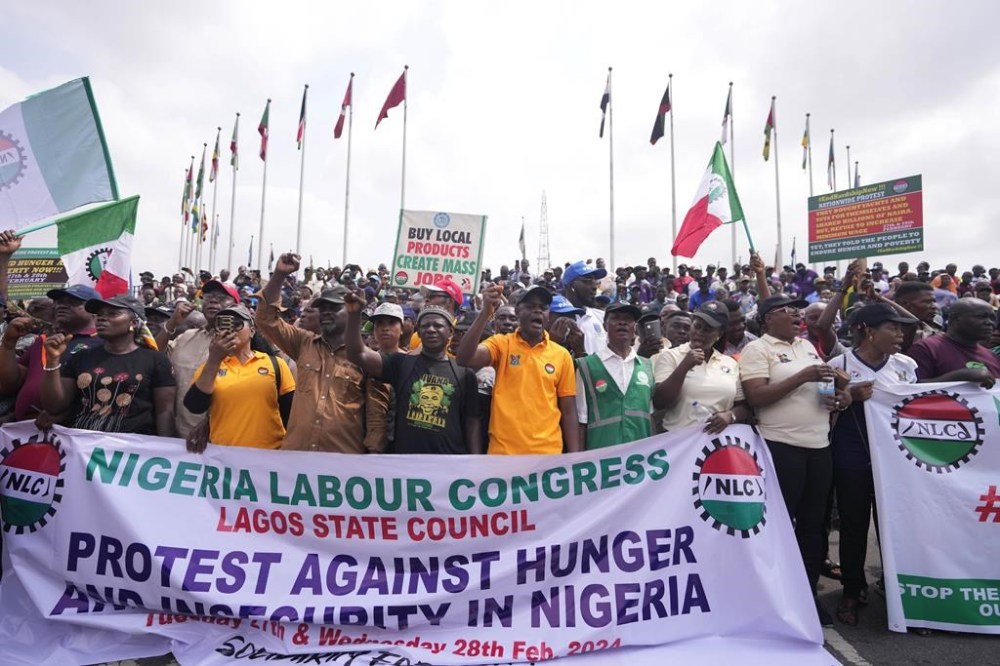
“We are hungry. There is nobody that doesn’t know this,” said Joe Ajaero, president of the Nigerian Labor Congress.
Others said the protest was the only way to get the government’s attention.
“Things are getting out of hand,” said Christian Omeje, a shop owner in the capital, Abuja. “Prices keep soaring, the aid the government said it would dole out has not been provided.”
This is just the latest strike action. In October, government labor unions reached a deal with the government to end strikes in return for monthly stipends and subsidies to cushion the blow of the new policies. Still, the unrest continued.
Unions say the government has failed to deliver on promises that included a monthly wage increase of approximately $20 for all workers for six months and payments of approximately $15 for three months to millions of vulnerable households.
A pledge to roll out gas-powered buses for mass transit last year also failed to materialize.
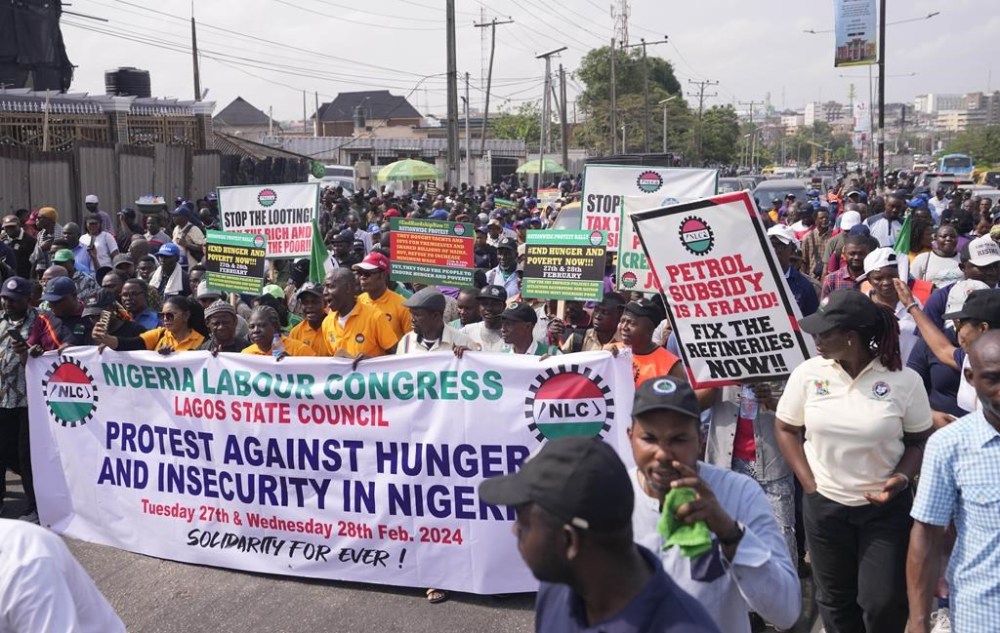
Most services appeared to continue Tuesday with a reduced workforce.
___
Follow AP’s Africa coverage at https://apnews.com/hub/africa