

Fresh from a deadly cholera outbreak, Zambia declares drought a national emergency
Advertisement
Read this article for free:
or
Already have an account? Log in here »
To continue reading, please subscribe:
Digital Subscription
One year of digital access for only $1.44 a week*
- Enjoy unlimited reading on winnipegfreepress.com
- Read the E-Edition, our digital replica newspaper
- Access News Break, our award-winning app
- Play interactive puzzles
*Billed as $5.77 plus GST every four weeks. After 52 weeks, price increases to the regular rate of $19.95 plus GST every four weeks. Offer available to new and qualified returning subscribers only. Cancel any time.
To continue reading, please subscribe:
Add Free Press access to your Brandon Sun subscription for only an additional
$1 for the first 4 weeks*
- Enjoy unlimited reading on winnipegfreepress.com
- Read the E-Edition, our digital replica newspaper
- Access News Break, our award-winning app
- Play interactive puzzles
*Your next Brandon Sun subscription payment will increase by $1.00 and you will be charged $17.95 plus GST for four weeks. After four weeks, your payment will increase to $24.95 plus GST every four weeks.
Read unlimited articles for free today:
or
Already have an account? Log in here »
Hey there, time traveller!
This article was published 29/02/2024 (823 days ago), so information in it may no longer be current.
HARARE, Zimbabwe (AP) — Zambian President Hakainde Hichilema Thursday declared the country’s debilitating drought a national disaster and emergency, saying it has devastated food production and electricity generation as the nation battles to recover from a recent deadly cholera outbreak.
Like some of its neighbors, the southern African country is suffering a severe drought as the El Nino weather pattern worsens harsh weather conditions attributed in part to climate change.
In an address to the nation, Hichilema said he has instructed security forces to focus more on food production in the largely peaceful country.
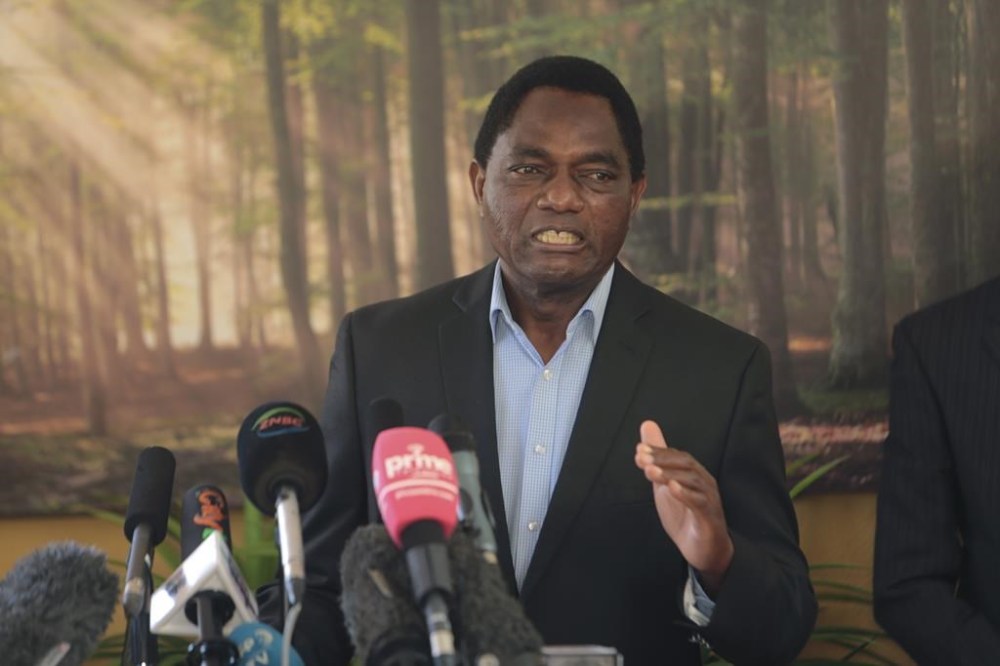
He said 84 of the country’s 116 districts are affected by the prolonged drought and authorities will take food from areas where there is an excess and distribute it to needy areas. In addition, the country plans more food imports and is mobilizing United Nations agencies and local businesses to assist.
The drought has destroyed about 1 million hectares (2.5 million acres) of the 2.2 million hectares (5.4 million acres) planted with the staple maize crop, he said.
“This drought has devastating consequences on many sectors such as agriculture, water availability and energy supply, risking our national food security and the livelihoods of millions of our people. The dry spell is projected to continue even into the month of March, affecting over 1 million of our farming households,” said Hichilema.
Electricity generation has not been spared, with the country expecting a power deficit of about 430 megawatts “potentially reaching 520 megawatts by December,” he said, as water levels decline at the country’s major source of hydro power, the Kariba Dam, which it shares with neighbor, Zimbabwe.
To cope, the country will import electricity and also ration supplies to its approximately 20 million people, he said.
Zambia was recently hit by one of its worst cholera outbreaks that killed more than 400 people and infected more than 10,000.
Some Zambians, weary of continued crises, have coined songs labeling the outbreaks of coronavirus and cholera as well as the current drought as a “triple tragedy,” said Hichilema.
Although many countries in southern Africa are yet to declare a national disaster, they are also in a dire situation because of the influence of El Nino weather patterns, according to the U.N agency, the World Food Program.
Parts of Zambia, Zimbabwe and Botswana are experiencing the driest February in the past 40 years, while severe rainfall shortages have been recorded in southern Malawi, eastern Angola and parts of Mozambique, said the WFP in a bulletin this week.
The United States Agency for International Development, the U.S. government’s foreign aid agency, has estimated through its Famine Early Warning Systems Network that 20 million people in southern Africa will need food relief between January and March.
Many people in the areas of highest concern such as Zimbabwe, southern Malawi, parts of Mozambique and southern Madagascar will be unable to feed themselves into early 2025 due to El Nino, USAID said.