

Pentagon to lift ban on V-22 Osprey flights, 3 months after fatal crash in Japan
Advertisement
Read this article for free:
or
Already have an account? Log in here »
To continue reading, please subscribe:
Monthly Digital Subscription
$0 for the first 4 weeks*
- Enjoy unlimited reading on winnipegfreepress.com
- Read the E-Edition, our digital replica newspaper
- Access News Break, our award-winning app
- Play interactive puzzles
*No charge for 4 weeks then price increases to the regular rate of $19.00 plus GST every four weeks. Offer available to new and qualified returning subscribers only. Cancel any time.
Monthly Digital Subscription
$4.75/week*
- Enjoy unlimited reading on winnipegfreepress.com
- Read the E-Edition, our digital replica newspaper
- Access News Break, our award-winning app
- Play interactive puzzles
*Billed as $19 plus GST every four weeks. Cancel any time.
To continue reading, please subscribe:
Add Free Press access to your Brandon Sun subscription for only an additional
$1 for the first 4 weeks*
*Your next subscription payment will increase by $1.00 and you will be charged $16.99 plus GST for four weeks. After four weeks, your payment will increase to $23.99 plus GST every four weeks.
Read unlimited articles for free today:
or
Already have an account? Log in here »
Hey there, time traveller!
This article was published 01/03/2024 (647 days ago), so information in it may no longer be current.
WASHINGTON (AP) — The Pentagon will lift the ban on flights by the grounded V-22 Osprey next week, U.S. officials told The Associated Press on Friday, following a high-level meeting where Defense Secretary Lloyd Austin endorsed the military services’ plans for a safe and measured return to operations.
The officials said that Naval Air Systems Command, which grounded the controversial tilt-rotor aircraft about three months ago, will lift it and allow the services to begin implementing their plans to get the Osprey back into the air. Austin met with the top service leaders, including for the Navy and Air Force, on Friday morning, according to the officials, who spoke on condition of anonymity to discuss plans not yet made public.
The Osprey has been grounded for almost three months following a Nov. 29 Air Force Special Operations Command crash in Japan that killed eight service members. The Japan incident and an earlier August Osprey crash in Australia that killed three Marines are both still under investigation. The Air Force has said that it has identified what failed in the Japan crash, even though it does not know yet why it failed.
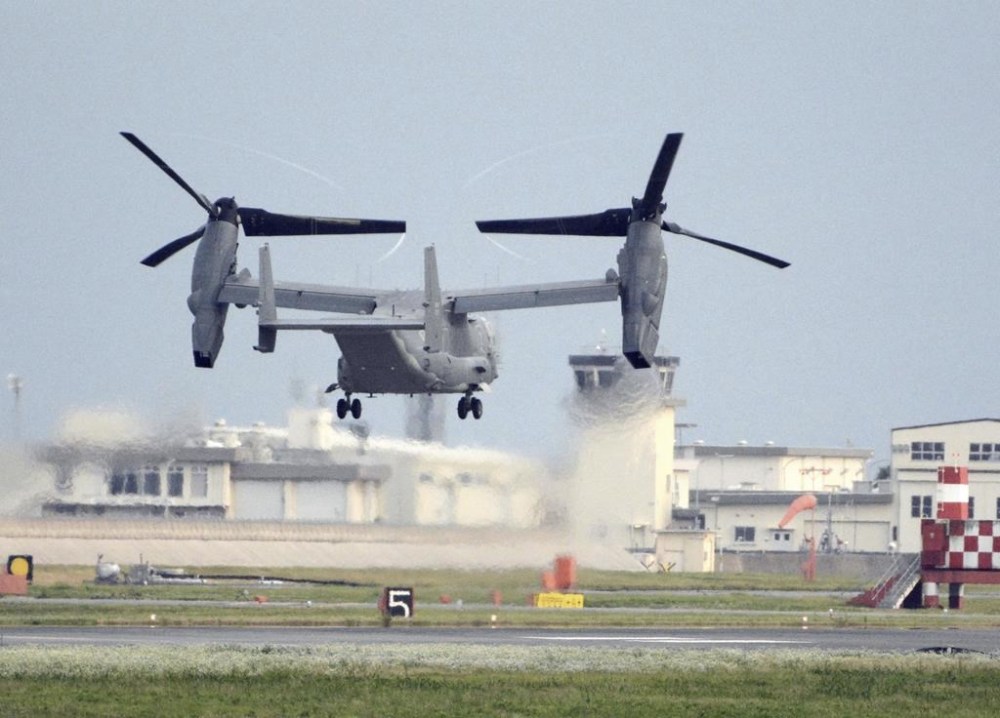
The decision to end the flight ban is up to Naval Air Systems Command, but Austin had asked for an informational briefing on the matter because of the significant safety concerns and the fact that three of the services and a critical ally are involved in the program. While Austin does not have approval authority in the return to flight process, U.S. officials said his endorsement of the services’ plan was considered a key step.
In the months since, the services have worked on plans to mitigate the known material failure by conducting additional safety checks and establishing a new, more conservative approach to how the Osprey is operated.
Officials said the U.S. military will also share its plans with Japan, which is the only international partner involved in the Osprey program. Japan also grounded its fleet of 14 V-22s after the November crash. Prior to the grounding the U.S. Marine Corps routinely used Ospreys in that county.
A return to flight is a sensitive topic in Japan, where public opinion on the Osprey is mixed. Officials said the U.S. is committed to a safe process, and the fleet will not fly again there until Japan has had an opportunity to be briefed on the services’ plan.
The head of Naval Air Systems Command is expected to fly to Japan next week to brief the Ministry of Defense and Japanese government in person on the plans, and no Ospreys will fly until that briefing has occurred, according to another U.S. official who was not authorized to publicly discuss the issue and spoke on the condition of anonymity.
The Osprey is a military aircraft that can take off like a helicopter and fly like an airplane. A string of accidents over the last two years has renewed questions on whether is is safe to fly.
The military-wide grounding has left the deepest impact on the U.S. Marine Corps, which relies on more than 300 MV-22 Ospreys to conduct a major part of its aviation mission. Air Force Special Operations Command has about 50 CV-22B Ospreys. The Navy is planning on replacing its C-2 Greyhounds, which transport passengers to aircraft carriers, with more than two dozen CMV-22 Ospreys.
The presidential fleet also uses a limited number of Ospreys to ferry White House staff, security personnel and reporters. Those aircraft have also been grounded.