

Transgender recognition would be blocked under Mississippi bill defining sex as ‘man’ or ‘woman’
Advertisement
Read this article for free:
or
Already have an account? Log in here »
To continue reading, please subscribe:

Digital Subscription
One year of digital access for only $205*
- Enjoy unlimited reading on winnipegfreepress.com
- Read the E-Edition, our digital replica newspaper
- Access News Break, our award-winning app
- Play interactive puzzles
*First annual payment billed as $205.00 + GST for one year. This annual subscription will automatically renew at $233.00 + GST every 52 weeks (10% off the regular annual price of $259.35). Offer available to new and qualified returning subscribers only. Cancel any time.
To continue reading, please subscribe:
Add Free Press access to your Brandon Sun subscription for only an additional
$1 for the first 4 weeks*
- Enjoy unlimited reading on winnipegfreepress.com
- Read the E-Edition, our digital replica newspaper
- Access News Break, our award-winning app
- Play interactive puzzles
*Your next Brandon Sun subscription payment will increase by $1.00 and you will be charged $17.95 plus GST for four weeks. After four weeks, your payment will increase to $24.95 plus GST every four weeks.
Read unlimited articles for free today:
or
Already have an account? Log in here »
Hey there, time traveller!
This article was published 13/03/2024 (946 days ago), so information in it may no longer be current.
JACKSON, Miss. (AP) — Sex would be defined as binary under a bill passed Wednesday by Mississippi House lawmakers following the lead of Republican-controlled legislatures around the country that are aiming to restrict the legal recognition of transgender identities.
Republican Rep. Dana McLean’s bill defines “woman,” “man,” “mother,” father,” “female,” “male” and “sex.” The definitions all support the idea that sex is defined at birth, and the bill states that “there are only two sexes, and every individual is either male or female.” If the Senate approves the bill and it is signed by the governor, those definitions will be codified into state law.
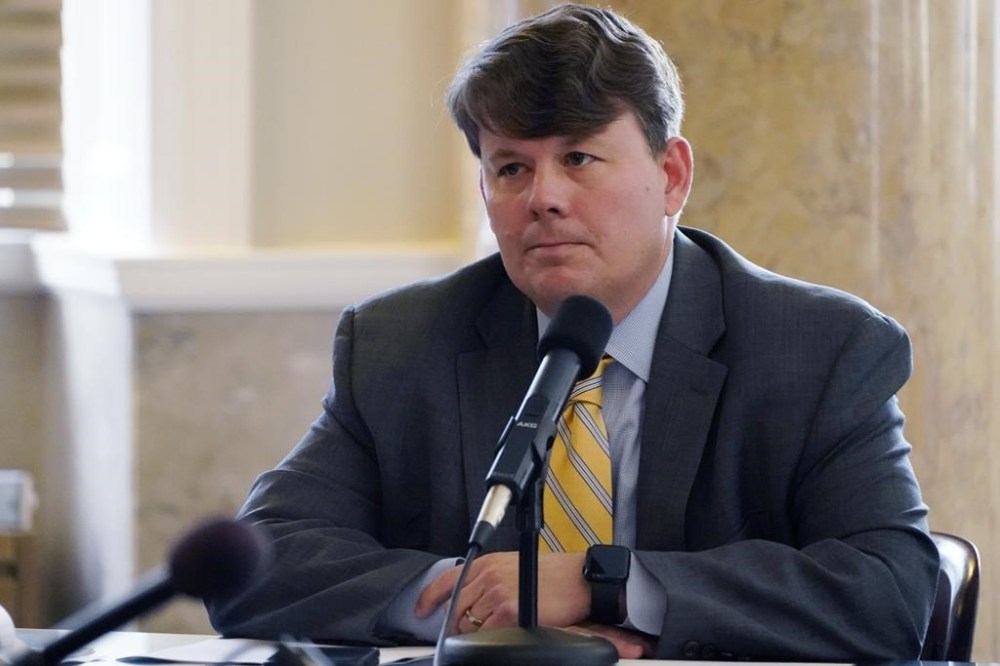
“Once it comes to the way the statutes are interpreted, we’re going to go based on biological at birth,” said Republican Rep. Joey Hood, who presented the bill on the House floor. “There’s no penalty if someone wants to identify one way. We’re just doing this to give meaning to the words in our statute.”
The bill specifies that a “person’s biological sex, either male or female, as observed or clinically verified at birth” is different from “gender identity or other terms intended to convey a person’s subjective sense of self.” It says that sex-based legal distinctions are in jeopardy and that such distinctions are necessary for safety, fairness and privacy reasons.
The proposal is one of numerous measures introduced around the nation this year, part of a push by conservatives who say states have a legitimate interest in blocking transgender people from competing on sports teams or using bathrooms and other spaces that align with their gender identity. Lawmakers in some states have referred to the measure as a “bill of rights” for women.
Measures have been proposed this year in at least 13 states. The bills follow a historic push for restrictions on transgender people, especially youths, by Republican lawmakers last year. At least 23 states, including Mississippi, have banned gender-affirming medical care for transgender minors, and some states are now trying to restrict that care for adults, as well.
Also on Wednesday, the Mississippi Senate passed a bill including the same definitions that would block transgender people, including those who have transitioned, from using restrooms that match their gender identity. The legislation requires public buildings to have single-sex restrooms and changing areas, or unisex spaces designated for one person. A person caught entering the wrong restroom or changing room could be sued.
Another bill on its way to the Senate would allow incarcerated people to sue prisons over transgender inmates.
Mississippi Democrats said the bill passed Wednesday was unnecessary and would interfere with the decisions of transgender people.
“This bill would target a whole community of people, of Mississippians. Hard-working folks, taxpayers who have to pay our salaries,” said Democratic Rep. John Faulkner. “Are you OK with that?”
Hood said the bill doesn’t target anyone; it just defines sex-based terms.
“What you were born with is what you are,” he said.
Under the proposal, people with developmental differences or “intersex conditions” would not be considered members of a third sex. The measure says they must be “accommodated” based on state and federal law, but it does not define what those accommodations are.
The bill will head to the Senate for further consideration.
___
Michael Goldberg is a corps member for the Associated Press/Report for America Statehouse News Initiative. Report for America is a nonprofit national service program that places journalists in local newsrooms to report on undercovered issues. Follow him at @mikergoldberg.