

Bill to undo Memphis’ traffic stop reforms after Tyre Nichols death headed to governor’s desk
Advertisement
Read this article for free:
or
Already have an account? Log in here »
To continue reading, please subscribe:

Digital Subscription
One year of digital access for only $205*
- Enjoy unlimited reading on winnipegfreepress.com
- Read the E-Edition, our digital replica newspaper
- Access News Break, our award-winning app
- Play interactive puzzles
*First annual payment billed as $205.00 + GST for one year. This annual subscription will automatically renew at $233.00 + GST every 52 weeks (10% off the regular annual price of $259.35). Offer available to new and qualified returning subscribers only. Cancel any time.
To continue reading, please subscribe:
Add Free Press access to your Brandon Sun subscription for only an additional
$1 for the first 4 weeks*
- Enjoy unlimited reading on winnipegfreepress.com
- Read the E-Edition, our digital replica newspaper
- Access News Break, our award-winning app
- Play interactive puzzles
*Your next Brandon Sun subscription payment will increase by $1.00 and you will be charged $17.95 plus GST for four weeks. After four weeks, your payment will increase to $24.95 plus GST every four weeks.
Read unlimited articles for free today:
or
Already have an account? Log in here »
Hey there, time traveller!
This article was published 14/03/2024 (930 days ago), so information in it may no longer be current.
NASHVILLE, Tenn. (AP) — Legislation designed to undo police traffic stop reforms set in place after the fatal beating of Tyre Nichols by officers last year is now headed to Republican Tennessee Gov. Bill Lee’s desk, despite emotional pleas to abandon the measure from Nichols’ family and accusations that the proposal is “extreme government overreach.”
For weeks, the Republican-controlled Tennessee Statehouse has remained steadfast in overturning an ordinance adopted by the Memphis city council, which included outlawing so-called pretextual traffic stops for minor violations like a broken taillight. The bill would apply statewide, prohibiting any local limits on any traffic stops when an officer observes or has reasonable suspicion that someone in the car has violated a local ordinance or state or federal law.
House Republicans approved the measure last week and Senate Republicans adopted that proposal Thursday with just the chambers’ six Democrats voting opposed.
“I pleaded with the sponsor to not run this,” said Sen. London Lamar, a Democrat from Memphis, whose district includes where Nichols was killed. “Because it’s a slap in the face. Not only for our city council, but all the local governing bodies in this state, because we’re telling them you are not smart enough to decide policies to help govern your own city.”
“This is extreme government overreach,” Lamar added.
Nichols’ death in January 2023 sparked outrage and calls for reforms nationally and locally. Videos showed an almost 3-minute barrage of fists, feet and baton strikes to Nichols’ face, head, front and back, as the 29-year-old Black man yelled for his mother about a block from home.
Five officers, who are also Black, were charged with federal civil rights violations and second-degree murder and other criminal counts in state court. One has pleaded guilty in federal court. The U.S. Department of Justice is investigating how Memphis Police Department officers use force and conduct arrests, and whether the department in the majority-Black city engages in racially discriminatory policing.
Yet even as numerous members inside the majority-white Tennessee Statehouse expressed shock and outrage over Nichols’ death at the time, many of those same lawmakers have largely criticized how Memphis — a majority Black city — has managed its crime rates and expressed distrust over the response from Black city leaders.
“If we don’t do this, we will further endanger our community,” said Sen. Brent Taylor, the Republican bill sponsor from Memphis.
Gov. Lee has not publicly commented on the legislation, but to date, the Republican has never handed down a veto since taking office.
Memphis’ city council enacted their changes with the support from activists and Nichols’ family. The changes were made after many pointed to an officer’s incident report that claimed Nichols was stopped for driving into oncoming traffic but that was later refuted by Police Chief Cerelyn “CJ” Davis, who said there was no evidence Nichols was driving recklessly.
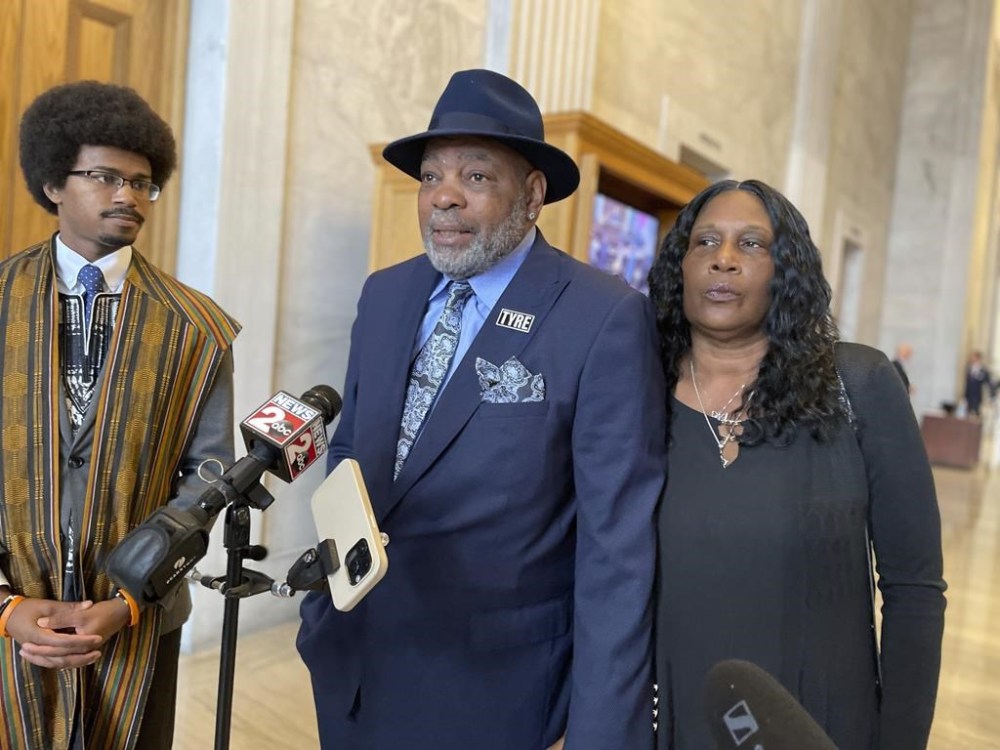
“Memphis is an independent city, so to speak. It’s not like any other city in Tennessee. It’s majority Black,” Rodney Wells, Nichols’ stepfather, told reporters Thursday. “Fair is fair. We worked too hard to get this passed for it to be overturned like this.”
Taylor defended moving forward with the legislation over the Nichols’ objections, arguing it was in the “best interest” of everyone to have “closure.”
“As a funeral director and as someone who has seen death daily for 35 years, I understand better than most the pain and suffering that this family is going through,” Taylor said. “As much as I empathize with the Wells family and Tyre Nichols family and the loss of Tyre, we can’t let that empathy cloud our judgment in protecting 7 million Tennesseans.”