

Connecticut considering barring legacy admissions at private colleges, in addition to public ones
Advertisement
Read this article for free:
or
Already have an account? Log in here »
To continue reading, please subscribe:

Digital Subscription
One year of digital access for only $205*
- Enjoy unlimited reading on winnipegfreepress.com
- Read the E-Edition, our digital replica newspaper
- Access News Break, our award-winning app
- Play interactive puzzles
*First annual payment billed as $205.00 + GST for one year. This annual subscription will automatically renew at $233.00 + GST every 52 weeks (10% off the regular annual price of $259.35). Offer available to new and qualified returning subscribers only. Cancel any time.
To continue reading, please subscribe:
Add Free Press access to your Brandon Sun subscription for only an additional
$1 for the first 4 weeks*
- Enjoy unlimited reading on winnipegfreepress.com
- Read the E-Edition, our digital replica newspaper
- Access News Break, our award-winning app
- Play interactive puzzles
*Your next Brandon Sun subscription payment will increase by $1.00 and you will be charged $17.95 plus GST for four weeks. After four weeks, your payment will increase to $24.95 plus GST every four weeks.
Read unlimited articles for free today:
or
Already have an account? Log in here »
Hey there, time traveller!
This article was published 14/03/2024 (915 days ago), so information in it may no longer be current.
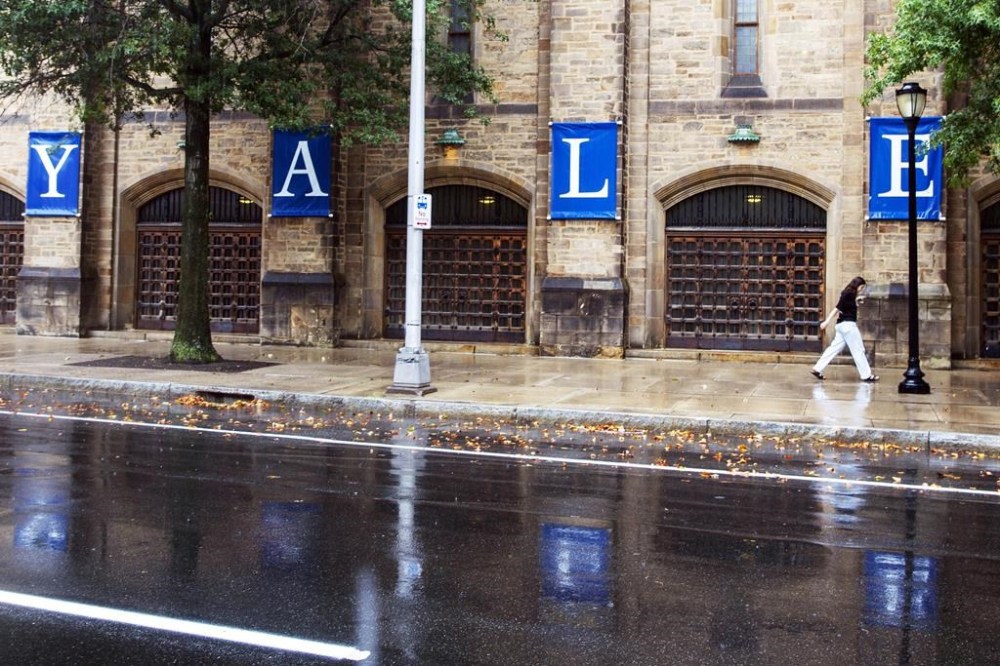
Connecticut lawmakers are considering banning the use of legacy and donor preferences in admissions to all colleges and universities across the state, including private ones like Yale University.
A bill was advanced to the Senate floor on Thursday, days after Virginia Gov. Glenn Youngkin signed legislation barring consideration of a student’s familial ties to a public college or university when being considered for admission. The first such law was signed in Colorado in 2021.
There has been pushback to Connecticut’s bill from some private institutions in the state, including Yale, which have argued the state should not be dictating how they make admissions decisions, just like it shouldn’t dictate decisions on curriculum and faculty hiring. But proponents note how these schools, which receive substantial tax benefits for their non-profit status, have the power to provide all kinds of students with a ticket to an elite world.
“If you look at leaders of Fortune 500 companies, you look at members of Congress, United States Supreme Court justices, this really matters to how our society operates,” said Democratic state Sen. Derek Slap, co-chair of the Higher Education.
An Associated Press survey of the nation’s most selective colleges in 2022 found that legacy students in the freshman class ranged from 4% to 23%, though many schools declined to provide basic data in response to AP’s request. The AP found that at four schools — Notre Dame, USC, Cornell and Dartmouth — legacy students outnumbered Black students.
Slap noted how the U.S. Supreme Court last summer struck down affirmative action in college admissions, proving they don’t have institutional freedom of make preferences based on race.
“I think it’s egregious, though, that this preference, the one for wealthy folks, remains,” he said.
Republican Sen. Kevin Kelly said he has heard from private schools in his district, especially faith-based colleges, that are concerned about how they would be impacted by the legislation. He said the ability of institutions of higher education to “exercise their freedom to teach how they are and what they are” has helped to create “American exceptionalism.”
“I think when the state government starts to interfere in that process, we’re not only interfering in private relations of institutions, but we’re also interfering in that American excellence,” he said.
Jeremiah Quinlan, dean of Undergraduate Admissions and Financial Aid at Yale University, recently told state lawmakers that the school agrees with the “central aim” of the bill, which is to enroll more low-income and first-generation students. But in addition to the state overstepping its bounds, he said the bill doesn’t address the key challenge of providing less advantaged students with the resources needed to prepare for college and graduate on time.
He also said Yale’s undergraduate admissions office strikes to “assemble a group of the most promising students from the most diverse collection of backgrounds.” He said undergraduates from families that can’t afford the full cost of attending Yale receive a need-based scholarship that covers tuition, housing, meals, travel, books and personal expenses.
Last year, Wesleyan University, another private school in Connecticut, announced it was ending its policy of giving preferential treatment in admissions to those whose families have historical ties to the school.
The bill, which cleared the committee on a vote of 18-4, moves to the Senate for further action.