

US official says Kosovo’s ban on dinar use may spark a ‘humanitarian issue’ for ethnic Serbs
Advertisement
Read this article for free:
or
Already have an account? Log in here »
To continue reading, please subscribe:

Digital Subscription
One year of digital access for only $205*
- Enjoy unlimited reading on winnipegfreepress.com
- Read the E-Edition, our digital replica newspaper
- Access News Break, our award-winning app
- Play interactive puzzles
*First annual payment billed as $205.00 + GST for one year. This annual subscription will automatically renew at $233.00 + GST every 52 weeks (10% off the regular annual price of $259.35). Offer available to new and qualified returning subscribers only. Cancel any time.
To continue reading, please subscribe:
Add Free Press access to your Brandon Sun subscription for only an additional
$1 for the first 4 weeks*
- Enjoy unlimited reading on winnipegfreepress.com
- Read the E-Edition, our digital replica newspaper
- Access News Break, our award-winning app
- Play interactive puzzles
*Your next Brandon Sun subscription payment will increase by $1.00 and you will be charged $17.95 plus GST for four weeks. After four weeks, your payment will increase to $24.95 plus GST every four weeks.
Read unlimited articles for free today:
or
Already have an account? Log in here »
Hey there, time traveller!
This article was published 14/03/2024 (891 days ago), so information in it may no longer be current.
PRISTINA, Kosovo (AP) — A senior U.S. official on Thursday said he was “very concerned” that Kosovo’s decision to ban the use of Serbian dinar in the north could cause “an emerging humanitarian issue” for the ethnic Serb minority.
Deputy Assistant Secretary of State Gabriel Escobar met with Kosovar Prime Minister Albin Kurti on his second day of the visit to the country in the latest American effort to restart the talks between Kosovo and Serbia to normalize their ties.
Kosovo’s controversial decision to ban ethnic Serbs in its territory from using the Serbian currency, the dinar, was “an emerging humanitarian issue that we need to address immediately,” said Escobar after meeting with Kurti, adding that decision “has caused some real hardship for some of the citizens of this country.”
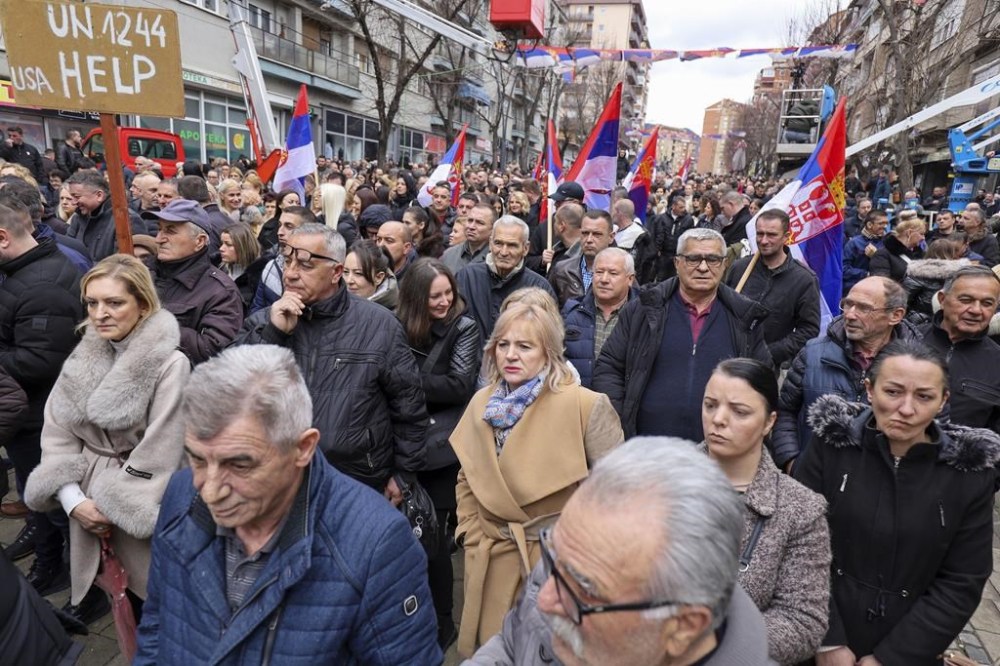
Kosovo’s central bank’s ban on Feb. 1 sparked new tensions and threatened to cause chaos in minority Serbian areas, where the dinar is widely used to pay pensions and salaries to staff in Serbian-run institutions, including schools and hospitals.
It has also fueled Western concerns about regional tensions escalating as a full-scale war rages in Ukraine, while Washington and Brussels were struggling to get the Pristina-Belgrade dialogue “back on track.”
Brussels has warned both that refusal to compromise jeopardizes Serbia and Kosovo’s chances of joining the bloc, which is mediating a dialogue between the former foes.
Kosovo has postponed implementation of the ban on the dinar by several months in response to international concerns.
The ban bars banks and other financial institutions in ethnic Serbian-dominated areas, especially in Kosovo’s north, from using the dinar in local transactions and requires them to use the euro, which is Kosovo’s official currency.
In another context, Western Ambassadors of France, Germany, Italy, Britain and the United States, known as the Quint, welcomed the Kosovo government’s decision to recognize the land rights of a 14th century Serbian Orthodox monastery of Visoki Decani. The monastery is listed as an endangered World Heritage site and has been fighting for formal title to lands around its buildings for nearly a decade.
In 2016, Kosovo’s top court ruled that the monastery, located some 100 kilometers (60 miles) west of the capital, Pristina, is the rightful owner of the land, but local authorities resisted giving it formal title for years. The international community has pressed Kosovo’s government to legalize the land of the monastery.
Kosovo’s Prime Minister Albin Kurti said implementation of the verdict on the monastery’s land title was the last condition set from the Council of Europe for Kosovo’s membership.
Kosovo was a former Serbian province until a 78-day NATO bombing campaign in 1999 ended a war between Serbian government forces and ethnic Albanian separatists in Kosovo and pushed Serbian forces out. Belgrade does not recognize Kosovo’s 2008 independence.
___
Semini reported from Tirana, Albania.
___
Follow Llazar Semini at https://x.com/lsemini