

$6,500 school vouchers coming to Georgia as bill gets final passage and heads to governor
Advertisement
Read this article for free:
or
Already have an account? Log in here »
To continue reading, please subscribe:

Digital Subscription
One year of digital access for only $205*
- Enjoy unlimited reading on winnipegfreepress.com
- Read the E-Edition, our digital replica newspaper
- Access News Break, our award-winning app
- Play interactive puzzles
*First annual payment billed as $205.00 + GST for one year. This annual subscription will automatically renew at $233.00 + GST every 52 weeks (10% off the regular annual price of $259.35). Offer available to new and qualified returning subscribers only. Cancel any time.
To continue reading, please subscribe:
Add Free Press access to your Brandon Sun subscription for only an additional
$1 for the first 4 weeks*
- Enjoy unlimited reading on winnipegfreepress.com
- Read the E-Edition, our digital replica newspaper
- Access News Break, our award-winning app
- Play interactive puzzles
*Your next Brandon Sun subscription payment will increase by $1.00 and you will be charged $17.95 plus GST for four weeks. After four weeks, your payment will increase to $24.95 plus GST every four weeks.
Read unlimited articles for free today:
or
Already have an account? Log in here »
Hey there, time traveller!
This article was published 20/03/2024 (931 days ago), so information in it may no longer be current.
ATLANTA (AP) — Georgia senators gave final approval Wednesday to a plan to create a $6,500 voucher funding for private school tuition and home schooling, sending the measure to Gov. Brian Kemp for his signature.
Senators voted 33-21 along party lines to approve changes that the House made last week to Senate Bill 233. House approval had long eluded the state’s school choice advocates.
Whereas last year a defeat of the bill in the House left Democratic opponents jubilant, supporters broke into applause and embraced as the Senate approved the measure, marking the end of a multiyear saga to create a third Georgia program funding nonpublic education options.
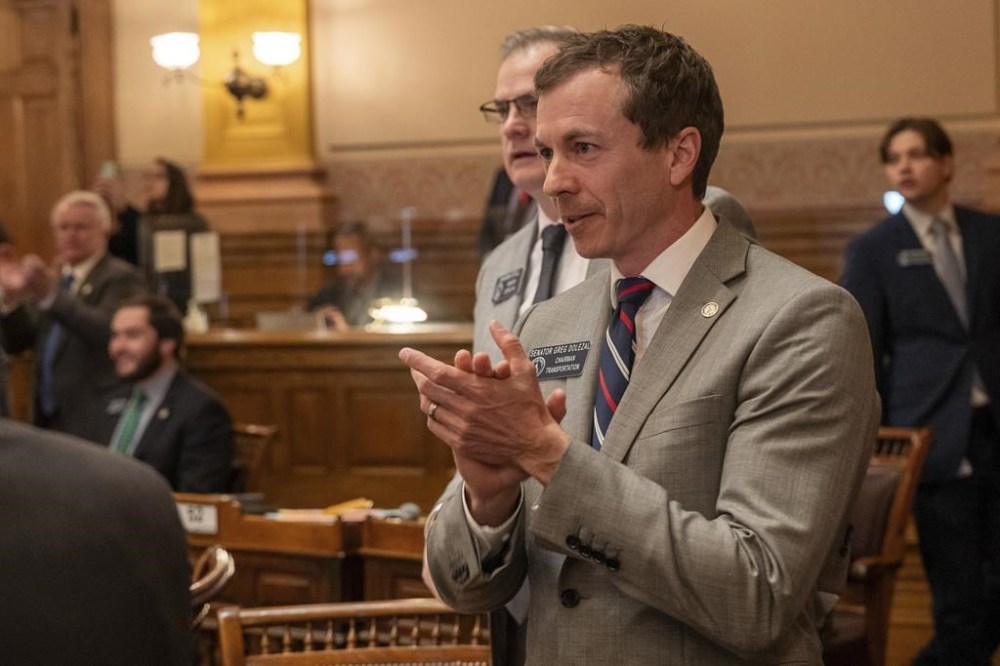
“When I cheer today, I’m going to be cheering because more parents and more families will have more opportunities,” said state Sen. Greg Dolezal, a Republican from Cumming who sponsored the bill.
Republican Gov. Brian Kemp backs the voucher plan, including devoting a substantial portion of his State of the State speech to advocating for it.
“I firmly believe we can take an all-of-the-above approach to education options,” Kemp said in a statement Wednesday.
Republican House Speaker Jon Burns of Newington began to forcefully advocate for the bill, persuading seven Republicans and a Democrat who opposed the measure last year to support it, providing the narrow margin of victory in the House.
The bill would provide $6,500 education savings accounts to students attending public schools that rank in Georgia’s bottom 25% for academic achievement. That money could be spent on private school tuition, home schooling supplies, therapy, tutoring or even early college courses for high school students.
It differs from last year’s failed measure, having been combined with a number of other education initiatives. But opponents argued that it would subtract resources from public schools, with school districts losing state aid as children depart, even as other students will remain behind.
“This bill is a thinly veiled effort to segregate and discriminate under the guise of choice,” said Sen. Nabilah Islam Parkes, a Democrat from Duluth. “Private institutions free to pick their students will inevitably leave behind those who perhaps need the most support -– our special needs students, our struggling learners.”
The new program would be limited to spending 1% of the $14.1 billion that Georgia spends on its school funding formula, or $141 million. Lawmakers would appropriate money for the voucher separately, and not take it directly out of the formula. That could provide more than 21,000 scholarships. Students who could accept them are supposed to have attended an eligible public school for at least two consecutive semesters, or be about to enter kindergarten at an eligible public school.
Students from households with incomes of less than four times the federal poverty level would be prioritized for the scholarships. Four times the federal poverty level is about $100,000 for a family of three.
Parents would have to provide proof of allowed expenditures to a new Georgia Education Savings Authority to claim the money. All of a family’s eligible children could qualify for the program
Democrats argue the money isn’t enough to pay tuition at most private schools, and that private schools aren’t available in some rural areas. They also say private schools don’t have to accept all applicants and could discriminate against people with differing social and religious views
“The reality is that a $6,500 voucher here doesn’t go nearly far enough to afford any kind of quality education,” said Sen. Elena Parent, an Atlanta Democrat.
Republicans, though, say that amount could make a difference for many families.
“Don’t tell these parents that this $6,500 bridge can’t change the lives of their kids, because it can,” Dolezal said.
Democrats also question whether the voucher will violate the Georgia Constitution’s ban on giving money to religious institutions. “It appears to me to be a little unconstitutional,” said Sen. Derek Mallow of Savannah.
The Georgia effort is part of a nationwide GOP wave favoring education savings accounts following the COVID-19 pandemic and fights over what children should learn in public schools.
Other parts of the revamped bill include writing current teacher pay raises into Georgia’s K-12 school funding formula, letting public school prekindergarten programs qualify for state aid to construct and furnish buildings, letting students enroll in other public school districts that will accept them and increasing tax credits for donations to public schools.
The language on teacher raises is partly symbolic — lawmakers have been increasing pay using budget bills in recent years.
Georgia already gives vouchers for special education students in private schools and $120 million a year in income tax credits for donors to private school scholarship funds.