

Why Israel is so determined to launch an offensive in Rafah
Advertisement
Read this article for free:
or
Already have an account? Log in here »
To continue reading, please subscribe:

Digital Subscription
One year of digital access for only $205*
- Enjoy unlimited reading on winnipegfreepress.com
- Read the E-Edition, our digital replica newspaper
- Access News Break, our award-winning app
- Play interactive puzzles
*First annual payment billed as $205.00 + GST for one year. This annual subscription will automatically renew at $233.00 + GST every 52 weeks (10% off the regular annual price of $259.35). Offer available to new and qualified returning subscribers only. Cancel any time.
To continue reading, please subscribe:
Add Free Press access to your Brandon Sun subscription for only an additional
$1 for the first 4 weeks*
- Enjoy unlimited reading on winnipegfreepress.com
- Read the E-Edition, our digital replica newspaper
- Access News Break, our award-winning app
- Play interactive puzzles
*Your next Brandon Sun subscription payment will increase by $1.00 and you will be charged $17.95 plus GST for four weeks. After four weeks, your payment will increase to $24.95 plus GST every four weeks.
Read unlimited articles for free today:
or
Already have an account? Log in here »
Hey there, time traveller!
This article was published 20/03/2024 (890 days ago), so information in it may no longer be current.
JERUSALEM (AP) — Israel is determined to launch a ground offensive against Hamas in Rafah, Gaza’s southernmost city, a plan that has raised global alarm because of the potential for harm to the hundreds of thousands of civilians sheltering there.
Prime Minister Benjamin Netanyahu says Israel can’t achieve its goal of “total victory” against Hamas without going into Rafah.
Israel has approved military plans for its offensive. But with 1.4 million Palestinians jammed into the city, Israel’s allies, including the U.S., have demanded greater care for civilians in its anticipated incursion.
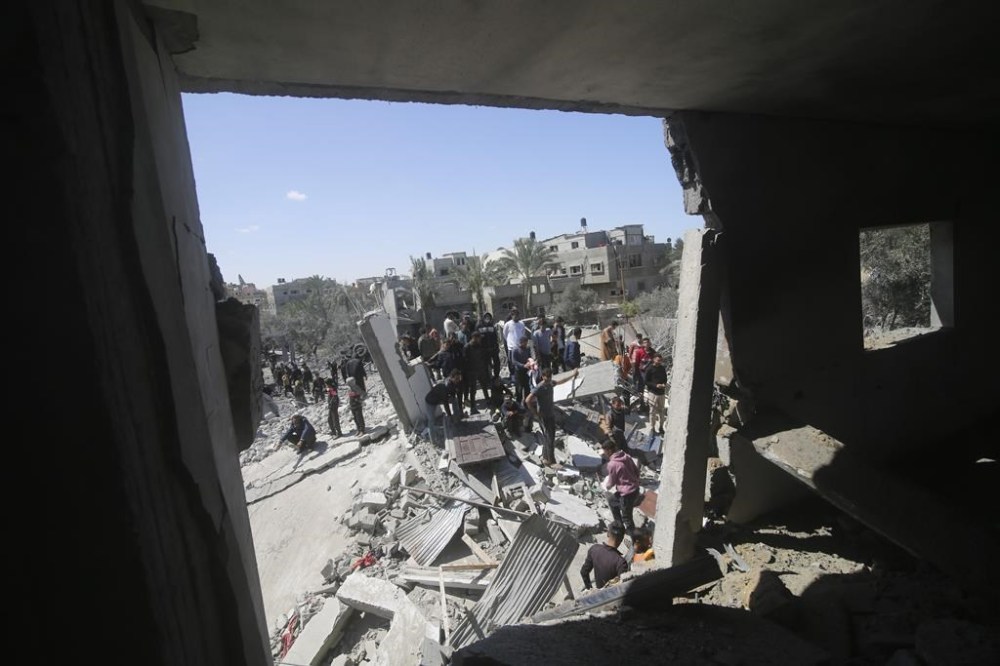
Most of those Palestinians have been displaced by fighting in other parts of Gaza and are living in densely packed tent camps, overflowing U.N.-run shelters or packed apartments.
Netanyahu is sending a delegation to Washington to present the administration with its plans.
WHY RAFAH IS SO CRITICAL
Since Israel declared war in response to Hamas’ deadly cross-border attack on Oct. 7, Netanyahu has said a central goal is to destroy the Islamic group’s military capabilities.
Israel says Rafah is Hamas’ last major stronghold in the Gaza Strip, after operations elsewhere dismantled 18 out of the militant group’s 24 battalions, according to the military. But even in northern Gaza, the first target of the offensive, Hamas has regrouped in some areas and continued to launch attacks.
Israel says Hamas has four battalions in Rafah and that it must send ground forces to topple them. Some senior militants could also be hiding in the city.
WHY THERE IS SO MUCH OPPOSITION TO ISRAEL’S PLAN
The U.S. has urged Israel not to carry out the operation without a “credible” plan to evacuate civilians. Egypt, a strategic partner of Israel’s, has said that any move to push Palestinians into Egypt would threaten its four-decade-old peace agreement with Israel.
In a phone call with Netanyahu this week, President Joe Biden told the Israeli leader not to carry out a Rafah operation, said the White House’s national security adviser, Jake Sullivan. He said the U.S. was seeking “an alternative approach” that did not involve a ground invasion.
Secretary of State Antony Blinken, who is on his sixth visit to the region since the war began, reiterated those concerns in an interview with Al-Hadath TV in Saudi Arabia on Wednesday.
“President Biden has been very clear that we cannot support a major ground operation, military operation in Rafah,” Blinken said. He said there is no effective way of moving 1.4 million people to safety and that those who stay behind “would be in terrible jeopardy.”
ISRAEL DOESN’T APPEAR CLOSE TO SENDING IN TROOPS
Netanyahu said he was sending a delegation to Washington “out of respect” for Biden. But in a statement Wednesday, he said he had told Biden that Israel “cannot complete the victory” without entering Rafah.
Despite the tough talk, Israel doesn’t appear close to sending troops into Rafah. This may be connected to ongoing attempts to broker a temporary cease-fire. Qatari mediators say those talks would be set back by a Rafah invasion.
There are also logistical concerns.
Israel’s military says it plans to direct the civilians to “humanitarian islands” in central Gaza ahead of the planned offensive. Netanyahu said Wednesday evacuation plans had not yet been approved.
___
Follow AP’s coverage at https://apnews.com/hub/israel-hamas-war